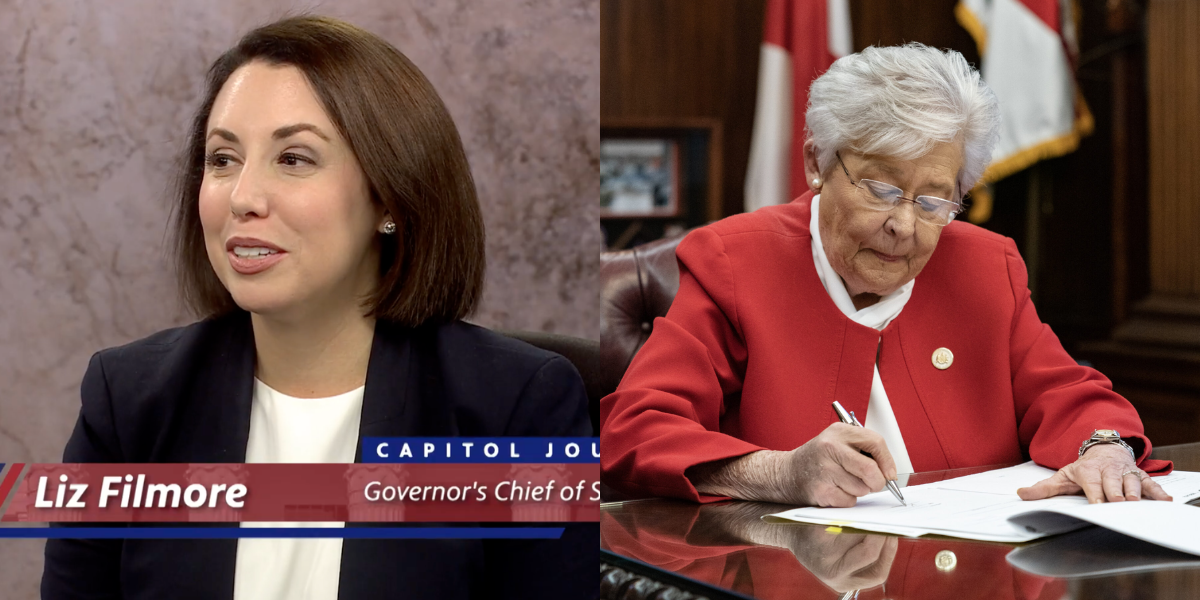
As Ivey’s final months in office wind down, the governor’s chief of staff said the administration is focused on cementing its policy legacy while preparing a detailed transition for whoever takes office in January.
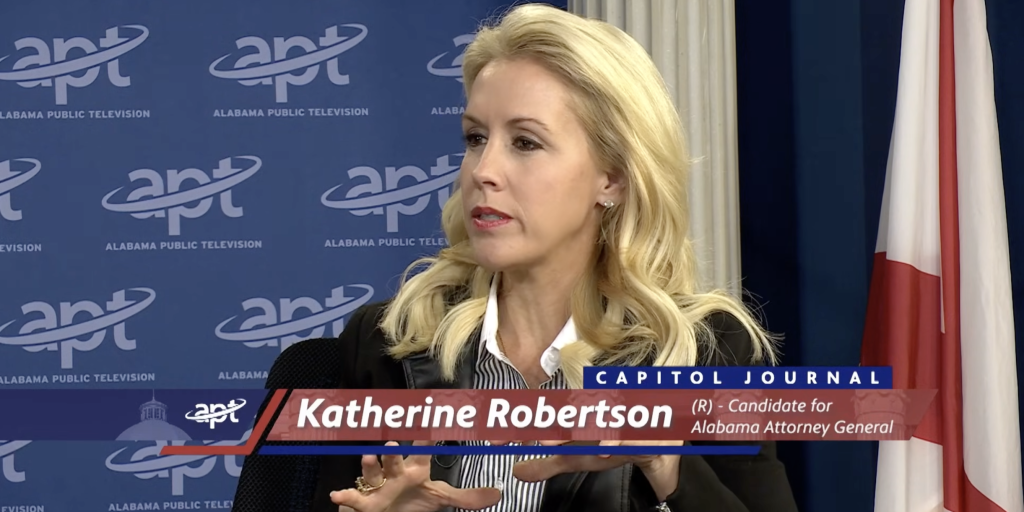
Liz Filmore, who has served as Ivey’s chief of staff and worked for her during her time as lieutenant governor, appeared on Capitol Journal this week to discuss the session that just wrapped and what comes next.
Filmore said the governor’s approach to the 2026 session was shaped by a single principle: don’t pass what you can’t implement before leaving office.
“It was very important to Governor Ivey that we didn’t seek anything in this legislative session we could not fully implement,” Filmore said. “Make sure that everything we pass in the session we can fully implement, and not to leave it up to the next person.”
She described the past quadrennium as historically productive.
“I would be as bold to say that this past quadrennium has been the most productive in the state’s history, just for the focus, the focus that she gives to the state, that she empowers others to do their work and gives grace to that situation,” Filmore said.
Education drove much of that focus. Filmore said the decision to seek a full term was rooted in Ivey’s desire to move the needle on student outcomes, and pointed to the largest Education Trust Fund budget in state history, 49,000 Choose Act applicants, and continued funding for the Literacy Act, Numeracy Act, and Turnaround Schools Initiative.
“We should not take the foot off the gas because we’re only at the beginning of having buy-in from those local educators on how important Literacy Act, Numeracy Act” and related programs are, she said.
Filmore also addressed the state’s $203.4 million federal award for rural health transformation, calling two bills passed this session key to making the investment work: one allowing ambulance reimbursement for at-home treatment and an antitrust bill enabling rural hospital collaboration.
“If we come out of this five years from now and haven’t transformed this state in a way that is sustainable moving forward, then we haven’t done our job,” Filmore said.
Looking ahead to January, Filmore said the administration has spent the past year preparing transition documents and briefing cabinet officials for the handoff. She noted the Ivey administration received nothing similar when it took power nine years ago following the resignation of Governor Robert Bentley.
“There was no paperwork that was given,” Filmore said. “It was a series of whack-a-mole to figure out what was happening and how do we address it and accomplish it.”
“The governor has stated to me many times she wants to leave the office better than she found it, and we’re doing that in a very intentional way,” she said.
Sawyer Knowles is a capitol reporter for Yellowhammer News. You may contact him at [email protected].