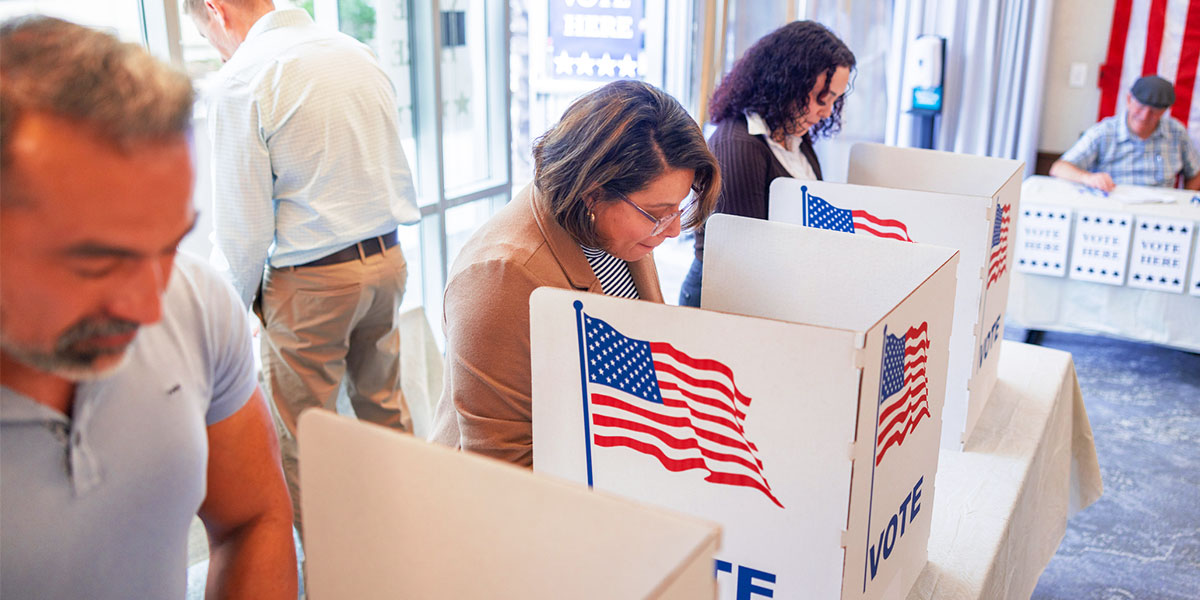
Alabama voters heading to the polls Tuesday won’t just pick candidates. Two Alabama constitutional amendments will appear on every ballot in all 67 counties, and both carry real consequences.
Amendment 1: Expanding Aniah’s Law
Amendment 1 would expand the list of offenses for which a judge can deny bail after a hearing, closing a gap exposed by real-world violence.
The current Aniah’s Law, passed by voters in 2022, covers capital murder, murder, first-degree kidnapping, first-degree rape, sexual torture, first-degree domestic violence, first-degree human trafficking, first-degree arson, first-degree robbery, terrorism, and aggravated child abuse.
Amendment 1 would add solicitation, attempt, or conspiracy to commit murder and discharging a firearm or explosive into an occupied building, vehicle, or dwelling.
Governor Ivey made the amendment a centerpiece of her “Safe Alabama” public safety package after the October 2025 mass shooting in downtown Montgomery that killed two and injured a dozen more.
One of the suspects in that shooting, 19-year-old Javorick Whiting, charged with attempted murder, walked free on $60,000 bond because the charge was not yet covered under Aniah’s Law. Ivey responded with a statement that made the case for expanding the law:
“As I stated after two Alabamians lost their lives at the hands of thugs in downtown Montgomery on October 4th, any and all involved must be held accountable and prosecuted to the fullest extent of the law,” Ivey wrote.
“Today, we learn that one of the four suspects has been released back onto the streets. This is exactly the legal loophole that I and many in the Legislature sought to close when I signed the Safe Alabama package.
[This] May, all Alabama voters will have a chance to end mandatory bail for those suspected of attempted murder by voting to expand Aniah’s Law. I will not forget today’s troubling news when casting my vote.”
The amendment does not make bail denial automatic. Judges still hold evidentiary hearings and retain full discretion. The bill passed the Senate 29-0 and the House 87-0. Attorney General Steve Marshall, Alabama’s district attorneys, and the bipartisan “Big 10” mayors coalition representing the state’s ten largest cities all support the measure.
The amendment is named for Aniah Blanchard, the 19-year-old Southern Union student abducted and killed in 2019 by a defendant who was free on bond while facing earlier violent charges. Her killer, Ibraheem Yazeed, was sentenced to life in prison on May 7.
A YES vote adds the new offenses to the bail-denial list. A NO vote leaves Aniah’s Law as it stands.
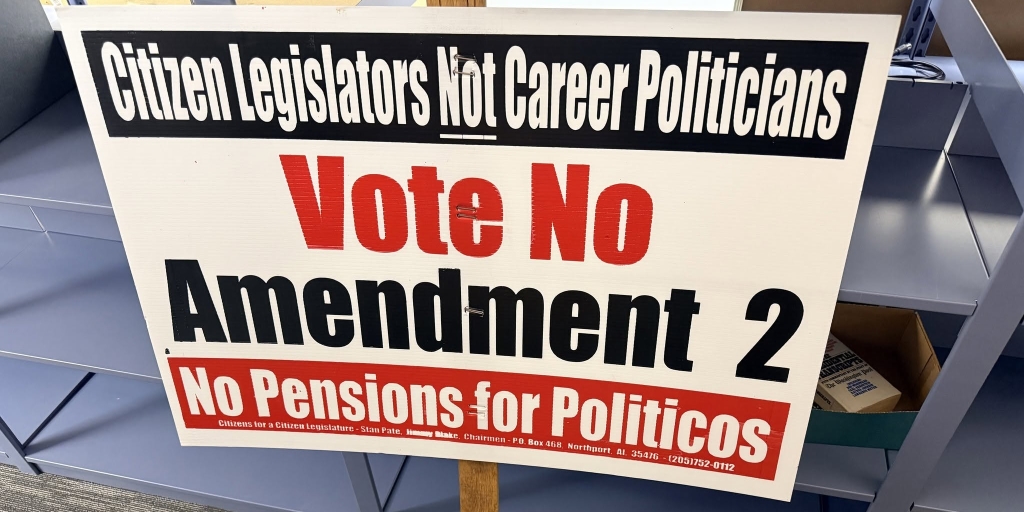
Amendment 2: District Attorney Compensation
Amendment 2 fixes a quirk in Alabama’s constitution that forces elected district attorneys to wait until their next term to receive pay raises the Legislature has already approved, even though judges receive those same increases immediately.
When the Legislature modernized judicial and DA compensation in 2021, sitting judges got the raises right away. Sitting DAs had to wait until the next election cycle. Amendment 2 would apply the same standard to DAs: their pay cannot be cut mid-term but can be increased.
Marshall County District Attorney Jennifer Bray laid out the case for the amendment in a recent op-ed in The Arab Tribune:
“Allowing the Legislature to reduce a district attorney’s salary during a term could undermine the independence and stability of the office,” Bray wrote.
“District attorneys should be able to make difficult and sometimes unpopular decisions based solely on justice and public safety, not concerns about political retaliation or financial pressure. The Legislature would still retain ultimate authority over compensation.”
The bill passed the House 101-0 and the Senate 29-1. The Alabama District Attorneys Association supports the amendment. No organized opposition has been identified.
A YES vote allows DAs to receive statutory pay increases mid-term and prohibits pay cuts during their term. A NO vote keeps the current rule.
Polls are open 7 a.m. to 7 p.m. Tuesday, May 19.
Photo ID is required. Voters who do not wish to participate in either party’s primary may request an Alabama constitutional amendment-only ballot at their polling place.
Sample ballot information is available here.
Sawyer Knowles is a capitol reporter for Yellowhammer News. You may contact him at [email protected].