Building Alabama is a weekly column by Yellowhammer News on the projects, industries and investments shaping Alabama’s economy.
Google’s $1.5 billion expansion of its Jackson County data center campus arrives at a moment when Alabama is rewriting the terms for how these projects work.
Data centers have become one of the most contested forms of economic development in the country. They bring enormous capital investment and long-term tax value, but they also raise fair questions about power demand, infrastructure costs, ratepayer burden and community benefit. Alabama has started answering those questions by tightening data-center incentives and paying closer attention to who bears the cost of power demand. Google’s latest move in Bridgeport offers one version of what those terms can look like in practice.
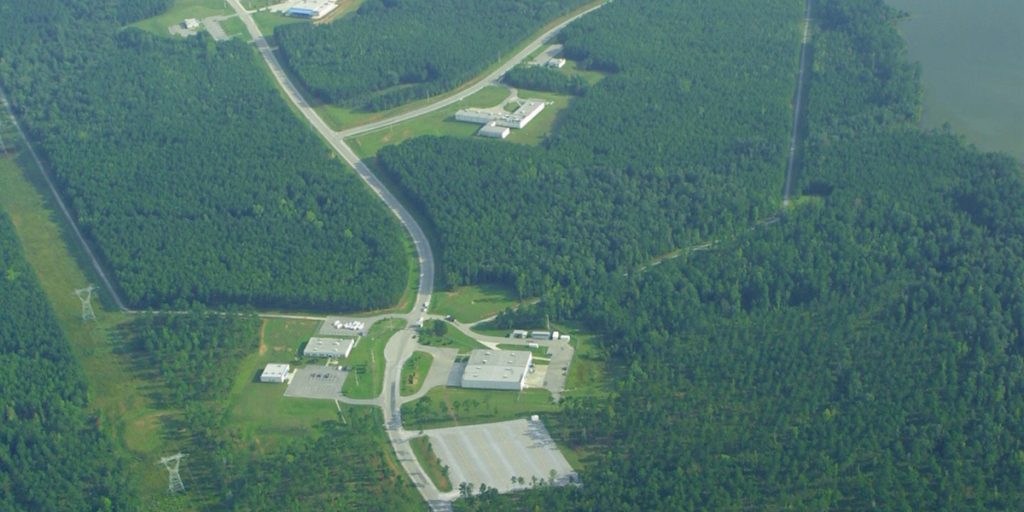
The company announced earlier this month that it will expand its campus across 2026 and 2027, bringing Google’s total Alabama investment past $2 billion. Google has called Jackson County home since 2018, and its campus began operations in 2019. More than 1,000 contract workers are brought to the site during the construction phase, while the campus already supports hundreds of full-time jobs.
The site itself is part of the story. Google’s campus is located on the site of TVA’s retired Widows Creek coal plant, which was decommissioned in 2015. The project is tied to a former industrial power site with existing electrical infrastructure and a community already familiar with large-scale energy operations. That gives the project a stronger starting point than a site without existing energy infrastructure. It also connects to a pattern Building Alabama has followed across earlier columns: existing infrastructure and site readiness reduce risk for the company and cost for the community.
The deal terms tell the rest. In line with its support for the White House’s Ratepayer Protection Pledge, Google says it will pay for 100% of the power it uses. For new data centers, including its Jackson County expansion, the company also says it will cover the infrastructure costs directly driven by its operations.
Google says it has contracted to bring more than 300 megawatts of new generation capacity to the Tennessee Valley region. In 2025, Google, Kairos Power and TVA also announced a partnership to supply up to 50 megawatts of advanced nuclear power to Google data centers in Tennessee and Alabama.
Google says it also acts as a flexible partner to TVA by reducing data center power use during peak demand and extreme weather events to support grid stability.
The community commitments are part of the same picture. Google announced a $2 million Energy Impact Fund with TVA and the Community Action Agency of Northeast Alabama to support weatherization and energy-efficiency upgrades for income-qualified households and local schools in Jackson County. The company also committed $550,000 over five years for STEM education kits for fourth- through eighth-grade students in the Jackson County School District.
The deal reflects a shift Alabama has already put into law. This year, lawmakers passed HB399, which tightened the state’s data-center incentive structure. The law reduced the default maximum abatement period to 20 years and allows an additional 10 years if the operator enters a binding agreement with the Alabama Department of Revenue and the Alabama Department of Commerce to provide qualified local investments, including roads, bridges, broadband, water and wastewater upgrades, and education support.
The same political direction runs through the Power to the People Act, HB475. That law included a temporary electric base-rate freeze and changes to the Public Service Commission. The details drew debate, but the trajectory is clear: energy costs and ratepayer protection are now central economic-development issues in Alabama.
Google’s Jackson County expansion sits on the right side of that shift. The company is building on a former energy site, saying publicly that it will pay its own infrastructure costs, adding generation capacity, and putting money into local energy and education programs. Those are the kinds of terms Alabama is beginning to encourage.
As other states wrestle with data-center growth for political, regulatory and infrastructure reasons, Alabama has land, power assets, economic-development experience and communities that can compete. The question is whether the Google model, where the operator pays its way and invests in the host community, becomes the standard template or stays the exception.
Data centers can work for Alabama. Google’s Jackson County expansion shows what the terms can look like when they do.
Sawyer Knowles is a state and political reporter for Yellowhammer News. You may contact him at [email protected].