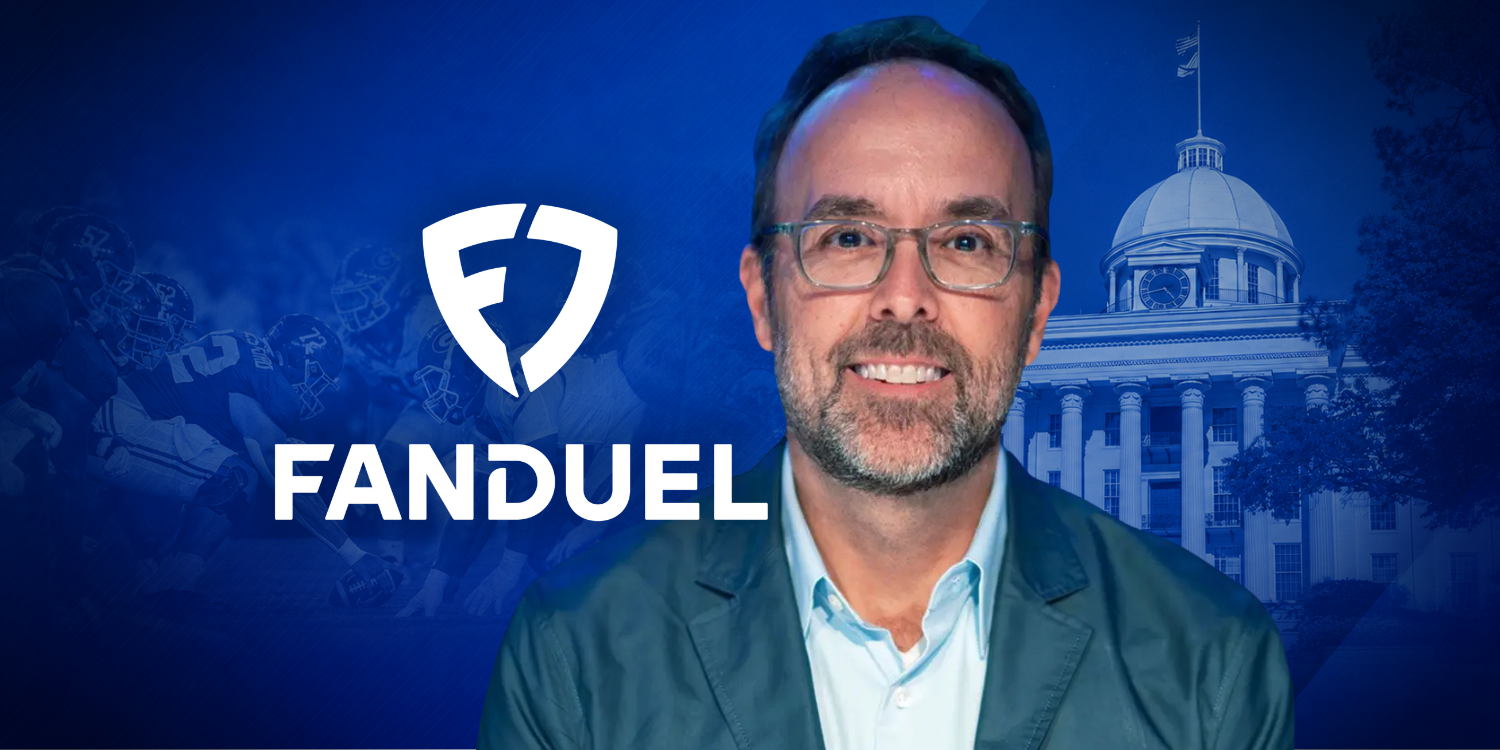
There are 307 illegal online sportsbooks currently taking bets in Alabama. Christian Genetski wants to replace them with one legal market — and the Alabama native running FanDuel may be the most qualified person in the country to make the case.
Genetski, a graduate of Birmingham-Southern College as well as the Vanderbilt University School of Law was appointed as the President of FanDuel Group back in 2022 after previously serving as Chief Legal Officer for the wagering giant.
Originally arriving to FanDuel more than a decade ago as its first in-house counsel, Genetski was critical over time in building the company’s legal team from scratch into an elite group of both attorneys and government affairs professionals. He was a critical part of navigating challenges that arose from the fight for legalized and regulated daily fantasy sports in over 20 states.
But there’s a certain irony in it all: the world’s largest sportsbook is run by a man who can’t legally place a bet in his own hometown.
“I think Alabama has an opportunity to build a framework that protects consumers, generates meaningful revenue for the state, and gives fans a legal way to engage with the sports they already love,” Genetski told Yellowhammer News. “I’ve been a sports fan a lot longer than I’ve been a sports betting executive. That started in Alabama. Some of my earliest sports memories were my neighbors introducing me to Alabama football after we moved there, and that perspective still shapes how I think about this issue today.”
In 2024, Genetski returned to Alabama to speak during a public hearing on two bills advancing through the Alabama Legislature which proposed a framework to legalize, tax and regulate various forms of gaming, including online sports betting. HB151 and HB152 represented the closest attempt made by Alabama lawmakers to pass comprehensive gaming legislation since the turn of the century.
As he did in the hearing, Genetski argued that Alabama is not choosing between sports betting and no sports betting, but between a regulated market and an illegal one.
“Today, Alabama residents are either driving to neighboring states to place legal bets or using illegal offshore operators,” he said before citing data that should concern Alabamians.
“According to Blask, which measures illegal market size, there are currently 307 illegal online sportsbooks operating in Alabama. 307! The difference in a regulated market is accountability. Customers know their funds are secure. They know they’ll get paid if they win. They have access to responsible gaming tools and independent regulators if there’s ever a dispute.”
While talking about the two million-plus attempts by Alabamians to place a bet online that were blocked by FanDuel, Genetski claimed those attempts likely did not end there, and instead wound up either in neighboring legal states like Louisiana, Mississippi, Florida, and Tennessee or even placed through an illegal unregulated offshore site.
“The reality is many Alabamians are already betting today, whether that’s through illegal offshore sites or by crossing state lines. So, the real policy question isn’t whether sports betting exists,” he said. “It’s whether that activity happens in a regulated, transparent market with consumer protections and economic benefit for the state, or whether it stays in illegal markets with no oversight and no accountability.”
Genetski both before and after taking over as president has proven critical in helping to establish FanDuel’s partnerships with numerous professional sports franchises and official partnerships with the NBA, NFL, NHL, and PGA TOUR. This as well as his legal contributions led to his election into the SBC Sports Betting Hall of Fame back in 2024.
Before arriving at FanDuel, Genetski established an impressive resume as a Senior Vice President and General Counsel of the Entertainment Software Association, as well as serving as a federal prosecutor in the U.S. Department of Justice’s Computer Crime and Intellectual Property Section.
While his experience in Washington helped him develop a fondness for the D.C. sports franchises, Genetski is a die-hard fan of the Alabama Crimson Tide.
“If you had asked me growing up in Vestavia what I was going to do professionally, I definitely wouldn’t have predicted this exact path, Genetski said.
“But looking back, some of the themes were probably there pretty early. I always loved sports, competition, and technology. Before I took my first job out of law school, a friend and I actually talked about starting a fantasy football website together. At the time, it felt a little too risky, so I took the more traditional legal path instead.”
As someone who was a key factor in building the regulatory framework in dozens of states and a key piece in bringing sports betting nationwide, not to mention a native of the Yellowhammer State, Genetski says he’s going to continue making the case for a legal, regulated sports wagering market in Alabama.
RELATED: Comparing House and Senate versions of the 2024 Alabama legal gaming bills
“When you come from a prosecutorial background, you spend a lot of time thinking about trust, accountability, and systems integrity,” he said. “You think about how things fail, how consumers can be harmed, and how to build controls that prevent that from happening….One thing I say often is regulated operators are accountable every single day — to regulators, customers, leagues, financial markets, and the public. Illegal operators are accountable to nobody. That distinction matters.”
For Alabama specifically, Genetski doesn’t think lawmakers are necessarily getting it wrong here rather than carefully trying to ensure that a system where sports gambling becomes legalized is done in a way that helps the state rather than hurts it.
“We’ve had productive conversations with legislators across the state, and I think fundamentally everyone understands the core issue here: this is not about whether sports betting exists. It already does,” he said, citing both the transparency and accountability in a legal market as well as the $6 billion FanDuel alone has paid in taxes to states since launching legal operations in 2018.
“The question is whether it happens in a legal, regulated market or through illegal offshore operators…We’re excited to continue being part of the conversation around what a framework tailored for Alabama could look like.”
Michael Brauner is a Senior Sports Analyst and Contributing Writer for Yellowhammer News. You can follow him on Twitter @MBraunerWNSP and hear him every weekday morning from 6 to 9 a.m. on “The Opening Kickoff” on WNSP-FM 105.5, available free online.