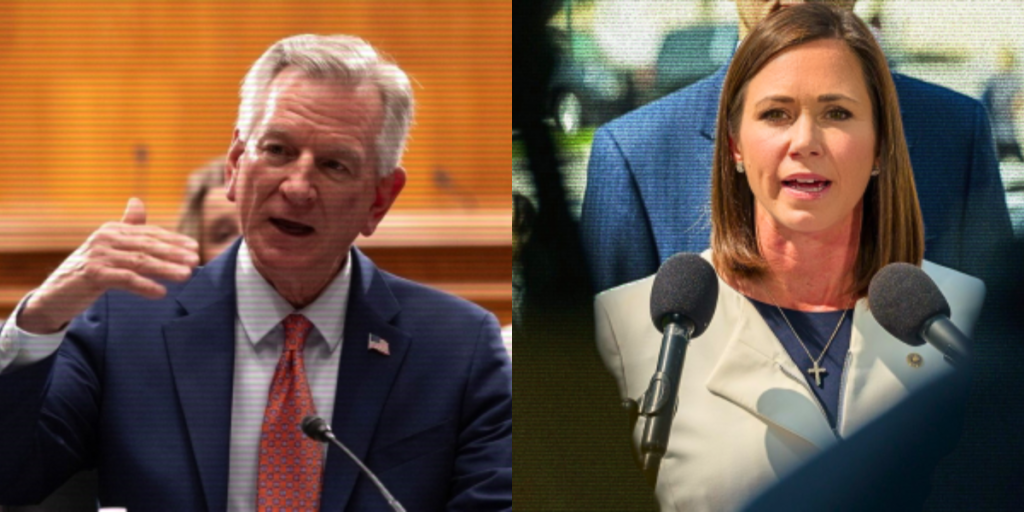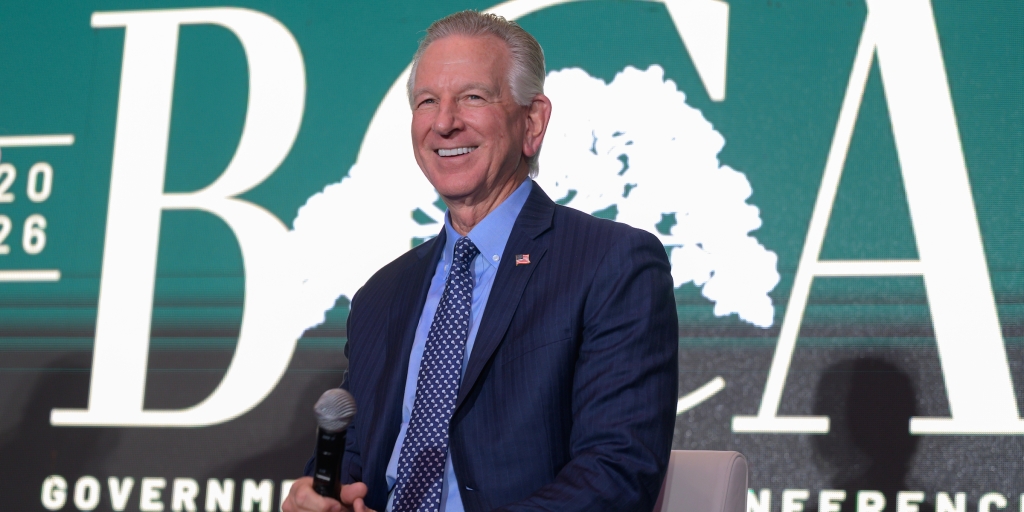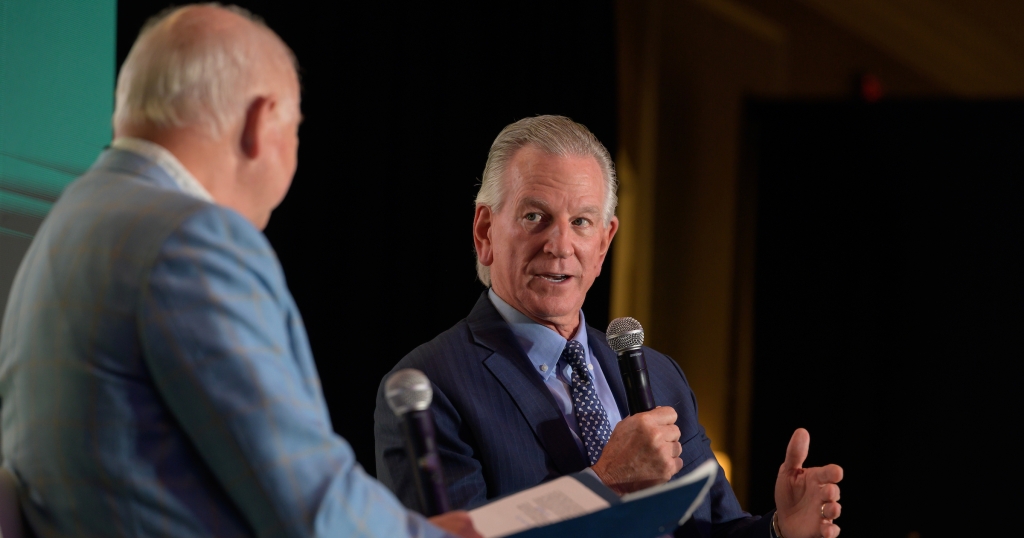
U.S. Senator Tommy Tuberville (R-Auburn) told Alabama’s business and political leadership Saturday morning that cutting the state’s income and property taxes is a realistic goal, and laid out a plan that pairs economic growth with an aggressive attack on waste, fraud and abuse to pay for it.
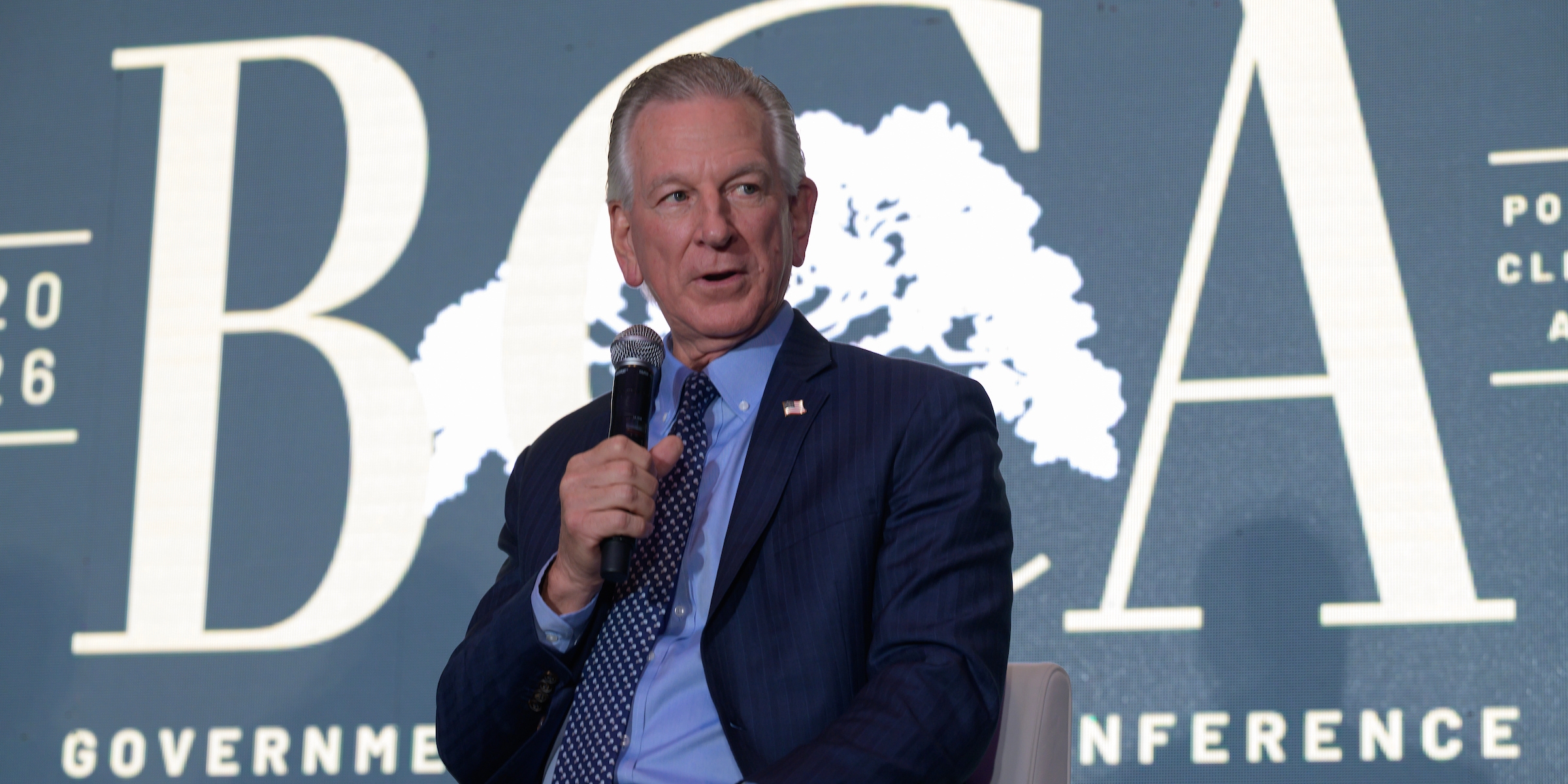
Speaking at the Business Council of Alabama’s Governmental Affairs Conference at the Grand Hotel, hours after Senate votes ended at 4:30 a.m. in Washington, the Republican nominee for governor was direct about both the ambition and the timeline.
“I would love to get rid of the state income tax. It’s not doable right now – we can’t do that. You’d love to get rid of the property tax – that’s not doable,” Tuberville said. “So what are we going to do? We have to grow the state to get to a point where we feel like we’re making progress, to be able to work with the legislature to reduce that to a certain point, because we have to help the taxpayers.”
“We can’t keep taxing the people of this state and this country. We can’t do it,” he added. “I mean, the taxes we’re paying are just absolutely insane.”
Tuberville, drawing on six years on the federal books, said the money for tax relief is already in the system – lost to fraud and mismanagement.
“We lose a trillion dollars to fraud in this country. We are so bloated. We have so much out there, you can’t keep an eye on all that’s going on,” he said. “We lose $100 million an hour. I want you to think about that: $100 million an hour, 365 days a year. What could we do — what could the country do? Infrastructure, health care, education.”
At the state level, he pointed to a hard deadline set by President Trump’s One Big Beautiful Bill, which requires states to shoulder a share of SNAP benefit costs if their payment error rates exceed federal thresholds. Alabama’s exposure stands at roughly $200 million a year, according to Alabama Daily News – the same figure Tuberville cited from the stage.
“In the Big Beautiful Bill that we passed, there’s what’s called an error rate. In SNAP, if your error rate is a certain amount, then you’re going to lose money in your state. Starting next year, it’s going to cost us $200 million if we don’t get our error rate down,” he said. “Error rate means we’ve got people on there that are not supposed to be there.”
The state has already moved on the problem: more than 81,000 recipients came off Alabama’s SNAP rolls this summer as eligibility reviews tightened ahead of the new federal requirements.
Tuberville tied the effort directly to the data center expansion he has championed across the state, casting artificial intelligence as the only tool capable of auditing programs at the scale the problem demands.
“The way we can handle fraud in Washington, D.C., and fraud in the state, is AI – because the human mind can’t keep up with all the money. They can’t do it. So we’ve got to start putting it on AI. We’ve got to put it in these data centers, to be able to make sure that we take care of the elderly, the veterans, the kids that need food,” he said.
He framed enforcement as the way to protect benefits for Alabamians who legitimately qualify. Not a threat to them.
“Everybody says, ‘We don’t need to take these people off food stamps.’ Wait a minute. We’ve got to make sure we can take care of it. Because, like I said earlier, we are in debt up to our ears.”
The approach connects the two halves of his agenda: the data centers he is recruiting generate new tax revenue and host the computing power he wants auditing state programs.
The third leg of the plan is workforce. Tuberville put a number on Alabamians currently on the sidelines and said a Tuberville administration would treat re-engaging them as a core economic mission.
“We’ve got 1.5, 1.7 million in our state that are not working. It’s time to go back to work. We’ve got to train them, we’ve got to educate them, and we’ve got to keep them in this state. We’ve got plenty of people to work,” he said.
He called recruiting manufacturers “the number one job” of “the CEO of the state,” crediting President Trump’s trade agenda with steering employers back to American soil and pledging to keep Alabama first in line.
“You have to create jobs, you have to grow, you have to get a tax base,” he said.
The tax message draws a clear contrast in the governor’s race. Democrat Doug Jones rolled out his own affordability agenda last month built around new state programs and government reforms; Tuberville’s answer runs the opposite direction – shrink what government wastes, grow what the private sector builds, and return the difference.
“We have to grow the state,” Tuberville said, “because we have to help the taxpayers.”