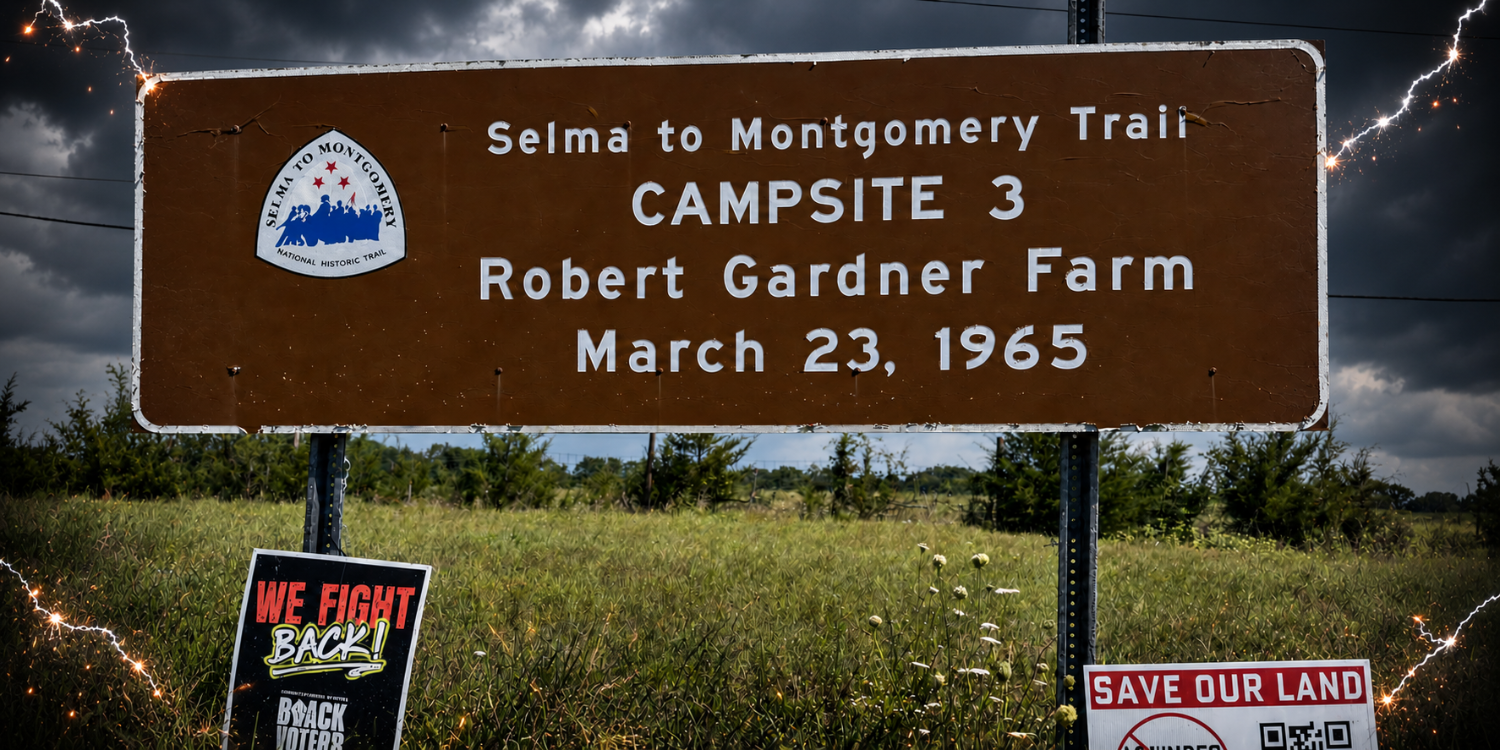
The Lowndes County Commission is close to approving a $2 billion tax incentive plan for a data center developer backed by Nvidia, the chipmaker worth more than $5 trillion, on land half a mile from a campsite where voting rights marchers slept on their way from Selma to Montgomery in 1965, according to sources with knowledge of the talks.
The march, which helped push Congress to pass the Voting Rights Act that summer, crossed Lowndes County along U.S. 80. When it began, not one Black resident of the majority-Black county was registered to vote.
The route is now a National Historic Trail.
The plan works out to more than $213,000 for every resident of Lowndes County, where 25% of the 9,359 residents live in poverty, according to the U.S. Census Bureau.
“Project Red Clay has not requested any abatements or incentives from the Lowndes County Commission,” the developer, Houston- and Seattle-based Cloverleaf Infrastructure, wrote in a May 27 update that described the project as a minimum $1.5 billion investment.
The commission has two regular meetings left before the November 3 general election.
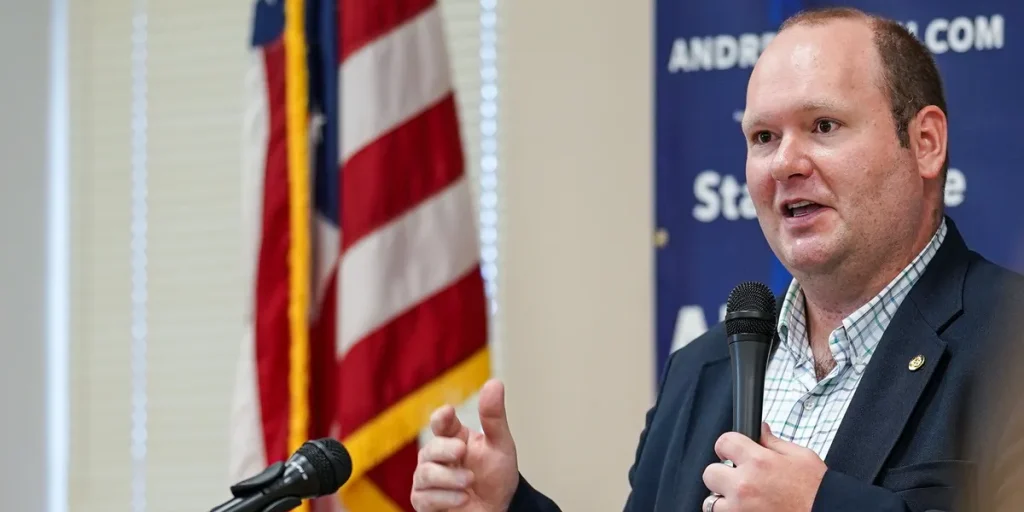
Those are the last regular meetings for Commissioner Robert Harris of District 1.
Harris lost the May 19 Democratic primary to Clifford “Cee” Jackson, and Jackson is unopposed on the November ballot. His term ends November 10.
“The county commission cannot vote to say no to them coming,” Harris told WSFA in May. “The only thing that we do have a vote on is abatements.”
A law Governor Kay Ivey signed in April cuts the standard maximum data center abatement from 30 years to 20 for deals granted on or after January 1, 2027.
At least one state lawmaker is preparing a bill that would make it illegal to build a data center near the Selma to Montgomery National Historic Trail, according to sources tracking the effort.
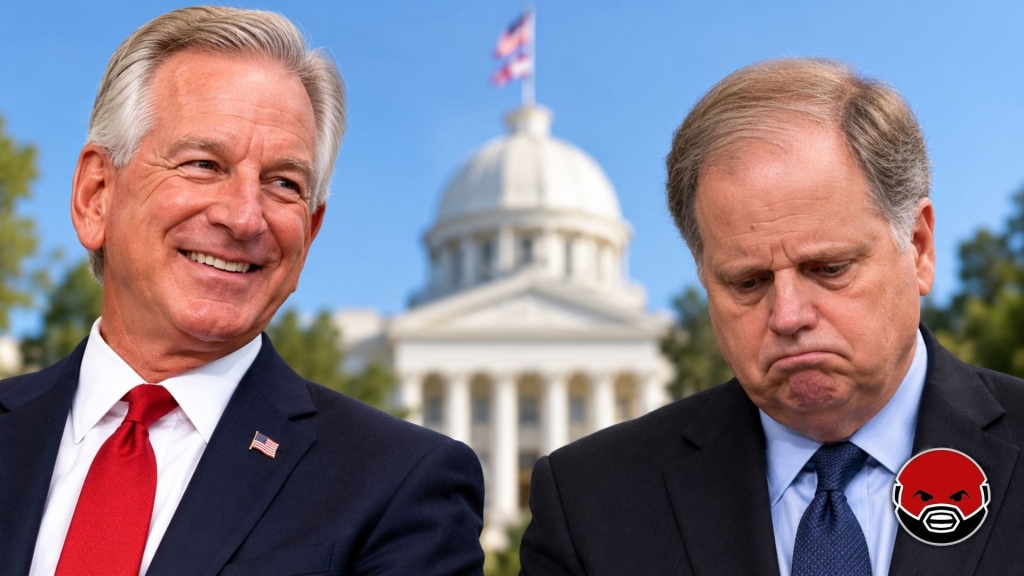
U.S. Senator Tommy Tuberville (R-Auburn), the favorite to become the next Governor of Alabama in 2027, has promised to end tax breaks for data centers and to back communities that turn the projects down.
“No more tax abatements. No more tax incentives,” Tuberville wrote recently. “If you want to come to Alabama, you pay full price.”
“If your community says no, my answer is no,” he wrote.
Lowndes County residents have said no since April.
A petition against the project passed 1,000 signatures in May. Residents filled the commission’s September meeting.
Commission Chairman Charlie King Jr. also serves as vice chairman of the Lowndes County Economic Development Commission, the group that introduced the project to commissioners.
At the commission’s May 26 meeting, King pledged to oppose any 30-year abatement for a data center.
At that meeting he voted against Commissioner Dickson Farrior’s motion to deny any abatement, The Lowndes Signal reported. Commissioners said in August that they had no information to share about the project.
Cloverleaf assembles land and power for data centers and sells the sites to the companies that run them. It has not named a buyer for the Lowndes County site, known as Project Red Clay.
Cloverleaf announced in August 21 that Nvidia had taken a minority stake in the company.
Nvidia announced in September that its board had added $150 billion to the company’s stock buyback program.
The site sits near the intersection of U.S. Highway 80 and Alabama Highway 21, about half a mile from the Robert Gardner Farm, where marchers camped on the night of March 23, 1965.
White neighbors tried to bribe the Gardner family before the marchers arrived, according to the National Park Service.
After the bribe failed, the family was threatened with violence and the farm’s phone and power lines were cut.
Dr. Charles Steele Jr., the former president of the Southern Christian Leadership Conference and a former Alabama State Senator from Tuscaloosa, wrote in July that the project should be built somewhere else in Alabama.
“If somebody proposed this a half mile from Gettysburg, there would be no debate. There would be nothing to debate,” Steele wrote. “The only reason this is a question at all is that the history belongs to us, and our history has always been priced cheap.”
“Robert Gardner was offered money to turn that march away. He said no, and it cost him,” he wrote. “Sixty-one years later somebody is standing in the same field with the same offer.”
Grayson Everett is the editor in chief of Yellowhammer News. You can follow him on X @Grayson270.