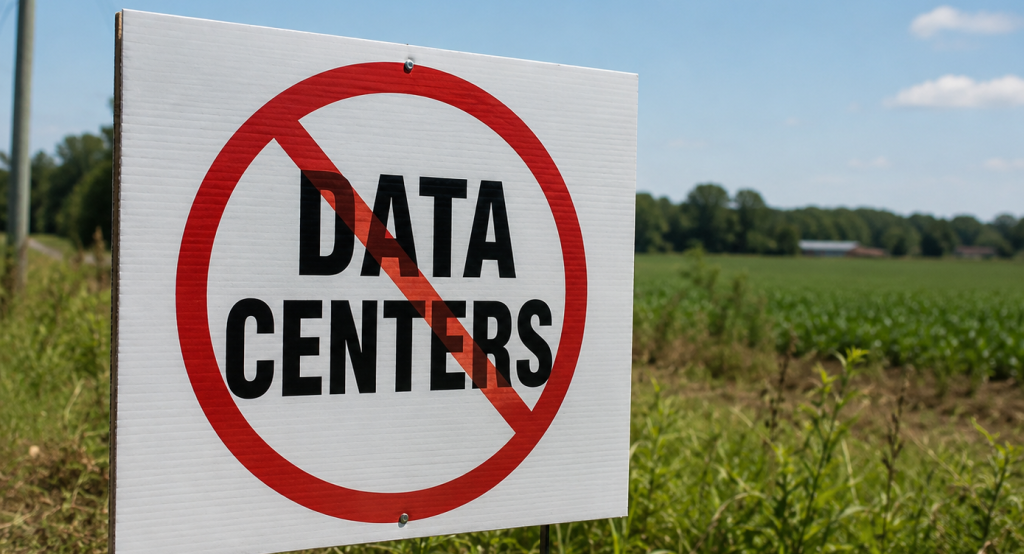
Across Alabama, residents aren’t necessarily saying “no” to data centers. They’re asking questions. How much water will they use? Will they be noisy? Where should they be built? And perhaps most importantly, how can communities welcome new investment without changing the character of the places people call home.
Those questions are driving action. The Cullman City Council voted unanimously Monday night to approve a one-year moratorium on data centers, doing so without commentary from council members — becoming the fourth known Alabama city to hit pause on new data center development, following Birmingham, Leeds and Homewood.
The pause is enforceable. The resolution states that each day a violation continues constitutes a separate offense and that violations are subject to injunctions and abatement as a public nuisance.
During the moratorium, city staff, the Planning Commission and the city attorney will review how data centers could affect infrastructure, the environment, traffic, noise, water resources and community character before reporting findings and zoning recommendations back to the council. The City Council could extend the moratorium beyond a year or end it early.
The resolution defines a data center broadly to include server farms, hyperscale facilities, colocation centers and similar large-scale operations, while carving out existing permitted facilities, routine maintenance, internal modifications and small-scale server rooms that don’t meet the full definition.
Those same conversations are now at the center of Fort Payne’s effort to write its own rules before any developer comes knocking. During its June 16 meeting, the Fort Payne City Council unanimously approved a six-month moratorium on data center development while city leaders draft zoning regulations governing where the facilities could be located and how they would operate. Fort Payne officials emphasized they have not received any inquiries about building a data center within the city — the moratorium is purely proactive.
“We’re just trying to get ahead of things before it does come up,” Zoning Administrator Nick Brown told council members.
Fort Payne’s effort comes at a different stage than Birmingham’s. Birmingham spent months crafting what city officials described as one of Alabama’s most comprehensive data center ordinances while considering a proposed hyperscale data center in the Oxmoor Valley area. The Birmingham City Council ultimately adopted a 20-point ordinance covering issues such as water use, noise mitigation, setbacks, electrical demand, landscaping and public notification after months of public meetings, revisions and debate.
Brown told council members Fort Payne’s current zoning ordinance contains no provisions specifically addressing data centers or battery energy storage systems. Without new regulations, he said, the city would have little control over where those facilities could be located.
The proposal now being developed would allow data centers primarily in the city’s M2 heavy industrial district and require conditional-use approval through the Board of Zoning Adjustment. Each proposal would also include a public hearing, giving residents an opportunity to weigh in before any decision is made.
Council members approved the six-month moratorium to give the Planning Commission time to develop recommendations before returning the ordinance to the council for consideration.
When the Planning Commission met June 23, residents, economic development officials and technical experts spent several hours discussing what those regulations should include.
Brown stressed that the city is not trying to prohibit data centers. Instead, officials want standards in place before one is ever proposed. He also said the ordinance should avoid unintentionally limiting existing manufacturers that may need digital infrastructure as they expand.
Among the provisions discussed were limiting data centers primarily to heavy industrial zoning, requiring conditional-use approval, public hearings, detailed site plans and a 1,000-foot setback from residential property lines.
Residents also suggested requiring environmental impact studies, water-use plans, electrical demand limits, noise standards, restrictions on facility size and additional protections for neighborhoods and natural resources.
Economic development officials explained that while massive hyperscale data centers require hundreds of acres and significant electrical capacity, smaller digital infrastructure facilities can support manufacturing and other industrial operations.
The proposed ordinance would also regulate battery energy storage systems. Brown told officials the city has received one inquiry about a battery energy storage project but none involving a data center.
For now, city leaders say the goal is simple: establish the rules before the first proposal arrives.
The Planning Commission is expected to continue refining the ordinance before forwarding its recommendations to the City Council for final consideration.
Sherri Blevins is a staff writer for Yellowhammer News. You may contact her at [email protected].