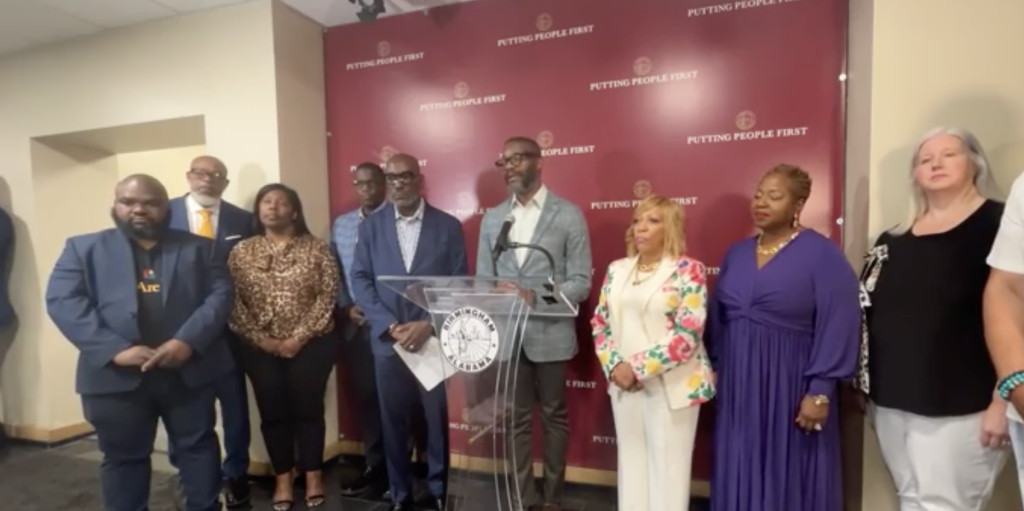
As communities across Alabama grapple with the growth of artificial intelligence infrastructure and large-scale data centers, Birmingham has approved a zoning ordinance city officials say creates some of the state’s strongest regulations for future hyperscale facilities.
The Birmingham City Council voted Tuesday to adopt the ordinance following months of study, revisions and public feedback. The measure establishes 20 requirements governing future hyperscale data center projects, including standards for setbacks, water use, electrical demand, noise mitigation and on-site power generation.
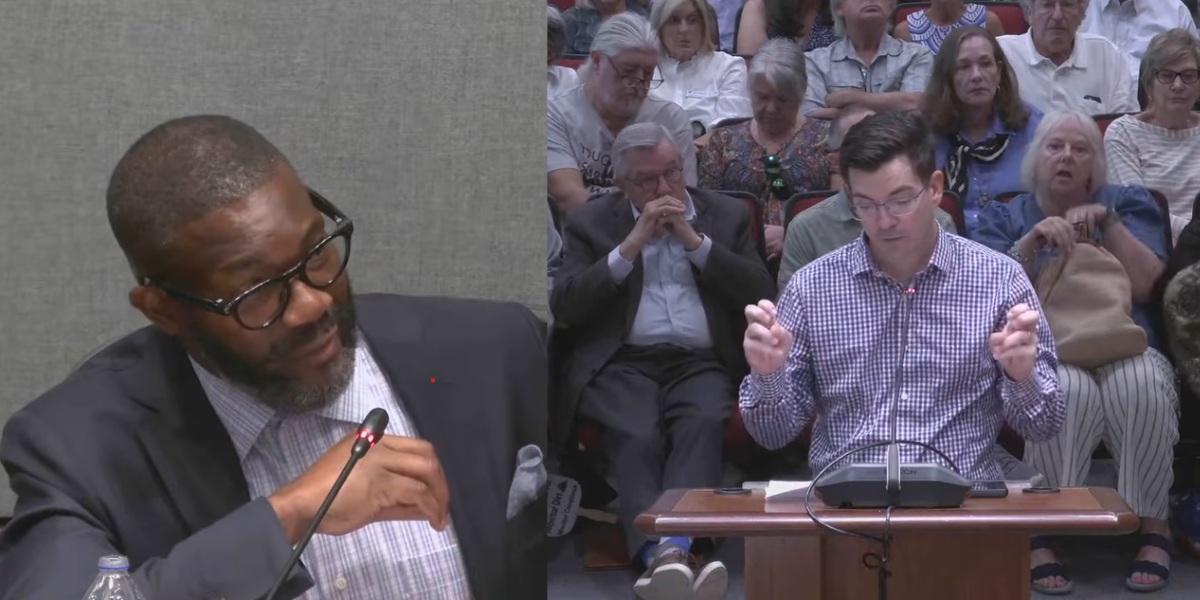
The vote came after a public hearing that drew a packed crowd to City Hall. Council chambers filled early, with additional residents watching from overflow areas as speakers continued for hours, reflecting the growing concern many residents have about how data center development could affect nearby neighborhoods.
“We believe our staff has produced one of the nation’s strongest data center ordinances,” Mayor Randall Woodfin told council members before the hearing began.
City officials said the ordinance was developed in response to the rapid growth of data centers nationwide and Birmingham’s increasing appeal to developers because of its electrical infrastructure, industrial assets and available sites.
Hunter Garrison, deputy director of the Mayor’s Office of Resilience and Sustainability, said the city sought to create protections addressing many of the concerns raised by residents.
“We cannot ban data centers. We can only put meaningful guardrails on them to protect our residents,” Garrison said.
According to city staff, the ordinance requires hyperscale data centers to meet 20 conditions before receiving permits. Among those requirements are a minimum five-acre site, a 500-foot setback from residential and urban neighborhood districts, closed-loop cooling systems designed to limit water consumption, noise studies before and after construction, and restrictions on certain forms of on-site power generation.
Officials also said future facilities would be required to provide certified-mail notification to property owners within 500 feet of proposed developments.
Throughout the hearing, however, speakers argued the ordinance still does not go far enough.
Many focused on the removal of a special-exception requirement that would have required an additional public review process for projects that comply with all ordinance requirements.
David Butler, an Oxmoor Valley resident, said residents should retain opportunities to publicly challenge future projects.
“Under this version the next hyperscaler simply files a permit. No hearing, no room like this one,” Butler said.
Others argued the ordinance’s 500-foot setback from residential areas is insufficient.
“That’s a disgrace because if you put the 500 feet, the residents and neighbors, they cross the street from it,” resident Olivia Thompson told the council.
Several speakers also urged the city to adopt specific numerical noise limits rather than requiring noise studies alone.
John Hilly, who spoke during the hearing, said residents deserve enforceable standards before construction begins.
“A noise study without a limit is simply paperwork,” Hilly said. “It tells you how loud a facility is. It does not require the facility to reduce the noise.”
Lauren Gibson urged council members to restore the special-exception process, arguing residents should maintain a formal opportunity to challenge future projects.
“The special exception process is how ordinary citizens like us get real rights,” Gibson said. “Notice that a project is coming, the right to appear, the right to present evidence and the right to question what they are told.”
City officials defended the ordinance’s approach, arguing that projects meeting all requirements should not be subject to an additional approval process that could create legal challenges.
Garrison said requiring a special exception for projects that comply with all regulations could expose the city to claims of arbitrary zoning decisions. City officials also argued that the ordinance’s requirements are designed to work together rather than independently. During the presentation, they pointed to restrictions on water use, landscaping and screening standards, electrical-demand disclosures and limits on power generation as protections intended to address a range of community concerns.
Council members also heard questions about whether approved facilities could later expand without additional oversight. City officials said any material expansion involving additional floor space, electrical demand, water use or power generation would trigger a new review to ensure the project complies with the ordinance.
The lengthy hearing showed just how divided residents and city officials remain over the future of data center development in Birmingham. Supporters said the ordinance puts rules in place before additional projects arrive, while critics argued residents should have a greater voice in future approval decisions.
After hours of discussion, the council ultimately approved the ordinance, with 6 yes votes and 3 no votes, setting new standards for future hyperscale data center development in Birmingham.
Sherri Blevins is a staff writer for Yellowhammer News. You may contact her at [email protected].