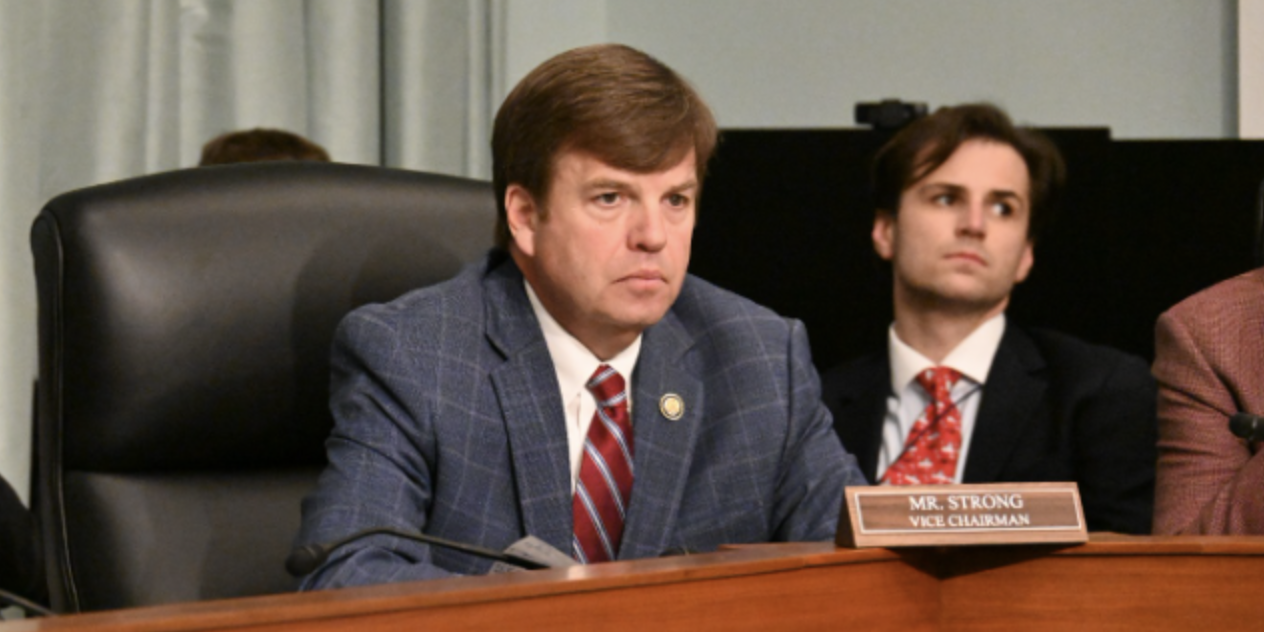
U.S. Rep. Dale Strong used a congressional hearing this week to spotlight Alabama’s role in America’s space program while pressing NASA leaders on plans for future lunar missions and long-term deep space exploration.
Strong (R-Huntsville), who serves as vice chair of the House Appropriations Subcommittee on Commerce, Justice, and Science, participated in a hearing examining NASA’s Fiscal Year 2027 budget request.
The hearing featured testimony from NASA Administrator Jared Isaacman and focused on the agency’s Artemis program, future Moon missions and maintaining U.S. leadership in space exploration.
During the hearing, Strong emphasized the importance of Huntsville’s Marshall Space Flight Center and the workforce supporting NASA programs across North Alabama.
“Just 17 days ago, the world watched as four astronauts returned to Earth, completing the first crewed deep-space mission in more than 50 years,” Strong said. “Every American should be proud of this incredible accomplishment.”
Strong said North Alabama has played a central role in the nation’s space efforts since the earliest lunar missions. He highlighted the work performed at Marshall Space Flight Center and the region’s engineers, contractors and small businesses that support NASA’s mission.
“The road to the Golden Age of Space Exploration runs through the Rocket City,” Strong said. “Since the first lunar mission, North Alabama has played a starring role in powering our nation’s space program.”
NASA’s Artemis program is designed to return astronauts to the Moon and establish a long-term lunar presence. NASA officials say the initiative will also help prepare for future missions to Mars.
Strong questioned Isaacman about maintaining investment in NASA’s Space Launch System rocket and Orion spacecraft. He argued the systems remain essential because they are already certified for human spaceflight and capable of supporting deep-space missions.
NASA’s Space Launch System, managed in part through work at Marshall Space Flight Center, serves as the backbone of the Artemis missions. The Orion spacecraft, built for long term crew travel, is designed to carry astronauts beyond low Earth orbit.
Isaacman acknowledged Huntsville’s influence on his own connection to space exploration, referencing his childhood visit to the U.S. Space & Rocket Center.
“I have an incredible appreciation for the work done at Marshall Space Flight Center,” Isaacman said.
Strong also advocated for continued investment in advanced propulsion technology, including Nuclear Thermal Propulsion, which NASA has studied for decades as a possible faster method for deep-space travel.
The hearing comes as NASA continues planning for future Artemis missions and weighs how budget priorities will shape the agency’s long-term exploration goals.
Courtesy of 256 Today.