Leeds is set to become the next Alabama community to land a major workforce housing development through an initiative championed by Gov. Kay Ivey, legislative leaders of both parties and the state’s largest business organization.
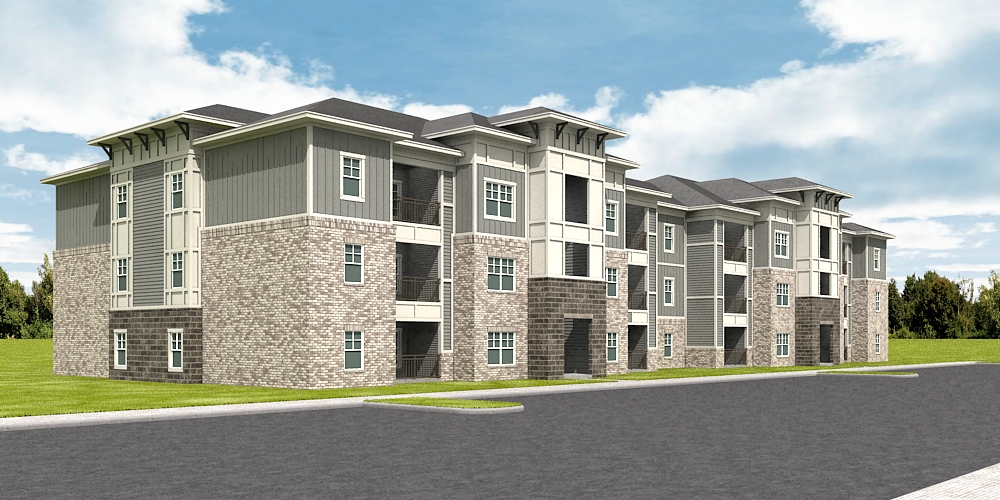
The Hall Group announced plans for The Grove at Leeds, a $47 million apartment community with 144 units, including 84 two-bedroom and 60 three-bedroom apartments, featuring high-end finishes and family-oriented amenities.
It is the third location in a series of statewide developments, following groundbreakings in Athens in February and in Foley in May.
The Grove developments are privately owned, privately financed and privately built. They are not public housing, and no state agency will own, operate or manage the properties.
The projects are supported through a state tax credit designed to make construction financially viable in high-cost, high-demand markets. Developers can claim the credit only after a project is completed, placed in service and leased.
The credit was created by the Working for Alabama package, the six-bill legislative slate Ivey signed into law in May 2024.
State leaders framed the package as an effort to remove barriers to workforce growth while strengthening Alabama’s ability to compete for new jobs and investment.
“Our state leaders over the past few years have taken up several ambitious challenges to address Alabama’s top areas of need,” Ivey said at the signing ceremony. “From broadband to infrastructure to The Game Plan we passed last year and now, Working for Alabama, we have come together to put Alabama first and have paved the way for a stronger economy and a better quality of life for all Alabamians.”
House Speaker Nathaniel Ledbetter said at the time that housing was among the clearest obstacles lawmakers identified.
“The House Labor Shortage Study Group identified the lack of affordable childcare and housing as two of the most prevalent barriers keeping Alabamians sidelined from the workforce,” Ledbetter said. “I have no doubt that our action on these two issues, as well as the other key areas of this package, will help Alabama families and our economy thrive like never before.”
The Business Council of Alabama was a leading supporter of the package and stood with Ivey at the bill signing. BCA President and CEO Helena Duncan said the effort reflected a coordinated push by the state’s business community.
“In order to attract and grow 21st century jobs, Alabama must have a 21st century approach to economic and workforce development,” Duncan said. “Working for Alabama was the result of a team effort that included Gov. Kay Ivey, Lt. Gov. Will Ainsworth, legislative leadership, and our committed corporate partners.”
Industrial recruiters have identified a shortage of quality workforce housing as one of the top obstacles to bringing new jobs and talent to Alabama, according to a legislative summary of the program.
Positioned along the growing I-20 corridor east of Birmingham, Leeds sits in the kind of employment hotspot the program was designed to target.
Secretary of Workforce Greg Reed, who was Senate President Pro Tem when the package passed, has tied the developments directly to the state’s industrial recruiting.
“With that growth comes a greater need to support our workforce, not only through job training and education, but by ensuring workers and their families have access to quality housing close to where they work,” Reed said at the Foley groundbreaking in May. “The Working for Alabama tax credits are proving that smart policy can attract private investment to meet that need.”
Hall Group President Gary Hall has credited state leadership at previous groundbreakings.
“Governor Ivey, Secretary Reed, Senator Elliott, and his colleagues have incentivized the private sector to address economic hotspots around the state,” Hall said in Foley. “Our state leaders are recruiting industry, and we want to help by investing in local economies around the state and providing great housing options for workers and their families.”
The first two Grove projects demonstrate the significant economic impact developers expect in Leeds.
The Athens development is expected to generate more than $17 million in economic impact, while the Foley development is projected to generate nearly $26 million.
Developers expect The Grove at Leeds to deliver a comparable impact as it moves forward.
Statewide, an economic impact study cited by legislators projects the program will create more than 3,100 jobs and generate $1.1 billion in economic activity. For every $1 in state credits, the study estimates the program will leverage $7.30 in economic activity and $3 in combined federal credits and private investment. Twenty-nine other states, including Georgia, South Carolina and Texas, operate similar programs.
A groundbreaking date for The Grove at Leeds has not been announced.