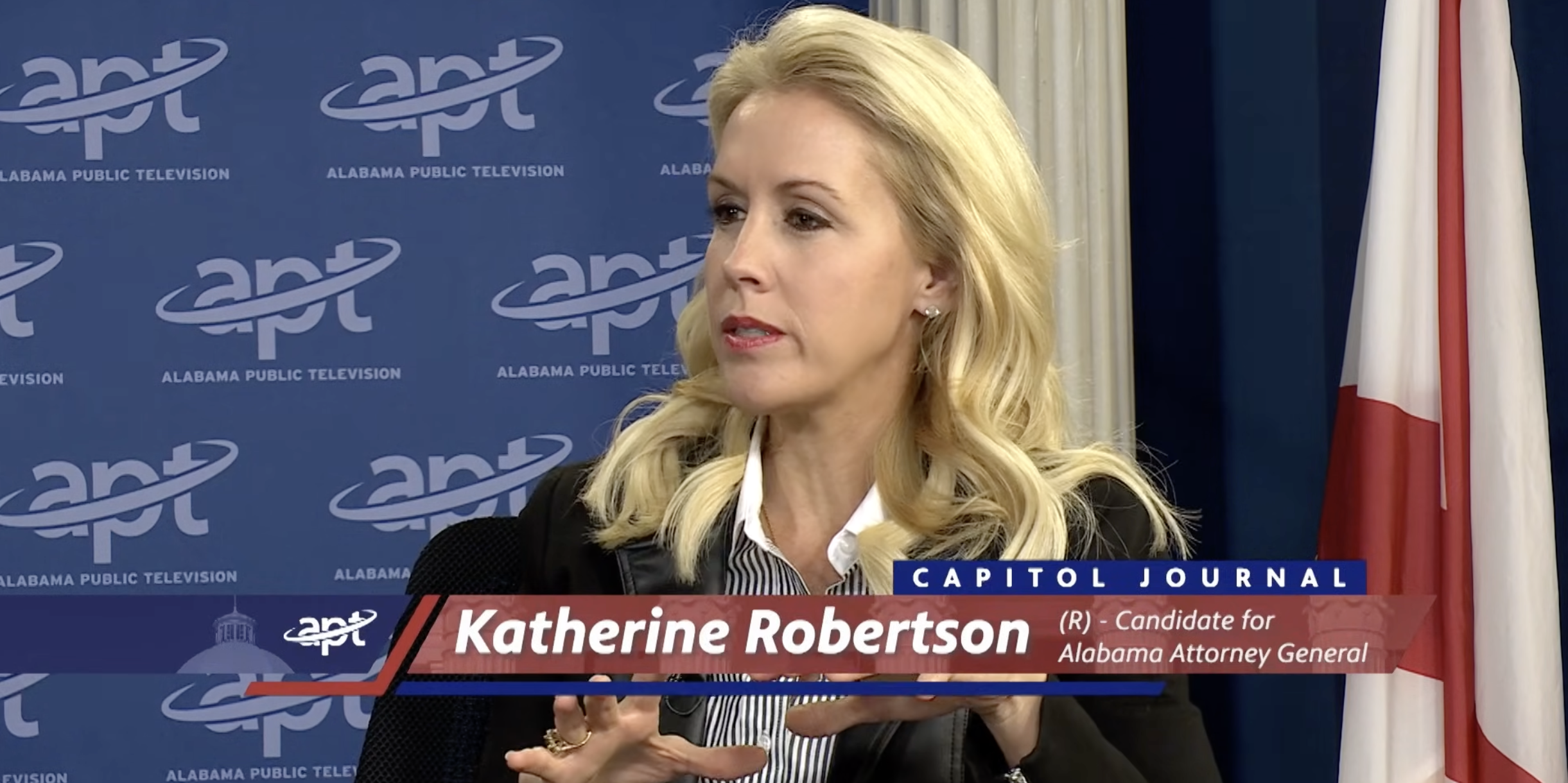
Katherine Robertson, the Republican nominee for Alabama Attorney General, said the Flock camera debate will be part of her legislative agenda when lawmakers convene next year – and she doesn’t care if she takes a political hit for it.
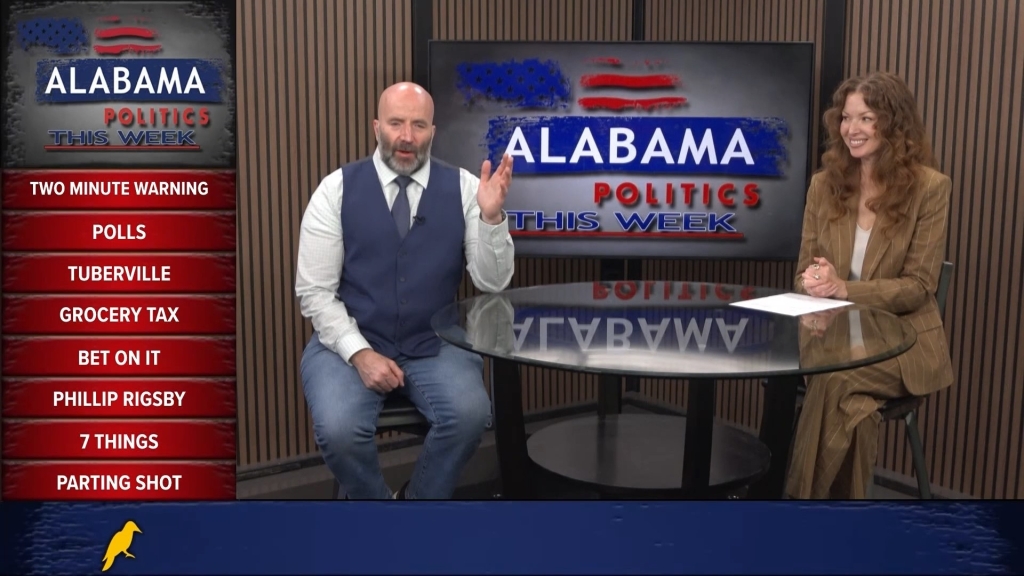
Robertson, chief counsel to Attorney General Steve Marshall for the last 10 years, made the remarks Friday in an interview with Todd Stacy on Alabama Public Television’s Capitol Journal.
“We’re going to probably be very engaged on the Flock camera debate, probably to my political detriment,” Robertson said. “But I think that a big conversation needs to be had about the pros and cons to make sure that we are protecting privacy while also giving law enforcement an important tool. I really want Alabama to lead the nation in that conversation.”
Flock, automated license plate readers used by law enforcement, have become one of the most contentious issues in the state this year.
The Alabama Policy Institute puts the count at close to 2,800 cameras operating in Alabama.
State Sen. Arthur Orr (R-Decatur) has said he will file legislation in 2027 setting warrant requirements and data retention limits, and Florida Governor Ron DeSantis banned the cameras from state highways in September.
Robertson said the problem is that no uniform rules govern how Alabama agencies use the technology.
“I think the goal would be to have some safeguards written into law so that every Alabamian understands, you know, when a police department in Huntsville is using it, or a police department in the Wiregrass is using these cameras, that everybody’s got the same set of rules,” she said. “And right now, there’s not really one set of rules.”
RELATED: Law enforcement says Flock cameras remain vital public safety tool despite isolated incidents
She said the privacy concerns are legitimate and compared the debate to the search-and-seizure cases that regularly reach the nation’s highest court.
“I think that people are right to have policy concerns, but at the same time, we’ve always worked through the balance of privacy versus law enforcement,” Robertson said. “The United States Supreme Court hears cases on search and seizure all the time. This is a similar debate. We’ve always been able to get to the right place as a country, and I think we will here too.”
Robertson said she is prepared to referee the fight between police and privacy advocates herself.
“I think our law enforcement here are just as sensitive to privacy issues as they would be anywhere,” she said. “They hear the concerns of their citizenry, and so I think there needs to be somebody kind of mediating this conversation, and I’m willing to step up and do it.”
Roberson is the far-and-beyond frontrunner to become Alabama’s next Attorney General, but on November 3, she faces Democrat Jeff McLaughlin in the general election.
Grayson Everett is the editor in chief of Yellowhammer News. You can follow him on X @Grayson270.