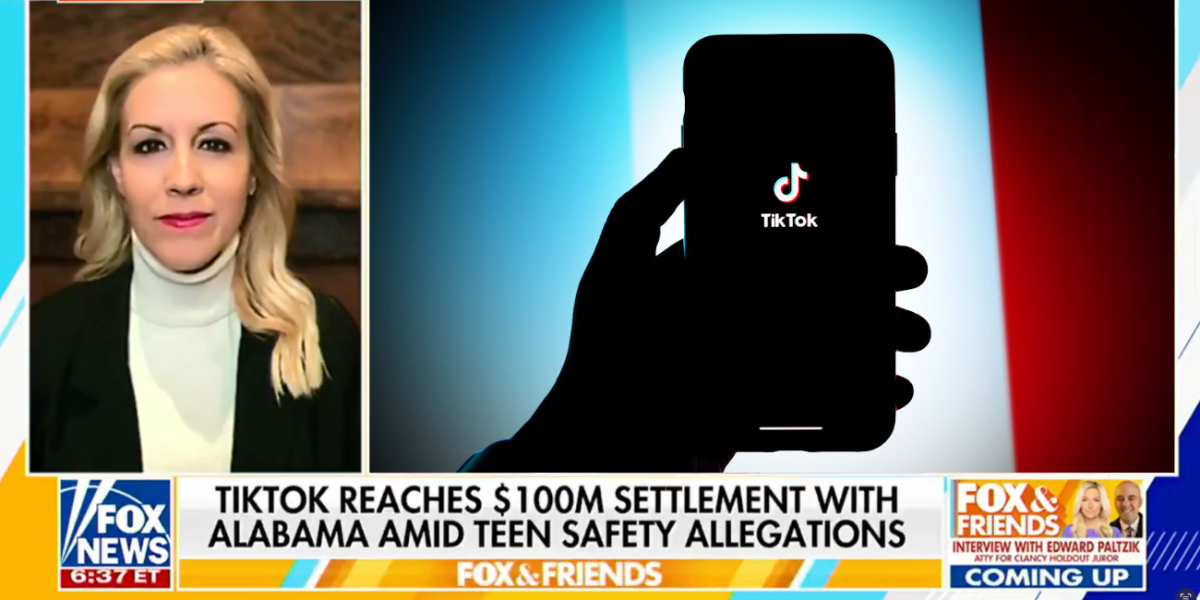
Katherine Robertson says Alabama families should see “pretty immediate change” from the state’s TikTok settlement, which requires new restrictions aimed at protecting children and teenagers using the platform.
Robertson, chief counsel to Attorney General Steve Marshall and the Republican nominee for attorney general, discussed the settlement Monday during an appearance on Fox News.
Alabama reached the agreement with TikTok on Friday, avoiding a trial that was scheduled to begin this week. The settlement requires the company to pay the state at least $100 million and implement a series of new protections for younger users.
“We’ve said for a long time in our office that our kids are up against so much, and we want to fight the war on childhood,” Robertson said.
She said the Attorney General’s Office pursued TikTok over allegations that the company assured parents its platform was safe for children even though its age restrictions and other safeguards were ineffective.
“There is no doubt that social media has impacted youth in a negative way,” Robertson said. “TikTok, in particular, seems particularly addictive, but also the kind of content that they were driving to teenagers and even younger kids is really astounding.”
Robertson pointed to content involving suicide, eating disorders, drugs and pornography as examples of material the office said children could encounter on the platform.
Under the settlement, younger TikTok users in Alabama will face a two-hour daily limit, interruptions after extended periods of continuous use, overnight restrictions, stronger age verification and limits on interactions between adults and teen accounts.
TikTok will also disable personalized recommendations by default for teen users and prohibit cosmetic filters for teenagers.
Robertson said those changes are intended to address both the addictive nature of the platform and its effects on children during school and overnight.
“One thing that was really impacting teens that we saw is disruption during school and then also just a lack of sleep, just staying up, scrolling and being fed out of the algorithm over and over again,” she said.
“These are really restrictive policies. There’s a reason TikTok didn’t want to agree to them on their own. It took a lawsuit to do that, and we think you’re going to see pretty immediate change, at least in Alabama.”
Robertson also highlighted the restrictions on cosmetic filters.
“We have 13- and 14-year-old girls that are feeling pressured to look like that in real life because of the filters they’ve had access to,” she said.
The TikTok agreement follows settlements reached by Marshall’s office with Meta and Roblox over separate allegations involving the safety of younger users.
Robertson said the new legal protections still do not replace parental decisions about children’s social media use.
“These cases are great. These changes are significant, but if you can keep your kids off this stuff, that’s really the way to go,” Robertson said. “We’re doing everything we can on our end.”
Sawyer Knowles is a state and political reporter for Yellowhammer News. You may contact him at [email protected].