Golf in Alabama has grown from modest beginnings on scraped-out sand greens to a statewide network of championship courses that attracts players from around the world. Along the way, the game has reflected the state’s changing cities, its sporting traditions, its ambitions for economic development, and its struggles over who gets to participate.
The story stretches from early private clubs in Birmingham and Mobile to the public courses of the Robert Trent Jones Golf Trail. It includes celebrated champions, landmark tournaments, and difficult moments that forced the sport to confront the barriers built into its institutions.
A meadow, a club, and an early golf course
At the turn of the 20th century, golf was still a relatively new pastime in Alabama. In Birmingham, the Country Club of Birmingham, founded in 1898, became an early home for the sport. Initially a gathering place for the city’s elite, the club reflected the recreational culture of the era.
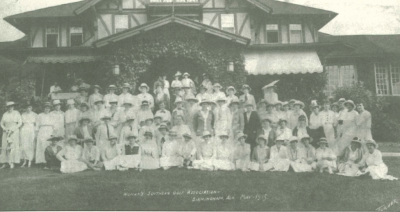
In 1899, member Robert Henry Baugh transformed a nearby meadow into a rudimentary golf course. Players encountered natural ground, nine scraped-out sand greens, and tin cans serving as cups rather than manicured fairways and putting surfaces.
As interest in the game grew, the club relocated to the Lakeview area in the early 1900s; the club itself cites 1904. In 1926, it moved to farmland in Shades Valley, where golf architect Donald Ross designed two 18-hole courses that established the foundation of the club’s present-day layout. The West Course was later reworked by Robert Trent Jones and Pete Dye.
The club’s history reflects golf’s early development in Alabama, where private social clubs helped establish the sport before it reached a wider audience.
Mobile developed its own golf tradition during the same period. The Country Club of Mobile was organized in 1897 and formally incorporated on March 1, 1899. After initially meeting and playing along the old Bay Shell Road, the club moved to its present location in late 1914. Its 18-hole course was designed by Donald Ross, though sources differ on whether his work dates to 1918 or 1928.
By the early 20th century, private clubs in Birmingham and Mobile had laid important groundwork for golf in Alabama, establishing traditions that would influence the game for generations.
Clubs and courses across the state
As the sport gained popularity, clubs and courses began appearing in communities across the state. Birmingham’s Highland Park Golf Course traces its origins to the Country Club of Birmingham’s Lakeview course, dating to about 1903. When the club moved to Shades Valley, the course passed to the city and opened to the public in 1927, expanding access to the game beyond private club membership.
The Alabama Golf Association, founded in 1915, helped formalize the state’s competitive golf culture. Tournaments and club championships gave amateur players opportunities to compete, while the arrival of nationally recognized golfers brought greater attention to Alabama’s courses.
Selma Country Club also took shape in this era, part of a broader wave of course development that carried golf beyond the state’s largest metropolitan areas. Sources give its opening date variously as 1903, 1923, or 1924.
The growth of the game, however, did not mean that its opportunities were equally available. Private clubs often restricted membership along racial and economic lines, while Black golfers faced discriminatory policies and unequal access to facilities. Public courses and community-based golf programs would become important in expanding participation, but the barriers were significant and persisted well into the modern era.
Champions and characters
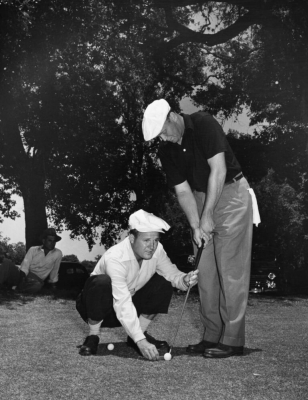
Alabama’s golf history is defined not only by its courses but also by the people who played them.
One of the state’s most remarkable figures was Charley Boswell, a Birmingham native and World War II veteran who lost his sight during military service. Before the war, Boswell had been a talented athlete, playing football at the University of Alabama and professional baseball in the minor leagues. After returning home blind, he eventually took up golf and became one of the sport’s most accomplished blind competitors.
Boswell won 16 national blind-golf championships and 11 international titles, earning recognition for his skill and determination. In the mid-1950s, Highland Park Golf Course was named in his honor. His legacy remains a distinctive part of Birmingham’s golfing story and a reminder that the game’s history includes athletes who challenged assumptions about ability and access.
Alabama has also hosted major competitions and welcomed some of golf’s most recognizable names. Shoal Creek hosted two PGA Championships and a U.S. Amateur, and the Country Club of Birmingham served as the companion course for the 1986 U.S. Amateur and later hosted the 2013 U.S. Mid-Amateur. These events helped connect local golf traditions to the national game.
Shoal Creek and a turning point for golf
One of the most consequential chapters in Alabama golf history unfolded at Shoal Creek, a private club near Birmingham founded in 1977 and designed by Jack Nicklaus. The course quickly drew national attention, hosting the 1984 PGA Championship and the 1986 U.S. Amateur before being selected for the 1990 PGA Championship.
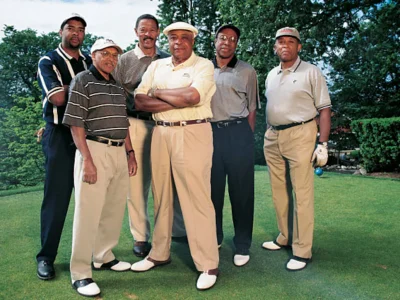
But in the months before the 1990 tournament, Shoal Creek became the focus of a national controversy over racial exclusion. The club had barred Black people from membership, and founder Hall Thompson’s public comments defending the club’s right to choose its members intensified criticism. Civil rights groups threatened protests, and corporate sponsors began withdrawing advertising from the championship broadcast.
The dispute placed the PGA of America under pressure to reconsider holding its championship at a segregated club. In a compromise intended to defuse the conflict before the tournament, Birmingham Mayor Richard Arrington and club and PGA officials negotiated an arrangement under which Thompson stepped down as board chairman and Shoal Creek extended honorary membership to Louis J. Willie, a Black Birmingham insurance executive.
That honorary membership was a significant moment, but it did not immediately resolve the broader issue of exclusion. Willie was not a dues-paying member, and Shoal Creek did not admit its first Black full-equity member, advertising executive Ron Edwards, until 1996.
The controversy had consequences beyond the club itself. The PGA of America, PGA Tour, USGA, and other golf organizations moved toward policies requiring host clubs to demonstrate nondiscriminatory membership practices, and Augusta National invited its first Black member the same year. The episode exposed the gap between golf’s public image as a game of sportsmanship and the exclusionary policies that continued to shape access to some of its most prestigious venues.
Shoal Creek remains an important part of Alabama golf history not simply because it hosted major tournaments, but because the events surrounding the 1990 PGA Championship forced the sport to confront the relationship between private-club traditions, civil rights, and the public responsibilities of major sporting events.
The Robert Trent Jones Golf Trail
A different chapter in Alabama’s golf story began in the late 1980s, when David G. Bronner, chief executive of the Retirement Systems of Alabama, envisioned a network of public golf courses that could attract visitors, encourage tourism, and support economic development across the state.
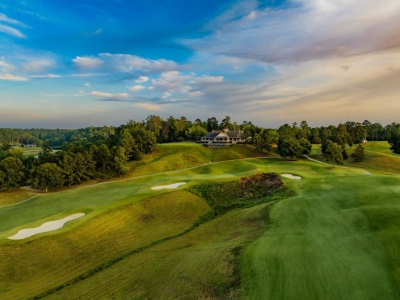
The project brought together Bronner’s vision and the work of legendary golf-course architect Robert Trent Jones Sr. Rather than concentrating investment in a single destination, the plan called for a series of courses stretching from north Alabama to the Gulf Coast, giving golfers a reason to travel through the state and experience different landscapes along the way.
The Trail opened in 1992 with four sites: Grand National in Opelika, Hampton Cove in Huntsville, Magnolia Grove in Mobile, and Oxmoor Valley in Birmingham. Three more complexes followed in 1993, expanding the network into other parts of the state.
The project continued to grow. Today, the Trail encompasses 11 locations, 26 courses, and 468 holes, offering a range of playing experiences for golfers of different skill levels. Its public-access model helped distinguish it from the state’s older private clubs and made championship-style golf available to a broader audience.
The Trail was also conceived as an economic development strategy. By creating destinations across Alabama, its developers sought to encourage golf tourism and draw visitors to communities that might otherwise have received less attention from travelers. The associated development around Trail properties has included hotels, restaurants, residential communities, and other businesses.
The Trail’s importance to Alabama extends beyond the courses themselves. It helped position the state as a golf destination, connecting communities across a wide geographic area and creating a recognizable identity for Alabama golf among travelers and players.
Still teeing it up
Golf in Alabama has never been only a story about courses. It is also a story about the communities that built them, the athletes who made their mark on the game, and the institutions that have shaped who gets to play.
The state’s earliest courses grew out of private clubs and modest sand greens. Over time, the game expanded into municipal facilities, competitive associations, and a statewide network of public courses. Its history includes celebrated achievements and uncomfortable reckonings, from Charley Boswell’s extraordinary career to the racial-exclusion controversy at Shoal Creek.
Today, Alabama’s golf landscape brings together historic clubs, public courses, championship venues, and the far-reaching Robert Trent Jones Golf Trail. Together, they tell a story of a sport that has changed alongside the state itself—and continues to evolve.
Courtesy of SoulGrown Alabama