For those who have spent years around the game of golf, it is easy to understand that developing the next generation of players requires more than just a golf course. It takes access to quality practice facilities, proper instruction, opportunities to compete and, most importantly, an environment where people can develop a lasting relationship with the game.
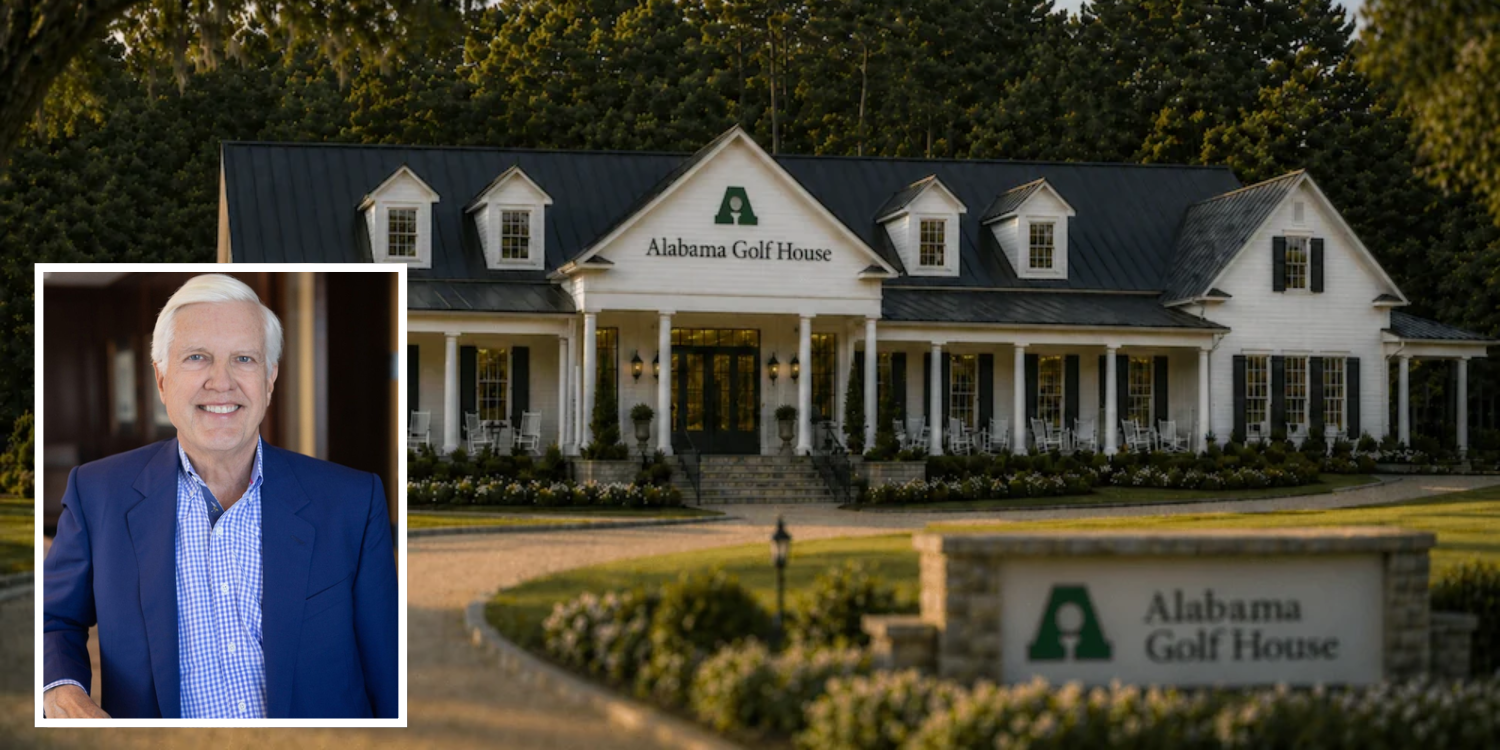
That is what makes the vision behind the new Alabama Golf House in Irondale so exciting.
In a recent conversation with Jim Gorrie, one of the driving forces behind the project, it became clear that the ambition stretches far beyond building another golf facility. The goal is to bring together the many different parts of Alabama’s golf community under one roof, while creating opportunities for players of all ages and abilities.
“Alabama golf in Alabama has never had a home until now,” Gorrie told Yellowhammer News.
A statement that captures the purpose of the project. From junior golf and collegiate programs to professional instruction, turf education and the recognition of Alabama’s golfing history, the Golf House is being designed to serve as a central hub for the state’s golf community.
Growing the game through public golf
The idea for the project began approximately five or six years ago, when Eric Eshleman, recently named Vice President of the PGA of America and longtime Director of Golf at the Country Club of Birmingham, and Grantland Rice, then head of the Alabama Golf Association, began exploring ways to improve access to the game.
Gorrie explained that the closure of private and public clubs, along with several driving ranges, created a need for the golf community to come together and develop a shared facility.
RELATED: New $30 million Golf House Alabama aims to become statewide home for golf
After exploring several potential locations, the group settled on an approximately 80-acre property adjacent to Whispering Pines Country Club.
“The one that we landed on last year just looked like it checked all the boxes,” Gorrie said.
At the center of the development will be a driving range that stretches more than 400 yards, with approximately 30 to 40 hitting bays. Half of those bays are planned to be covered and equipped with TrackMan technology.
Importantly, the facility will not operate exclusively as a private or membership-based club.
The western side of the range will be completely open to the public, with the intention of making the game as accessible and affordable as possible.
Gorrie said the organization may eventually explore options for regular visitors, although a formal pricing structure has not yet been established. The TrackMan technology will give players access to detailed information about their ball flight and performance, while the facility’s additional practice areas will provide opportunities to develop other parts of the game. Now people from the public will have access to a technology that is used by some of the best professionals in the world.
“It’ll all be done in a way to hopefully make it as affordable as it can and as accessible as we can make it for everybody,” Gorrie said. “That’s the hope and that’s the goal.”
For someone who has competed professionally, access to a facility like this is particularly meaningful. Golf development is not simply about having somewhere to hit balls. It is about having the opportunity to work on different areas of your game, understand your performance and develop through consistent practice with quality information.
A par-3 course designed to bring more people into the game
One of the features I was particularly interested in discussing with Gorrie was the planned par-3 course.
Having traveled and competed in tournaments around the world and having the privilege to visit some of the most prestigious facilities , I believe shorter-format golf facilities under flood lights can play a tremendous role in introducing people to the game.
Gorrie agreed.
“It’s certainly the best way to start sticking your toe in other than just hitting balls on a range,” he said.
The proposed course is expected to feature nine or 10 holes, ranging from approximately 75 to 150 yards. Unlike some of the shorter par-3 concepts around the country, Gorrie explained that the intention is to incorporate more shot-making opportunities into the design.
“It’ll be a little bit larger than some of the ones that we’ve visited, like the Cradle or like the Patch or the Hay at Pebble Beach,” Gorrie said. “We’ve looked at all of those, and we hope to have a little bit more shot making involved in the holes that we’ll try to create.”
He described the location as particularly impressive, with the course sitting in a valley surrounded by large rock formations.
“I think it’s going to be great, and it will be a public facility, so anybody will be able to come out there and just be around golfers and see and play golf and just hopefully inspire others to join,” Gorrie said.
The course will be open to the public, providing an opportunity for beginners, juniors and experienced golfers to enjoy the game without committing to a traditional 18-hole round. This is one of the best ways to develop your game. The driving range allows you to work on technique in your swing, flighting your ball different ways as well as work on a good solid pre-shot routine. Once you feel comfortable with what you have been working on, what better way is there than walking over to the par-three course to put your prep to play and experience the game itself. Not to mention the social environment it creates that you can share with family and friends.
A new opportunity for Birmingham’s collegiate golfers
Another important part of the development will be the support it provides to Birmingham’s collegiate golf programs.
“UAB, Miles and Samford will all have a house where they will be able to do things they’ve never been able to do before with their programs and teams,” Gorrie said. Each team will have a dedicated space on the eastern side of the facility, allowing their teams to benefit from practice opportunities that will allow them to work on the finer details in their game.
The facility will also accommodate programs such as PGA HOPE (Helping Our Patriots Everywhere) , veterans’ initiatives, adaptive golf, First Tee and Youth on Course programs.
Gorrie emphasized that the intention of the Golf House is to make these opportunities available to as many people as possible, rather than limiting the facility to competitive golfers.
“We absolutely want to provide as much free or reduced cost training as we can for anybody and meet them where they are,” Gorrie said.
He also hopes the local college players who benefit from the development will eventually give back through instruction, junior programs and community involvement.
That is an exciting prospect for the future of golf in Alabama. As a professional golfer, I understand how important it is to have people willing to share their knowledge and experiences with younger players. Many golfers who eventually reach the professional level have benefited from access to public facilities, mentors and individuals who were willing to help them along the way.
Gorrie said golf professionals across the state have offered to volunteer, and they are not the only ones.
“There’s a lot of people that as they approach or enter retirement, they still want to stay around the game and they’re not necessarily doing it for a living,” he said.
Gorrie recognizes that connection, pointing to the number of professional golfers who have developed through public golf.
“We are coming across a lot of people who have made it all the way to the tour through public golf, and we have to do our part to make it accessible,” Gorrie said.
Developing careers beyond the golf course
While the practice facilities will likely attract much of the attention, one of the most interesting aspects of the project is the planned Agronomy Center.
The organization is in final negotiations with Auburn University to host a one-year Greenskeeper Apprenticeship Program, known as the GAP Program, developed nationally by the United States Golf Association.
The proposed program would provide students with practical education and training in golf course maintenance and turf management.
Gorrie explained that there is “endless demand” for qualified employees at golf facilities throughout Alabama. The hope is that graduates of the program could move directly into employment, while also having the opportunity to possibly continue their education through Auburn’s four-year turfgrass program.
“Almost everybody that would go through that would immediately be employed at all the many facilities around the state that need people,” Gorrie said. “The turf school at Auburn is obviously well known, and it would be a neat access point for people that might want a career based on that.”
Research could follow the training program to Birmingham. “It’s not formal yet,” Gorrie said, but “we hope to see some of the research efforts that Auburn has in golf turf possibly being explored in Birmingham as well.”
For a state with such a strong golfing presence, developing the people responsible for maintaining and managing its courses is an important investment in the industry’s future.
Alabama’s golfing history
The project will also establish Alabama’s first Golf Hall of Fame, something Gorrie believes is long overdue.
“There’s only three or four states in the country that don’t have a golf Hall of Fame,” Gorrie said. “There are so many wonderful people throughout our game that have not been appropriately recognized over the years, and we’re going to correct that, and we’re going to have a lot of fun with it.”
The Hall of Fame will initially recognize golfers who have already been honored through the Alabama Sports Hall of Fame, with the intention of celebrating the many individuals who have contributed to the state’s golfing history.
Alongside the Hall of Fame, the organization is developing a volunteer group known as the Yellowhammers, named after Alabama’s state bird.
The group is expected to consist of approximately 50 to 100 younger volunteers, who will assist with fundraising for the Alabama Golf Foundation, events and hosting the Hall of Fame celebrations. This is a great way for the people who share a love for the game to get involved in this great project.
“They’ll be out there in their outfit and doing the things that are done in other states, like the Thunderbirds in Phoenix or the Salesmanship Club in Dallas,” Gorrie said.
Gorrie explained that the idea is to create a group of people who may not necessarily be in a position to make major financial contributions but still want to play an active role in supporting the future of golf in Alabama.
The next generation is at the center of the vision.
Perhaps the most important part of the entire project is its emphasis on junior golf.
Gorrie believes that developing young players should be one of the central priorities of the Golf House. Existing programs such as First Tee, Youth on Course and PGA junior initiatives will have opportunities to benefit from the facility.
“I don’t think there will be a bigger focus than the juniors because that’s where it’s all going to start,” Gorrie said.
However, his long-term vision goes even further.
The organization is exploring a dream vision on the possibility of acquiring additional adjacent land through fundraising, to develop a future short course or potentially a nine- or 18-hole facility that could be managed and operated by juniors themselves.
Gorrie described the idea as a long-term ambition, but one that could give young golfers a greater sense of responsibility and ownership.
“I know there’s some clubs like Old Barnwell where the only way an older person can play that course is to play with a kid,” Gorrie said. “How much fun would that be for them to learn the responsibility?”
He also referenced the Tiger Woods Learning Labs as an inspiration for potential future educational programs, which would use golf as a platform to teach young people important life skills and STEM-related subjects. The TGR learning labs provide opportunities to discover careers in golf course architecture, turfgrass management, sport marketing, professional golf operations and golf course construction. What an amazing thought to have something like this based in the city of Irondale.
It is an approach that recognizes golf as more than a competitive sport. The game teaches responsibility, discipline, etiquette and respect, qualities that can benefit young people well beyond the golf course.
Gorrie said the state’s junior talent has outrun its facilities.
“We have a tremendous amount of talent, and we could hold our own against any other state with the talent level that are being produced in Alabama with questionable facilities or not the depth of facilities that you see at other places,” he said. “So this will really help us be able to cultivate even more juniors to come through.”
A statewide home for Alabama golf
When asked what excites him most about the project, Gorrie returned to one central theme: bringing Alabama’s golf community together.
His hope is that the facility will become a statewide initiative rather than something that serves only the Birmingham metropolitan area.
“Our hope is that this will be broader than just the Birmingham metro area, that this will truly be statewide,” Gorrie said.
With golf associations, educational programs, competitive opportunities and the Hall of Fame all coming together, the goal is to create a place where people from across Alabama can connect and celebrate the game.
For those of us who have dedicated much of our lives to golf, seeing that kind of investment in the future of the sport is encouraging.
Alabama already has a strong golfing tradition and continues to produce talented players. The opportunity now is to build the infrastructure that allows even more young golfers to develop, more people to access the game and more individuals to find a career within the industry.
As Gorrie put it, the project is about bringing together the many different parts of Alabama’s golf community under one umbrella.
Gorrie states his excitement to have newly appointed Executive Director Jackson Seawell on board. Son of legendary Alabama Golf coach Jay Seawell. Someone who knows about competitive golf where he played at Samford and has experienced 10 years in the business world. “He’s a wonderful young person,” Gorrie said. “I think he’s going to do really well, and we’re going to do everything we can to help him be successful.”
The hire also bridges the state’s biggest rivalry. “That’s pulling all of us who are Auburn faithful with the Alabama faithful,” Gorrie said. “I mean, it’s just been fun.”
If that vision becomes a reality, the Alabama Golf House could become much more than a new facility in Irondale. It could become a home for the people, programs and future generations that will shape golf across the state.
Jovan Rebula is a professional golfer who has competed on the DP World Tour, HotelPlanner Tour and Sunshine Tour over the past five years. He played at Auburn University from 2016 to 2021, winning the 2018 British Amateur Championship and the 2019 SEC individual title.