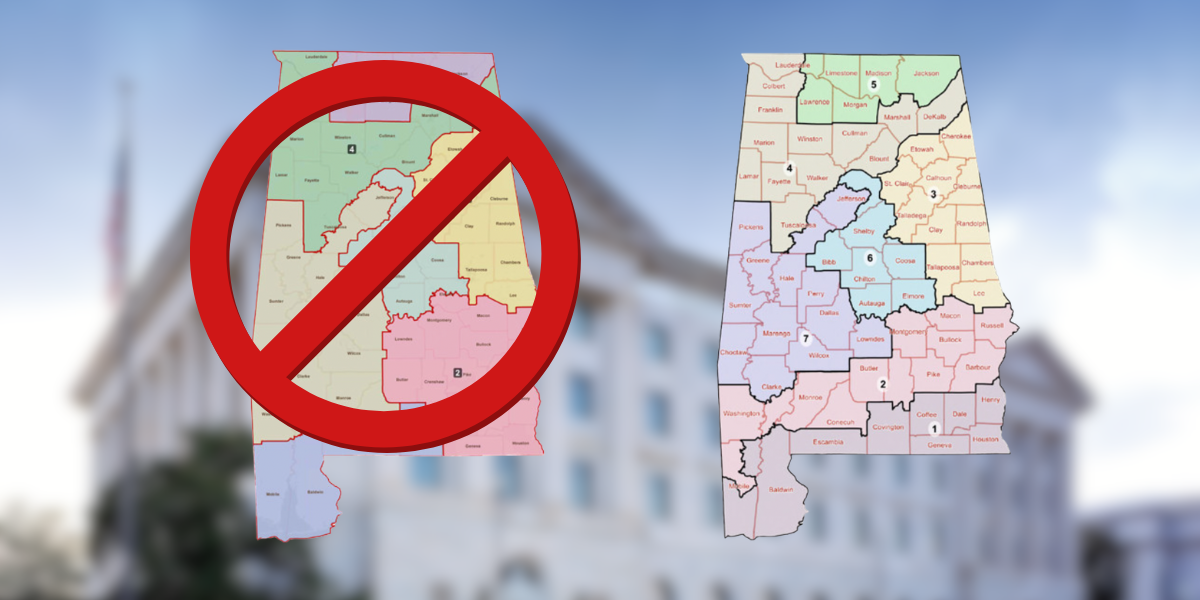
In another turn of events in this year’s storied election cycle, the panel of federal judges overseeing Alabama’s redistricting fight issued an injunction against Alabama from using it’s 6-1 congressional map the state argued was permissible following the U.S. Supreme Court’s recently issued Louisiana v. Callais decision.
In its ruling, the panel wrote, “Ultimately, we cannot see our way clear to requiring Alabamians to cast their votes in the 2026 elections under a districting plan tainted by intentional race-based discrimination,” reaffirming the court’s longstanding opposition to the map advanced by state lawmakers after the Callais decision.
The judges also noted that keeping the court-ordered map in place would not significantly disrupt Alabama’s election process.
“And under the unusual circumstances of this case, we conclude that a limited order requiring the Secretary to continue using this Court’s race-blind map will not disrupt Alabama’s elections,” the panel wrote. “All candidates ran under the race-blind map until fifteen days ago, and all voters remain districted under the race-blind map in electoral computer systems.”
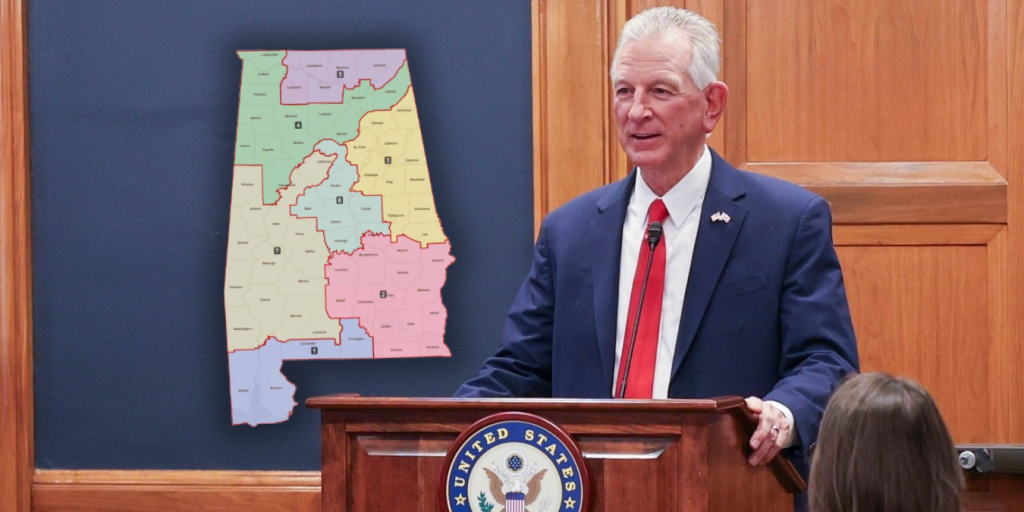
The ruling follows Governor Kay Ivey’s decision to call a special legislative session earlier this year, during which lawmakers approved a contingency congressional map intended for use if the Supreme Court sided with the state.
Following that session, Alabama scheduled special primary elections for the affected congressional districts on Aug. 11. With the latest ruling, the state is expected to continue using the court-drawn 5-2 congressional map created by a special master during earlier stages of the litigation.
Alabama is widely expected to appeal the injunction, arguing the Supreme Court’s Callais ruling supports the legality of the Legislature’s proposed map.
Alabama Attorney General Steve Marshall criticized the panel’s decision and vowed to appeal to the U.S. Supreme Court.
“I am disappointed, but not at all surprised, that the three-judge panel has again struck down Alabama’s blandly unobjectionable congressional map that has been in place for decades,” Marshall said. “I find nothing in the U.S. Supreme Court’s vacatur order of May 11 that would provide a basis for this outcome; thus, we will immediately appeal this decision to the Supreme Court. ”
“This is a very fluid situation, and I will do my best to keep the People of Alabama apprised of our efforts. Know this — in my mind, it is not a matter of whether we win this case, only when.”
Carter Ashcraft is a contributing writer for Yellowhammer News. He is a graduate of The University of Alabama, a rising law student, and has worked professionally across roles in Alabama state government. He can be reached at [email protected]