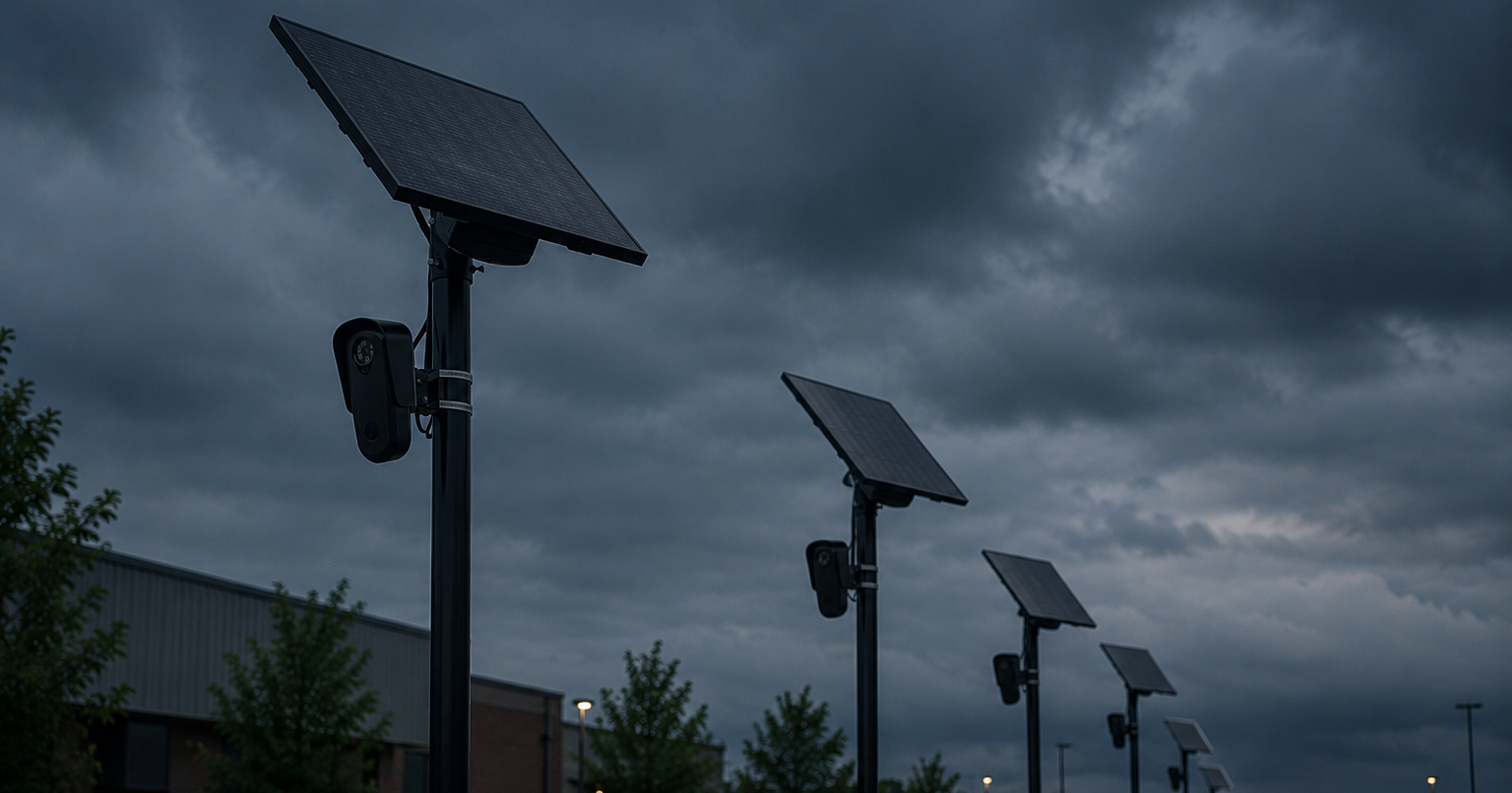
George Orwell’s 1984 offered a nightmarish vision of a surveillance state. The growing nationwide network of automated license plate reader (ALPR) cameras evokes Big Brother but now faces significant pushback, including vandalism.
Many people refer to these as Flock cameras after the largest provider. Flock was founded in 2017 by three Georgia Tech alums and boasts 120,000 cameras in 49 states, 2025 revenue of $300 million, and 1,500 employees.
Cameras typically lease for about $3,000 annually plus a small upfront fee. The cameras include monitoring and can track individual cars traveling past different cameras. Subscribing police departments nationwide can access the images. Flock also offers a gunshot detection system.
The cameras make mistakes which have produced frightening scenes of drivers stopped at gunpoint by police because their car was flagged as stolen. Yet all human systems, even police dispatchers, make mistakes. We should monitor the error rate and get the bugs worked out quickly.
Hundreds of incidents of improper access by law enforcement have occurred. Unauthorized access should be punished, but improper access to law enforcement data is not unique here. Private detectives, for instance, have long gotten license plates run for them.
The ALPR systems differ from red light and speeding cameras. These other cameras activate upon detection of a violation, say a car driving through a red light. ALPR cameras read all passing vehicles, which might violate the 4th Amendment. I will let the lawyers assess that.
Like many people, I am suspicious of new technology. Yet “surveillance” has benefits. License plate readers let turnpikes bill motorists without toll booth stops. This saves time and facilitates privately funded roads, which are typically superior to poorly maintained and congested government roads.
Some concern with Flock cameras may spill over from revenue generating cameras. Many cities fund Flock cameras with Federal grant dollars, with businesses and homeowner associations paying for others.
Monetization of law enforcement is problematic. Market transactions are voluntary but interaction with law enforcement, like being accused of a crime, is not. A business’ profit is a portion of the mutual gains from voluntary trade; government should seek justice when enforcing laws, not revenue.
But this leads to a second concern, namely what do cities get for their money? Knowledge of my driving patterns cannot be worth very much. The lack of clear value leads to speculation about hidden agendas.
Flock emphasizes use by law enforcement. But Flock tallies all closed cases where cameras were used, not just cases where they provided vital help. A recent academic research paper finds an 11 percent decline in auto theft in cities using ALPR’s, so there may be deterrent value.
The cameras could be used for coercive efforts, like implementing environmentalists’ dream of “15-minute cities.” Residents of such cities would not normally be allowed to travel more than 15 minutes from their homes. ALPR cameras could detect citizens traveling without government permission.
I certainly oppose bureaucrats using technology to impose tyranny. But we can oppose tyrannical use of Flock cameras. The problem with bureaucratic tyranny arises from the bureaucrats, not the cameras.
This is why I generally consider libertarians’ hostility to surveillance misplaced. Observation does not make anything illegal. It allows prosecution of existing laws. The laws are the problem.
Anticipated lax enforcement may explain the existence of laws restricting our freedom. Public choice economics analyzes government decisions based on the participants’ benefits and costs. Elected officials want to benefit some constituents without angering others. Toothless laws that appear to bite accomplish this.
Suppose some constituents dislike people driving faster than 25 mph on a given street. City council members placate these constituents by lowering the speed limit. Drivers realize that the police will rarely ticket anyone so they do not vehemently oppose the measure. Technology disrupts this deal, but the law creates the problem.
I believe that we can control our elected representatives. The ongoing “DeFlock” movement is a healthy and normal element response of representative government. With enough protest, communities will remove these cameras as fast as they installed them.
Daniel Sutter is the Charles G. Koch Professor of Economics at Troy University. The opinions expressed in this column are the author’s and do not necessarily reflect the views of Troy University.