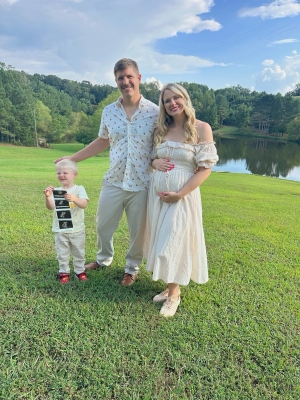
When Caitlin Gum and her husband Robert decided to move to North Alabama from New Jersey, they knew their lives would change. But as they considered which community in North Alabama would be the best fit for their family, they didn’t know just how much change was coming.
The Gums, who previously lived in the southeast, chose to return to their roots because they missed the culture, pace of life, and sense of community it offers. They also wanted to be close to family in Chattanooga. The couple considered buying a home in
Madison County but ultimately, they found exactly what they wanted in Cullman.
One month before they moved to Cullman, Caitlin learned she was pregnant—with twins. While local access to quality healthcare had been a factor in their decision to move to Cullman, the happy surprise left the couple with questions they hadn’t considered before. Where should they deliver the babies? What OB provider should they use?
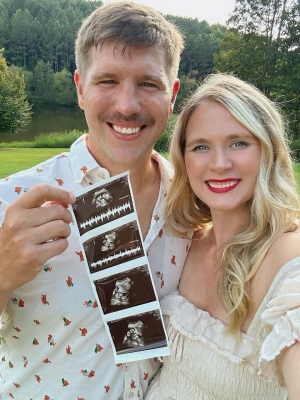
Caitlin was 37, pregnant with twins, and had some complications in a previous pregnancy, so they needed to choose somewhere that offered advanced maternity and newborn care.
“We were still new to the area, so we asked around,” Caitlin said. “So many people told us we needed to go to Birmingham or Huntsville.” Then, by sheer coincidence, Robert met Dr. Taylor Massengill who is an OB-GYN physician at Cullman Regional. He took the opportunity to ask her advice, and she encouraged the Gums to consider delivering in Cullman.
“We need to move away from this assumption that care is better in big cities and big hospitals,” said Dr. Massengill. “My partners and I are doing our best to provide exceptional, evidence-based care for our patients. I’m really proud of that.”
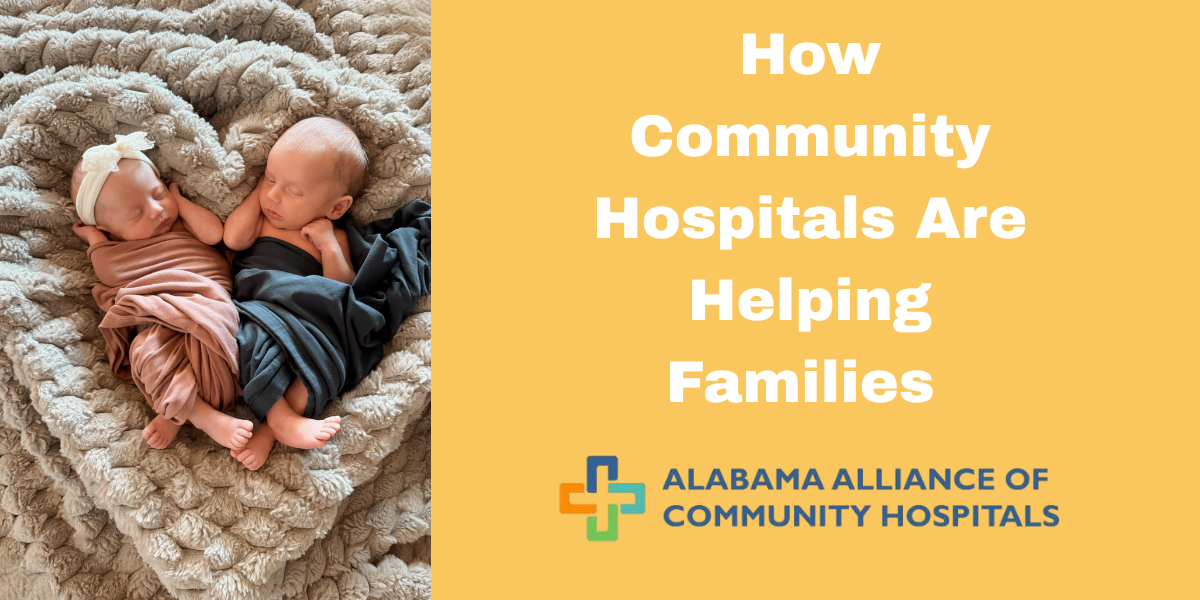
Her advice to the couple resonated and on January 14, Dr. Massengill delivered the twins at 34 weeks gestation.
While Caitlin did not have any delivery complications, both babies required care in Cullman Regional’s Neonatal Intensive Care Unit (NICU) which is a highly specialized nursery that cares for premature newborns and infants with certain medical conditions.
A team of neonatologists and neonatal nurse practitioners staff the NICU around the clock. Caitlin and Robert visited the twins every day.
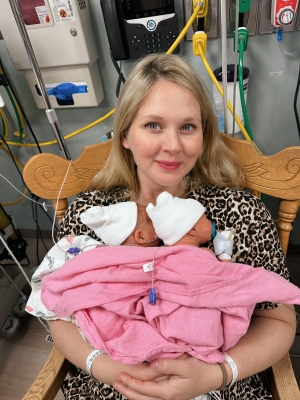
“That’s really when it made a difference. It would have been much harder to go home and leave them at a hospital in another city an hour or more away. Because the babies were at Cullman Regional, we felt close to them. It meant we could spend more time with them, and it made those two weeks easier for our four-year old-son, too.”
Thinking back on how they got here, Caitlin and Robert are happy they decided to move to Cullman and grateful for that chance encounter with Dr. Massengill. They’ve settled into their new life and are looking forward to watching the kids grow and thrive in their small-town community.
For Caitlin, it’s important that she shares their story because she believes other families should know that her community hospital provided the birth experience they wanted, the advanced care they needed, and reassurance that future healthcare needs can be
provided locally. “I had doubts in the beginning about a community hospital being able to care for me and my babies, but we decided to trust Dr. Massengill,” said Caitlin. “After the whole experience with Dr. Massengill, my delivery, and the NICU care, those doubts were all taken away.”
Making the Case for Community Hospitals
When pregnant women are looking for pre-natal and maternity care, most would expect to find it in or at least near their local community but that’s not always the case. In fact, around the same time Cullman Regional expanded its maternity capabilities with the opening of its NICU, several community hospitals in Alabama announced they were having to close their OB programs. A lack of maternity care has become a real concern in Alabama, especially in rural areas.
“We already had maternity deserts in Alabama but with the recent OB closures, access to maternal-fetal care is even worse,” said Cullman Regional Chief Nursing Officer Charna Brown.

In 2025, multiple state and federal programs were established to provide much needed funding for rural hospitals and increase access to important healthcare services including OB care. As those programs develop and deploy, the hope is to relieve chronic financial strains that community hospitals endure and stabilize healthcare services in local communities.
“We live only 20 minutes away from the hospital,” said Caitlin. “With all the prenatal appointments during pregnancy, I can’t imagine how disruptive it would be driving an hour or more just to see a doctor.”
Community hospitals, whether they are rural or located in a non-urban area, are vital to their communities. They save lives, improve quality of life, and strengthen the local economy. When they stop offering a service, the community is harmed.
Advocating for community hospitals is critical to reverse the trend of hospital closures and loss of local services in Alabama. The Alabama Alliance of Community Hospitals was recently established to ensure that those with the ability to help have an accurate
understanding of the unique challenges and needs of community hospitals.
The Alabama Alliance of Community Hospitals (AACH) is dedicated to promoting the stability, growth and long-term sustainability of community hospitals across our state.