Twelve years ago today, my father, along with Col. Gary Lewi and the dedicated and invaluable volunteers, opened the doors to the Museum of American Armor in Old Bethpage, New York, on grounds donated by Nassau County.
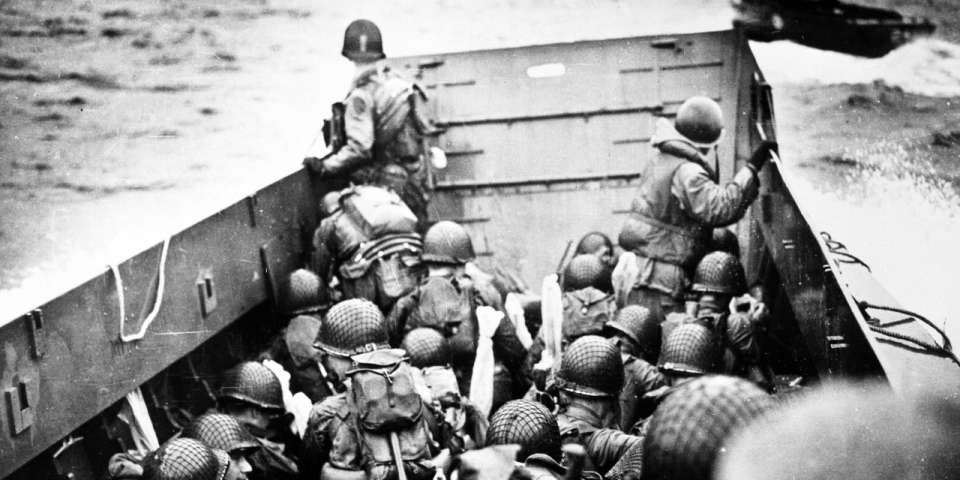
He chose the date on purpose. Eighty-two years ago today, young Americans climbed down rope ladders into the cold water off the coast of Normandy and started walking toward machine gun fire. Most of them were teenagers. A lot of them never made it off the beach.
My father has spent decades of his life building that museum. More than fifty operational armored vehicles. Tanks that still run. Half tracks that still roar. He did not build it because he loves machines. He built it because he is determined not to let us forget.
I asked him once why it mattered so much to him. He thought about it for a while. Then he said the men who climbed off those landing craft were not heroes because they wanted to be. They were heroes because somebody had to be. And if a generation comes along that does not understand what those boys paid, the bill comes due again. And it is always paid in blood.
That is what I think about when I hear the phrase freedom isn’t free.
Most people say it without thinking. They put it on a bumper sticker. They say it on the Fourth of July and then go back to whatever they were doing. But my father taught me that the phrase is not a slogan. It is a ledger. Every generation gets handed a country that was paid for by someone else, and every generation has to decide whether it is going to keep up the payments or let the account go into default.
A few years ago, my father wrote a column for Gatestone Institute titled Ronald Reagan’s Warning. He saw it coming. He named the disease. The disease is not that we have enemies abroad, although we do. The disease is that we have forgotten how to act like a country at home.
Reagan had a rule for this. He called it the 11th Commandment. There are only ten, of course, and borrowing from the Commandments would be sacrilegious from almost any other mouth. But Reagan was special to America in a way few men have ever been, and we let him say it. “Thou shalt not speak ill of another Republican.” He gave us that rule because he understood something my father understands and that we are now relearning the hard way. When the people on your own side spend their energy tearing each other down, the people who actually want to destroy you are watching, and they are taking notes.
Reagan said something else too, almost twenty years before he became president. “Freedom is never more than one generation away from extinction. We didn’t pass it on to our children in the bloodstream. It must be fought for, protected, and handed on for them to do the same.”
Read that again. Slowly.
And right now, I am not sure we are defending it.
The world is on fire. The regime in Tehran has spent forty years promising to destroy Israel and chanting death to America. They have been knocked back. They have not been defeated. There are enemies who want to see this country brought low and they are not shy about saying so. There are challenges to American leadership that would have been unthinkable a generation ago.
And the enemy is not just abroad. There is an old phrase for it. Fifth column. It comes from the Spanish Civil War, when a general marching on Madrid bragged that he had four columns of troops outside the city and a fifth column of sympathizers already inside it. The phrase stuck because every serious nation has eventually had to reckon with the same problem. The most dangerous opposition is rarely the army at the gate. It is the people inside the walls who have decided they are not on our side anymore.
That is the fifth column today. It is not the foreigner sneaking across the border. It is the American who has lost the instinct to defend America. It is the senator who roots for his own country to stumble because his party benefits. It is the activist who cannot bring himself to say this country is good. It is the official who treats the word citizen as an embarrassment.
You can spot them by what they oppose. Right now there is a bill in front of the United States Senate called the Safeguard American Voter Eligibility Act. The SAVE Act. It does something so basic that the average American assumes it is already the law. It says the people who vote in American elections should be Americans. Citizens. Proven, with documents, the way every other serious country in the world handles its own elections. The bill passed the House. It is stuck in the Senate. Watch who is fighting it. Watch carefully. Because the people fighting that bill are telling you something important about what they think citizenship is worth.
This is where principle matters. If you do not have principles you do not have anything. You have positions, and positions blow with the wind. A man with principles can lose an election and still know who he is in the morning. A man without principles wins one and is still a stranger to himself. The country was built by Americans with principles. It will only be kept by Americans with principles. Everything else is noise.
We are watching our elected officials root for each other to fail. Not the policy. The person. They want the bad outcome because the bad outcome is good for their side. They have decided that beating their countryman matters more than beating the actual enemy. That is the fifth column wearing a suit and tie.
When my father’s generation went to Normandy, they did not ask the man next to them on the landing craft how he voted. They did not ask if he was a Democrat or a Republican. They asked if his rifle was loaded. They were Americans first, and everything else was a distant second. That was the deal.
Somewhere along the way, we lost that.
My son, when he was little, did not know that tanks were real. He had a plastic one, the kind with rubber treads, the kind that lives in the toy box of every American boy. To him it was just a toy. Then one evening he was sitting with his grandfather and something came on the television. A documentary, a film, I do not remember which. There was footage of armor moving across a field. Real armor. Real men inside it. My son looked at the screen and then he looked at the toy in his hand and he understood, the way a small child understands, that the toy stood for something he did not yet have words for. He asked his grandfather what tanks were for.
My father did not soften it. That was not his way. He was a man of principle and a man of plain speech, and he believed that children deserved the truth in the smallest dose they could carry. He told my son that tanks were not toys. He said grown men drove them, and they drove them a long way from home, and they used them to stop the bad guys. My son asked who the bad guys were. My father told him, in language a small child could hold, that the bad guys were men who decided some people did not deserve to live. He said the men in the tanks went and stopped them. He said a lot of the men in the tanks did not come home.
My son sat with that. He kept the tank in his hand. Then he went back to playing, the way a small child does, because a small child cannot carry a thing like that for long. But the answer stayed in the room. It stayed in him. And years later, when my father opened the doors of that museum in Old Bethpage, I understood what he had been doing his whole life. He had been answering my son’s question. He had been answering every child’s question. He was making sure the answer did not get forgotten, because the day a generation forgets the answer is the day it has to learn it all over again.
I am a Republican and a conservative. I believe in this country with everything I have. I believe in strong borders and a strong military and a strong economy and the values that built this place. But I also believe that the man across the aisle, even when he is wrong, is still my countryman. And if I spend all my energy hoping he fails, I am not loving my country. I am loving my team. Those are not the same thing.
If we forget that, we lose it. Reagan said so. My father has spent his life saying so. And every name on every memorial in every small town in America says so.
Freedom isn’t free. The bill is still being written. And the only question is whether this generation has the character to do something honorable with the country it was handed.
I believe we do. We are not dead yet. We have not lost this yet. The country my father built that museum to honor is still standing, still strong, still worth every drop of blood that was paid for it. The men who walked off those landing craft eighty-two years ago today were not handing us a country to lose. They were handing us a country to defend. And eighty-two years later, in Old Bethpage, New York, there is a building full of tanks that my father put there to remind us that the work is not finished. It is ours now.
Will Kadish is the President and CEO of Broad Metro LLC, an Alabama based company. With over 30 years of projects across the United States, his work spans mixed use development, commercial development, and long-term community partnerships from Florida to Virginia. He is also co-founder of The Parlay Project, a nonprofit focused on sports gambling addiction awareness and recovery, and serves on the Board of the YMCA of Alabama.