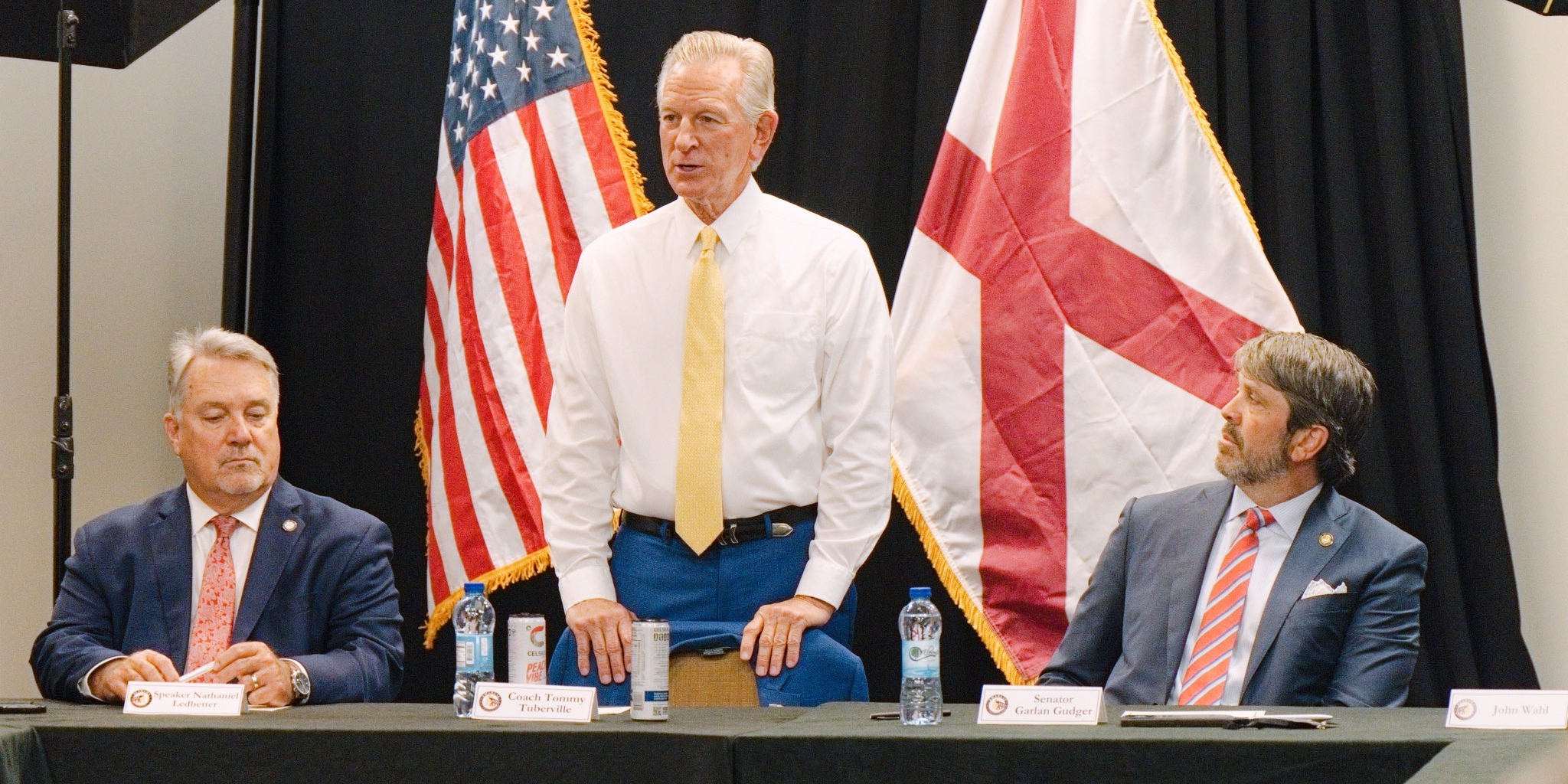
Coach has released his playbook.
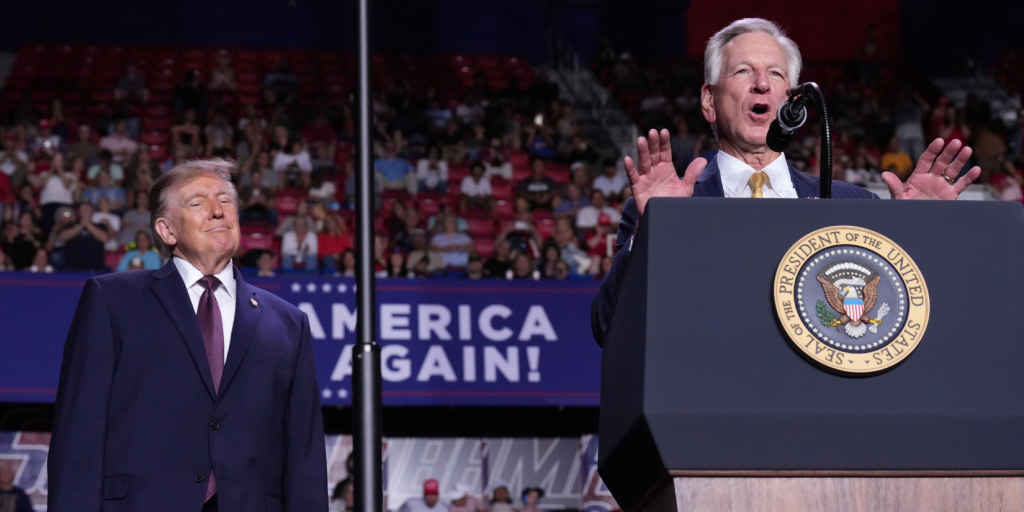
U.S. Senator Tommy Tuberville (R-Auburn) released a 21-page governing agenda Thursday titled “Back to Basics: The Golden Age Playbook,” laying out seven priorities, eight bills for his first legislative session and a public scoreboard he says voters should use to grade him, less than two weeks before the November 3 general election for Governor of Alabama.
The document opens with a letter from Tuberville.
“For nearly 40 years, I built teams for a living,” Tuberville wrote. “For the last six, I’ve represented Alabama in the United States Senate. Both jobs taught me the same thing. You win by getting the basics right: the right people in the right places, a clear assignment for everybody, and accountability for results, starting with the man at the top.”
“If you remember two things, remember these. I will bring good jobs to every corner of this state, so more Alabamians can work, earn a good living, and raise a family right here at home. And I will make state government smaller and give you the savings back in lower taxes,” Tuberville wrote.
“I’m not running to manage Montgomery. I’m running to change it.”
The seven priorities, in the order the campaign ranks them, are jobs, affordability, education, smaller government, public safety, infrastructure and health care. Every commitment in the book carries a timing label: Day One by executive order, first session by bill, first budget, or by the end of the first term.
RELATED: Tuberville officially running for Governor of Alabama in 2026
The centerpiece for families is a single first-session bill the campaign calls the Family Affordability Act.
It would eliminate the remaining 2% state sales tax on groceries, bring the state income tax down in steps over the first term, freeze property tax increases on homes owned by senior citizens, extend the base rate freeze on power bills and phase out child care assistance gradually as a parent’s pay rises rather than cutting it off at an income cliff.
“What matters is what’s left in your pocket after you pay your bills,” Tuberville wrote.
The grocery tax plank lines up with the plan Alabama Republicans unveiled last week to make full repeal the first order of business in the 2027 session. The income tax cut, the document says, will be “paid for with audited savings from a smaller state government and real growth, never borrowed money.”
Tuberville pledges to veto any state tax increase that reaches his desk.
On jobs, the playbook casts the Governor as “the state’s closer” and promises “the most aggressive economic development operation in America.” It calls for rewriting Alabama’s incentive laws before they expire, a closing fund for deals that come down to the wire, clawbacks when companies break their promises, certified industrial sites with rural counties first, and a team dedicated to recruiting corporate headquarters because Alabama ranks 44th in household income.
The book credits last year’s record $14.6 billion in new investment, the Eli Lilly plant in Huntsville and the return of U.S. Space Command to Redstone Arsenal as momentum to build on. It also says announcements alone are not enough.
“The typical Alabama household still earns less than 80 cents for every dollar the typical American household earns, and that gap is no smaller than it was in 1993. Announcements don’t pay the bills. Paychecks do,” the document states.
The sharpest departure from current practice is on data centers. Tuberville would end tax breaks for them entirely.
“I’m changing how Alabama treats data centers. No more tax breaks. They go in the highest property tax class, pay the full cost of the power lines, substations, and water systems they need, and replace the power and water capacity they take. Local communities decide whether a data center is right for them, and if your community says no, my answer is no,” Tuberville wrote.
Last week, the Lowndes County Commission approved a 20-year tax abatement for the Nvidia-backed Project Red Clay on a 3-2 vote over months of vehement opposition from residents and constituents.
Tuberville also says he will make the first appointment to the Secretary of Energy post created under the Power to the People Act, the utility-regulation law Governor Kay Ivey signed this spring that expanded the Public Service Commission from three members to seven.
His appointee “will call hearings under oath, so every increase gets justified in public,” and “no family or small business will pay a single cent more because of a data center or any other big user.”
On the size of state government, the playbook says Executive Order Number One will freeze hiring outside public safety and direct care, start an audit of every agency, grant and contract, and put the State Comptroller in charge of real-time auditing. It commits to merging at least a dozen agencies into larger departments by the end of the first term and to auditing all of Alabama’s more than 450 boards and commissions within 90 days.
“Boards that can’t make the case get merged or ended, working with the Legislature where the law requires it. The first to go: licensing rules that keep qualified people from working,” the document says.
The campaign estimates $150 million to $200 million a year in audited savings once the changes are in place, with every dollar directed toward the income tax cut. Teachers, state troopers, correctional officers and direct-care workers are exempt from the workforce reduction.
On public safety, the book formalizes the pledge Tuberville made in his recent “war zone” ad about Montgomery: state troopers and investigators sent into any city “losing the fight against violent crime,” full cooperation with ICE, a Georgia-style statewide gang unit, truth in sentencing and a public dashboard tracking how every circuit’s prosecutors and judges handle violent felonies. A companion section on children would make mailing abortion pills into Alabama a felony, create a public registry of convicted child abusers and require background checks for everyone who works with kids.
“If you hurt a child, I have zero tolerance for you. Children can’t protect themselves. Adults have to do it for them,” Tuberville wrote.
On education, Tuberville promises to fully fund First Class Pre-K, extend the state’s reading and math laws through eighth grade, enforce A-to-F school accountability and fund the CHOOSE Act for every family when income limits lift in 2027. The book says every student will identify a career interest by eighth grade and choose a path by tenth. Democratic nominee Doug Jones (D-Mountain Brook) has called for stopping the CHOOSE Act “in its tracks.”
RELATED: Stephanie Smith: Doug Jones is dead wrong on school choice
On health care, “Alabama will not expand Medicaid. We’ll run the program we have like it belongs to the taxpayers, because it does.” It calls for reforming certificate of need around community need rather than competitor objections, a Medicaid fraud strike force and a commitment to zero rural hospital closures.
On infrastructure, the first budget would include a funded plan to three-lane Interstate 65 from the Tennessee line to Mobile, with more interstates added each year after. Every road and bridge project would receive a public score from 0 to 100, with job growth and safety weighted heaviest.
“No more roads to nowhere,” Tuberville wrote.
The book closes with a two-page scoreboard listing where Alabama stands today and where the campaign says it will be: labor force participation from 56.8% to 60%, eighth grade math and reading from 49th and 47th in the nation to the top 25, $20 billion in investment built and hiring, and violent crime down 20% in the state’s four largest cities.
Tuberville commits to posting every line on a public dashboard by Day 90.
“If a program doesn’t work, we’ll fix it or end it. If somebody can’t do the job, we’ll find somebody who can. And if I fall short, you’ll hear it from me first,” he wrote.
Grayson Everett is the editor in chief of Yellowhammer News. You can follow him on X @Grayson270.