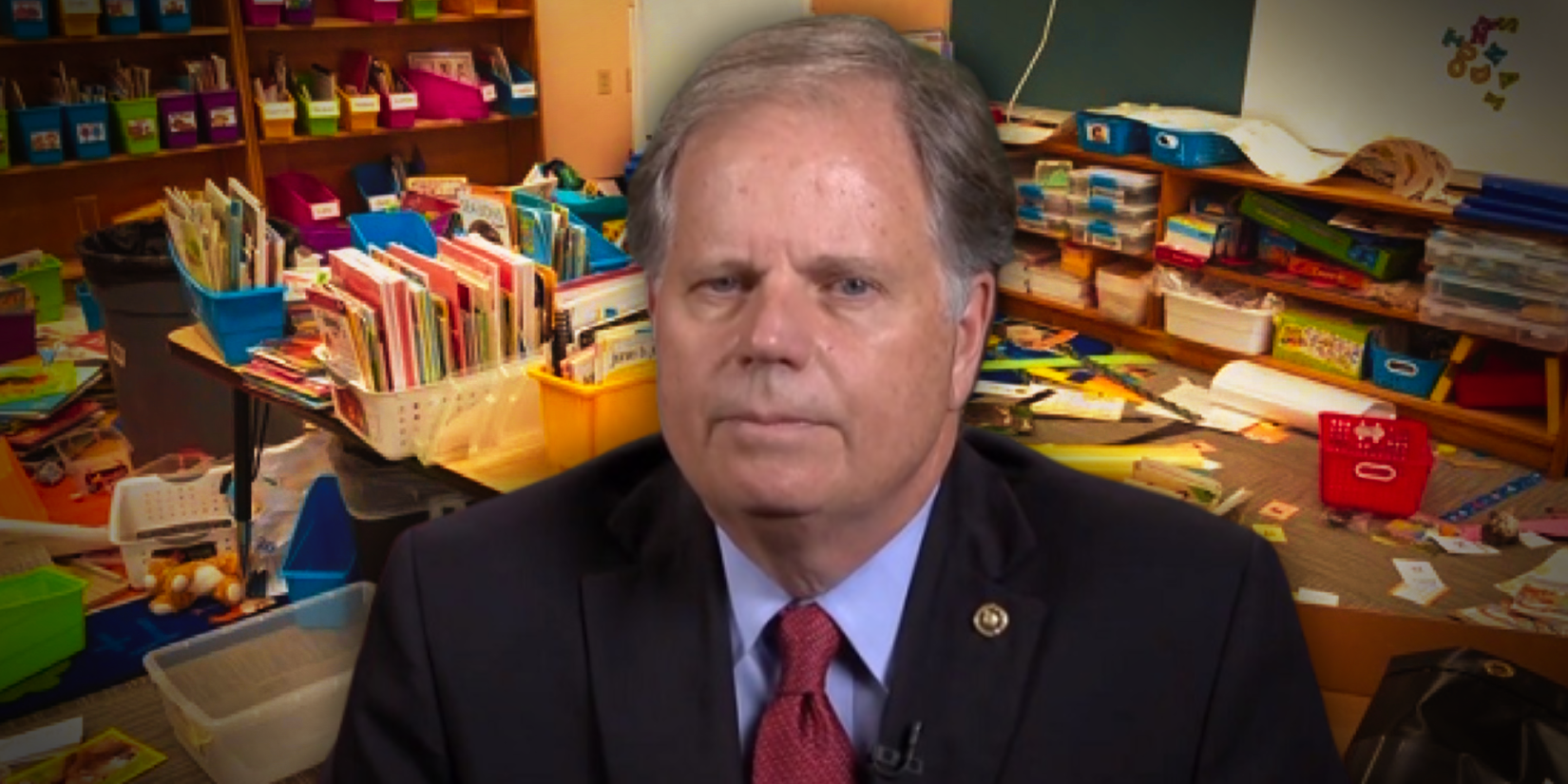
Former U.S. Senator and current Alabama gubernatorial candidate Doug Jones has repeatedly called for eliminating Alabama’s landmark Creating Hope and Opportunity for Our Students’ Education (CHOOSE) Act. His argument, lacking in facts and steeped in elitist rhetoric, relies on a fundamental misconception: that allowing families to direct their children’s education dollars somehow harms public schooling and denies “true” choice.
As someone dedicated to advancing free-market principles, limited government, and educational excellence across Alabama, I feel compelled to set the record straight. The CHOOSE Act isn’t a drain on our educational ecosystem at all; it is the single greatest catalyst for educational innovation, accountability, and empowerment.
First, the claim that private schools are the “only entities that have a choice” under Education Savings Account (ESA) programs is completely incorrect; this argument flips reality directly on its head. The CHOOSE Act isn’t specifically for private schooling; in fact, the program was designed to be and is already being used in Alabama in public schools, homeschools, charter schools, and micro-schools. It is truly a program to encourage a cafeteria plan of educational options according to parent and student needs rather than institutional mandates. Conversely, for decades, the only families in Alabama who have enjoyed true educational choice were those wealthy or sacrificial enough to pay double, once through their property and income taxes for public schools, and again for private tuition, or those privileged enough to move into expensive real estate districts. The CHOOSE Act breaks down socio-economic barriers and equips all parents, including lower and middle-income parents, with the financial flexibility to choose the learning environment that best suits their child’s unique needs.
To suggest that expanding options for families is “giving money away without accountability” ignores both the structure of the Act and the ultimate mechanism of accountability: parental consent. In a government-monopoly model, a failing school retains funding regardless of performance. In fact, some failing schools gain additional funding; increasing taxpayer funding for failure isn’t accountability. Under an ESA model, accountability is immediate and direct. If a private school fails to deliver academic results, safety, or moral alignment, parents vote with their feet and take their dollars elsewhere. Market competition forces every school to raise standards to attract and retain students. Perhaps competition is what Doug Jones actually dislikes about parental choice.
Politicians attributing public school enrollment fluctuations solely to school choice overlooks broader demographic shifts, including declining birth rates and migration patterns. But more importantly, if public enrollment is shifting, government officials should ask why families are seeking alternatives, rather than trapping students in systems that aren’t serving their needs.
Defenders of the educational status quo often frame education funding as a zero-sum game between public school budgets and private choice. I would argue that education funding was never meant to protect institutions; it was designed to educate children. Every child in Alabama deserves access to an environment where they can thrive, regardless of their ZIP code. I would also argue that the family unit is the cornerstone of all successful societies and parents should be the final arbiters of the education and upbringing of their children.
Thousands of families from every demographic and every county in Alabama have found an educational path tailored to their children by utilizing the CHOOSE Act. Instead of retreating back into state-managed mandatory educational monopolies, Alabama should continue leading the nation in expanding educational liberty and trusting parents to make the best decisions for their own families.
Stephanie Smith is President and CEO of the Alabama Policy Institute.