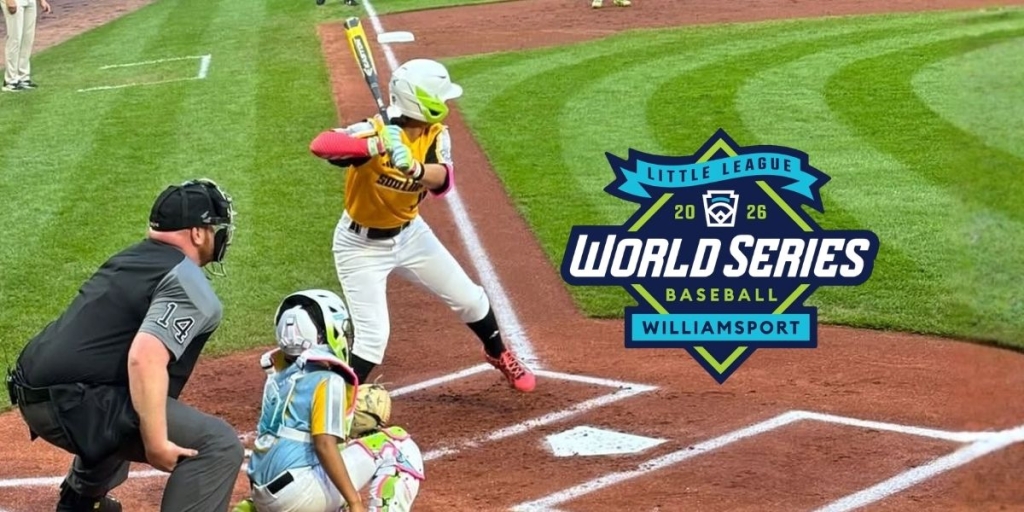
The Phenix City squad led by 12-year-old Kinley Rasmus from the Little League World Series captured the hearts of the entire country, but it also led to some illegal betting.
As Rasmus helped the team make a run, she broke Mo’ne Davis’ Little League World Series record for most hits by a girl and matched Davis’ record for both strikeouts in a single game and strikeouts on the tournament.
While this tournament is one of the purest forms of sport left in today’s crazy era of pro and collegiate athletics, folks were quick to point out the fact that some were illegally wagering on it.
Offshore sports books, which are of course illegal in the state of Alabama, were offering prop odds on Rasmus and the entire Phenix City squad, as well as the rest of the tournament. This allowed folks to bet on youth sports without any consequence, something the tournament strongly disavowed.
“Little League is a trusted place where children are learning the fundamentals of the games and all the important life lessons that come with having fun, celebrating teamwork, and playing with integrity,” the organization said in a statement. “No one should be exploiting the success and failures of children playing the game they love for their own personal gain.”
BetOnline, which was offering odds on Rasmus’ over/under for strikeouts and possibility to lead the tournament in home runs, pointed back at ESPN and tournament sponsors for profiting off the event every year for those who were upset about offering odds on it.
“We understand why some people are uncomfortable with betting on kids, but if the discomfort is really about profiting off 12-year-olds, that conversation shouldn’t start and end with us,” BetOnline brand manager Dave Mason said in a statement.
“Little League, ESPN and the tournament’s sponsors are cashing in every August … the difference is nobody’s asked them to share that revenue. So, here’s our offer: commit to paying the players and families, who comprise the core of this incredible tournament, and we’ll commit to taking Little League off our board in 2027.”
Regardless of the arguments from either side, legalized sports books — which of course cannot operate in Alabama — did not offer odds on the Little League World Series, only illegal offshore books who are already breaking the law simply by existing.
State Rep. Chris Blackshear (R-Phenix City) said in July that the unregulated market continues to grow as Alabama falls behind by not legalizing sports betting, something he tried to make happen in 2024 in a package that fell short of the ballot.
“There is a lot of other, some would argue, quasi-legal, -illegal gaming that exists across the state. So, it’s growing every day,” Blackshear said. “It’s again a conversation of when you know the elephants in the room, you’re sitting there looking at it, but you choose not to address it.”
In May, U.S. Senator Katie Britt (R-Montgomery) led a bipartisan effort trying to get the Justice Department to move against offshore operators who “allow minors to engage in unregulated sports betting and gaming with no oversight” when she introduced the GAME Act.
Ultimately, most seem to agree this is a real issue, and while legalized sports betting alone does not tackle predatory offshore markets, it would certainly go a long way towards crippling their reach in the state of Alabama and every other state where regulated gaming remains illegal and unable to operate.
Michael Brauner is a Senior Sports Analyst and Contributing Writer for Yellowhammer News. You can follow him on Twitter @MBraunerWNSP and hear him every weekday morning from 6 to 9 a.m. on “The Opening Kickoff” on WNSP-FM 105.5, available free online.