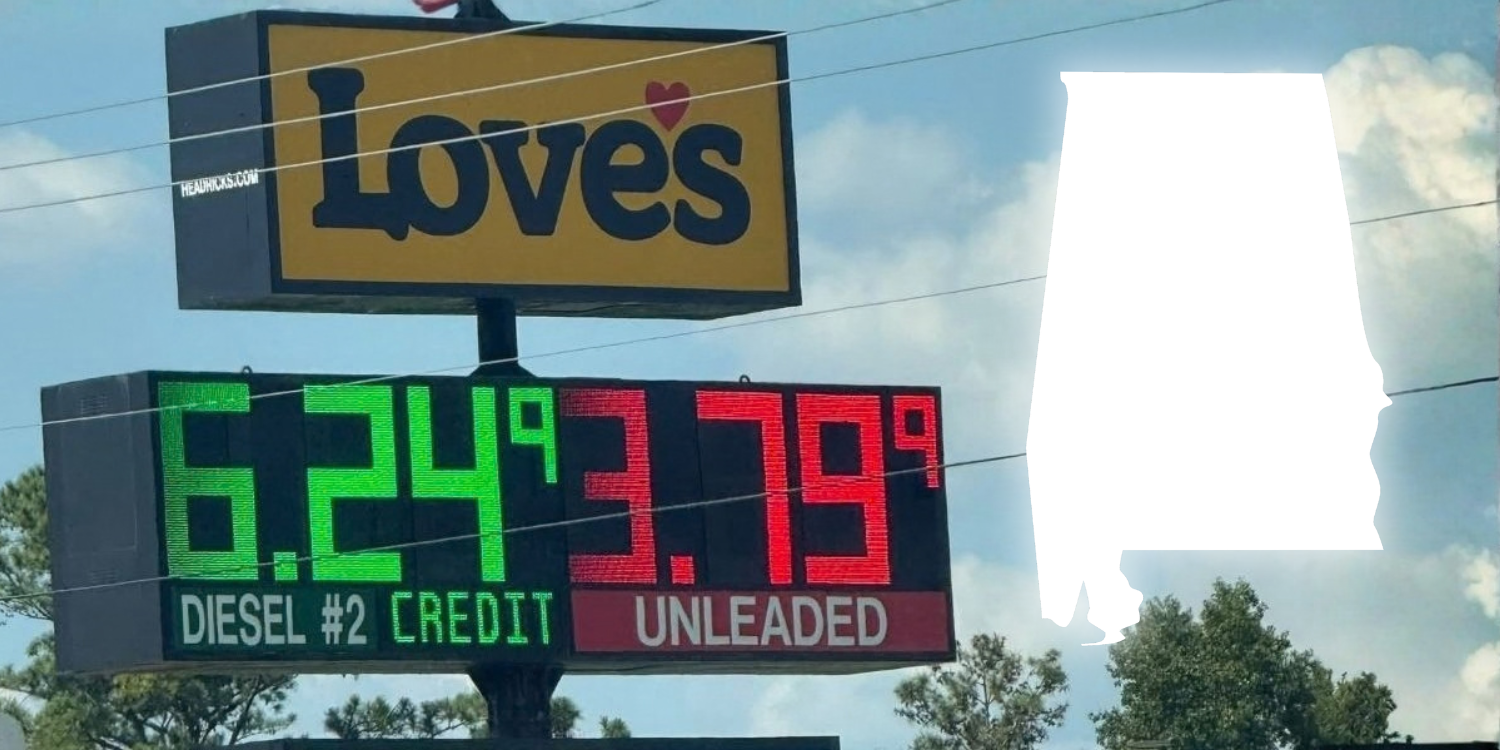
Alabama drivers on the road for Labor Day weekend are getting at least a little break at the gas pump compared with much of the country, but they are still paying substantially more than they were a year ago.
The national average for a gallon of regular gasoline reached $4.1474 Friday, according to AAA, compared with $3.2016 a year ago. That’s nearly 95 cents more per gallon than drivers were paying at this time last year.
Alabama’s average was $3.8027 Friday, about 34 cents below the national average. A year ago, the statewide average was $2.8376, meaning Alabama drivers are paying about 97 cents more per gallon than they were at this time last year.
Alabama also remains among the country’s less expensive places to fill up. In its Thursday report, AAA listed the state at $3.79 per gallon and among the nation’s 10 least expensive gasoline markets.
Even with Alabama prices below the national average, Labor Day 2026 is shaping up to be a costly one for drivers.
GasBuddy projected earlier this week that the national average would reach $4.03 per gallon over the holiday weekend — 87 cents higher than last year’s $3.16 average and enough to make it the most expensive Labor Day at the pump on record in nominal terms. GasBuddy listed the previous record at $3.83 in 2012.
GasBuddy made that projection Sept. 1. By Friday, AAA was reporting a national average of nearly $4.15 per gallon.
AAA also said Labor Day weekend is on track to set a record at the pump. The organization reported Thursday that the national average had never topped $4 per gallon on Labor Day. AAA lists the previous Labor Day record as $3.82, set Sept. 3, 2012.
Global tensions are playing a major role in what drivers are seeing at the pump.
AAA said continued volatility in the Strait of Hormuz has pushed crude oil prices into the $90-per-barrel range. GasBuddy also pointed to tensions involving Iran and drone strikes on Russian refineries that have reduced refining capacity and tightened worldwide supplies of gasoline, diesel and jet fuel.
“It’s been a challenging year for motorists, with constant ups and downs at the pump that stayed elevated into this final summer holiday, though relief may lie ahead if tensions ease,” said Patrick De Haan, head of petroleum analysis at GasBuddy. “Last year saw the cheapest Labor Day since 2020, but the pendulum has swung wildly this summer. This year has been less about typical supply and demand, and more about uncertainty over how global tensions will affect the availability of crude oil and refined products.”
Normally, the end of the summer driving season brings some relief at the pump as demand begins to fall. Gasoline demand dropped from 9.04 million barrels per day to 8.92 million last week, according to Energy Information Administration data cited by AAA.
GasBuddy said demand has been slowing since peaking in mid-July, and another potential break for drivers could come after Sept. 15, when much of the country begins switching to less expensive winter-blend gasoline.
How quickly those savings show up at the pump, however, could depend on what happens overseas. GasBuddy cautioned that continued geopolitical tensions could delay some of the usual seasonal relief.
Sherri Blevins is a staff writer for Yellowhammer News. You may contact her at [email protected].