Alabama Attorney General Steve Marshall and Governor Kay Ivey both believe the U.S. Supreme Court got it right in its latest ruling — a decision that could have a major impact on how redistricting plays out in the Yellowhammer State, even as Alabama remains locked under a federal court order blocking any immediate redraw of its congressional map.
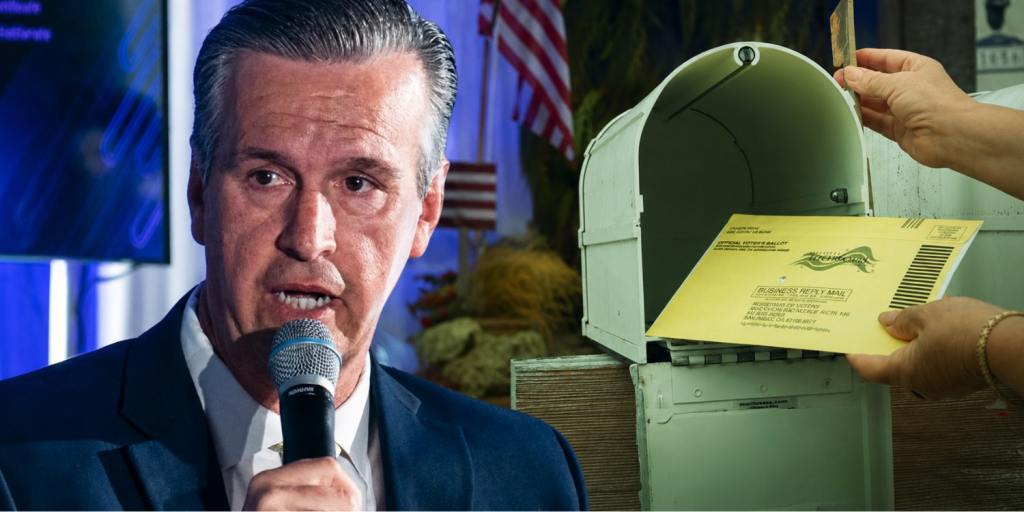
Marshall celebrated the U.S. Supreme Court’s decision Wednesday in Louisiana v. Callais holding that Section 2 of the Voting Rights Act and the Fourteenth and Fifteenth Amendments of the U.S. Constitution neither require nor allow States to use race to draw voting districts, either to create additional minority-majority districts or to intentionally dilute the vote of minority voters. States must use race-neutral considerations when crafting districts.
“The Supreme Court has spoken. States cannot be forced to gerrymander by race,” Marshall said.
“Louisiana v. Callais is a watershed moment. The Court has shut the door on vote-dilution claims that use racial data to disguise what are really partisan disputes. Alabama has been fighting this battle for many years, and today the Supreme Court confirmed our long-held argument that States must not use race, either to help or to harm particular voters, when drawing voting districts.”
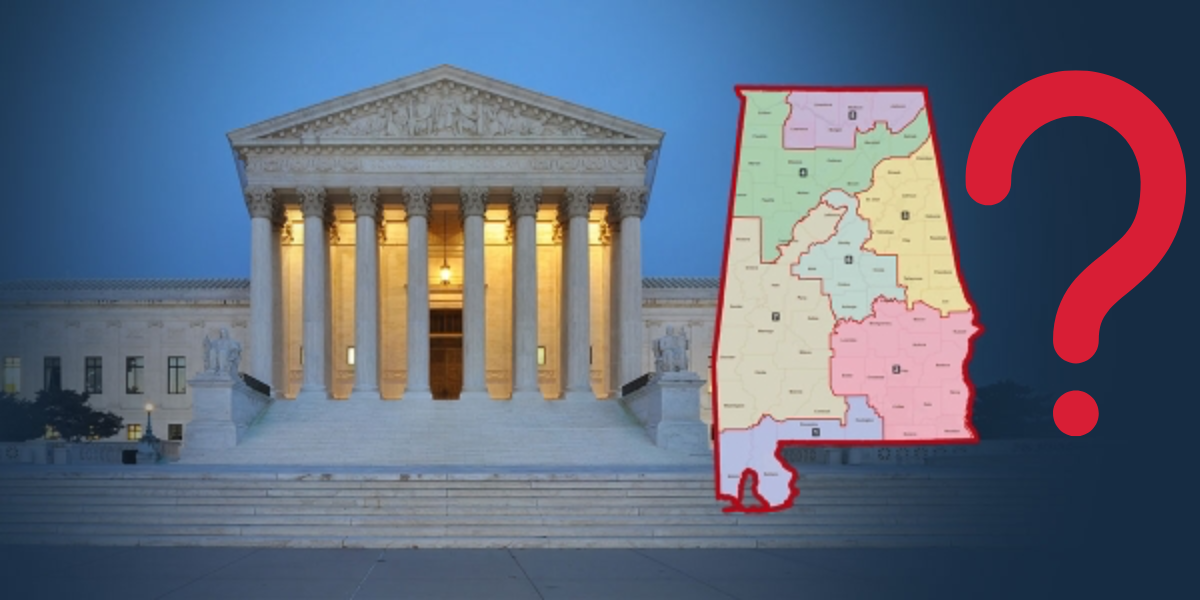
The Supreme Court re-heard Louisiana v. Callais last year, which used the same Gingles test ‘50%+ black voting-age population (BVAP)’ mechanism to draw an additional black opportunity district as Allen v. Milligan, Alabama’s redistricting litigation, which subsequently became Alabama’s 2nd Congressional District under federal order.
“The Court rightly acknowledged that the South has made extraordinary progress, and that laws designed for a different era do not reflect the present reality,” Marshall continued. “We will act as quickly as possible to apply this ruling to Alabama’s redistricting efforts and ensure that our congressional maps reflect the will of the people, not a racial quota system the Constitution forbids.”
Governor Ivey, in a statement released Wednesday, echoed Marshall’s praise of the ruling but made clear that Alabama is not yet positioned to act on it. The state remains under a federal court order prohibiting the use of new congressional districts until after the 2030 census, and Alabama’s own challenge to that order is still pending before the U.S. Supreme Court.
“I applaud the Supreme Court’s decision today in Louisiana v. Callais. While I am encouraged by this decision, it does not yet resolve our ongoing redistricting fight over Alabama’s congressional map,” Ivey said.
“For too long, federal courts forced states like Alabama into a no-win situation at the hands of activists who want us to draw maps that discriminate against our own citizens based on race. As the Supreme Court rightly recognized, the Alabama of today is not the Alabama of the past, and we are proud of our progress.”
Ivey ruled out an immediate special session of the Legislature to redraw the map while the federal injunction remains in force — but signaled optimism that the high court will soon clear the way for Alabama.
“Litigation surrounding Alabama’s congressional districts is pending before the U.S. Supreme Court, and Alabama is currently under a court order prohibiting the use of new congressional districts until after the 2030 census,” Ivey said.
“While we are not in position to have a special session at this time, I hope in light of this new decision, the court is favorable to Alabama.”
The Supreme Court resolved the dispute by holding that the plaintiffs in the first case had not shown that Louisiana’s initial map violated the Voting Rights Act. The court held that the evidence showed that the State used race-neutral redistricting criteria, including partisan goals to protect incumbents, to draw the districts.
According to the court, Section 2 imposes liability on States “only when the circumstances give rise to a strong inference that intentional discrimination” on the basis of race occurred. And it is the plaintiff’s burden, the Court added, to disentangle race from any other goals the State Legislature may have had when drawing the districts.
In September, Attorney General Marshall filed a brief with the Supreme Court in support of Louisiana’s original map.
Yaffee is a contributing writer to Yellowhammer News and hosts “The Yaffee Program” weekdays 9-11 a.m. on WVNN. You can follow him on X @Yaffee