California has been planning and building high-speed rail for thirty years. The delays and cost escalation illustrate what government production means in practice.
Before examining details, consider the significance of this project for liberals, who overwhelmingly believe that burning fossil fuels imperils the planet. The Green New Deal proposed replacing air travel with high-speed electric railroads, so an efficient high-speed line between Los Angeles and San Francisco would have significant demonstration effects.
Surely then California’s high-speed rail would be completed on time and on budget. But alas, no, as a report by Wendell Cox for Unleash Prosperity details.
The California High-Speed Rail Authority began planning in 1996. Trains were to travel 200 miles per hour and travel between LA and SF in 2 hours and 40 minutes. The project involved two parts. Phase I connecting LA and SF would be completed by 2020; Phase II would extend to San Bernadino, San Diego and Sacramento.
The legislature passed and voters approved a $9 billion bond issue in 2008, when Phase I was estimated to cost $33 billion. The state expected Federal assistance and private sector financing to cover the total.
Delays and cost escalation began almost immediately. By 2012, the projected Phase I cost had tripled to $99 billion despite minimal inflation during those years. The Authority in 2012 decided to reduce the cost to $68 billion by using existing track in San Francisco and Los Angeles, but this meant not meeting the travel time goal.
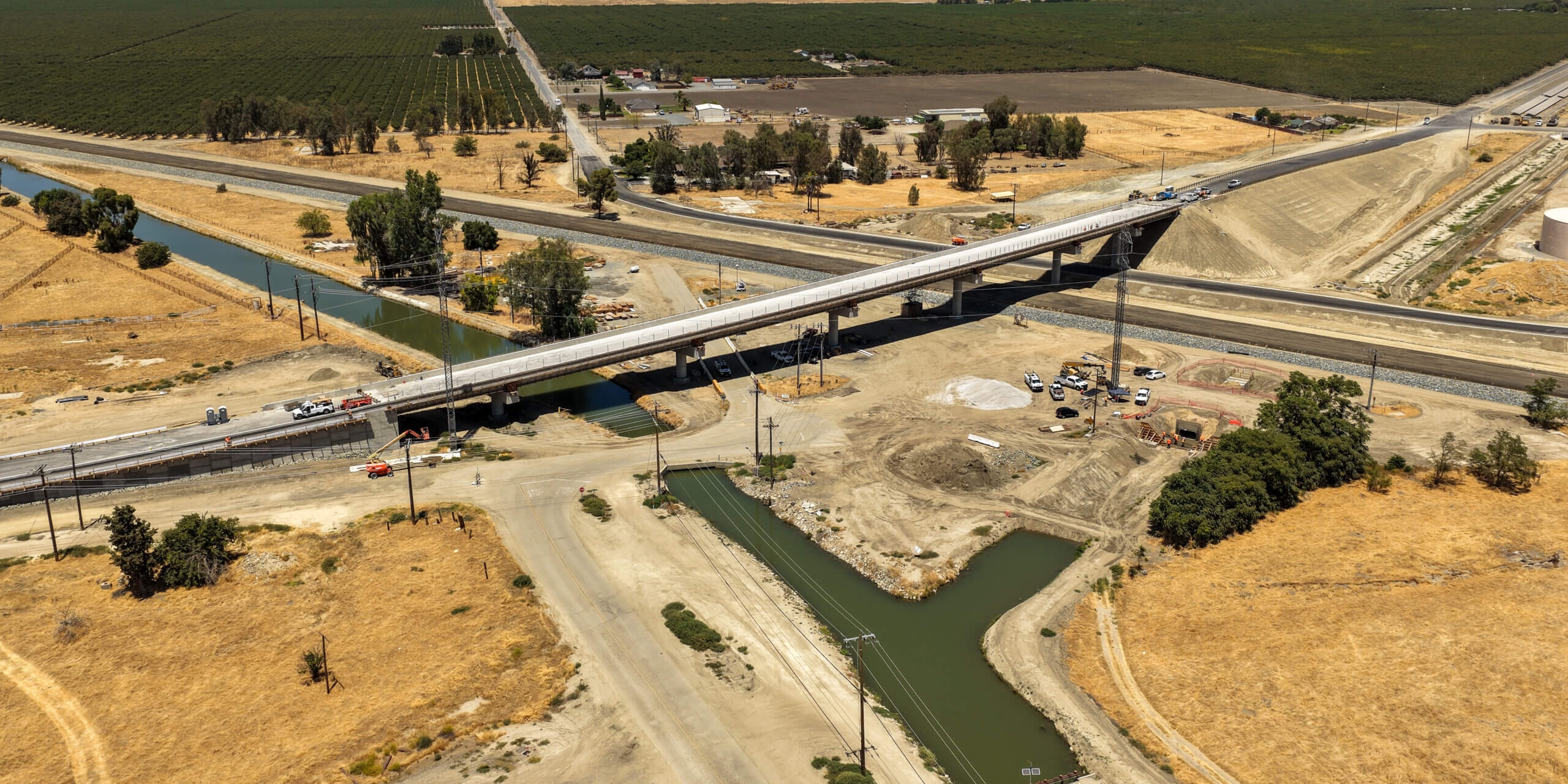
Gavin Newsom, when elected governor in 2019, decided to focus on completing the segment from Merced to Bakersfield in the Central Valley. But even this, which is about one-third of the Phase I route, may not be finished until perhaps 2033 and will cost $35 billion, compared to a projected $6 billion in 2008. Phase I has no projected completion date.
Progressives’ inability to build with the fate of the world hanging in the balance (if climate change is indeed an extinction threat) counsels skepticism for Comrade Mamdani’s city-owned grocery stores in New York.
Why has the project sputtered? First and probably foremost, California never had full funding for Phase I. Any cost estimate depends on the construction period, rendering the original projection meaningless for building 25 years later.
The cost estimate was essentially propaganda. Research documents a global tendency to underestimate cost and overstate revenue for government projects. The projections are not simply erroneous but biased. Ridership revenue was also overestimated but I will skip those details.
Environmental approvals have caused delays. Even today only 90 percent of the Phase I path has approval. To be sure, tunneling through mountains in an earthquake-prone state likely involves complications. But since we had only until 2030 to save the world, delaying the project would itself be an environmental catastrophe, no?
The inevitable politicization of all government decisions provides additional challenges. Politics affects every choice, from the route to contractors for bridges to purchasing the trains.
I imagine that the political demands in woke California are inconsistent with a functioning rail system. We see some evidence of this. The Authority proudly asserts the primacy of DEI for the project and publishes glossy sustainability reports.
By contrast, private sector entrepreneurs face competition and must deliver working products on time. Having a bottom line helps prioritize merit. You can tell your aunt and uncle you cannot afford to hire your incompetent cousin as a manager.
Other (allegedly) environmentally critical projects are also languishing. Fewer than 1,000 of the Inflation Reduction Act’s 500,000 electric vehicle chargers (96 charging stations) were completed at the end of 2025. Energy analyst Robert Bryce observes that at the current rate of construction, doubling the power grid for an all-renewable system will take 140 years.
The California High-Speed Railroad Authority will have retirees before San Francisco to Los Angeles passengers. Politicization of business decisions is unavoidable when government owns the means of production. California’s high-speed rail debacle is a warning for all government ownership.
Daniel Sutter is the Charles G. Koch Professor of Economics at Troy University. The opinions expressed in this column are the author’s and do not necessarily reflect the views of Troy University.