Deer season may get much of the attention in Alabama, but hunters don’t have to wait to head into the woods.
Squirrel season is in full swing across Alabama, bringing with it one of the state’s longtime fall hunting traditions and an opportunity for both experienced and new hunters to get outside.
The 2026-27 season opened Sept. 12 and runs through Feb. 28, according to the Alabama Department of Conservation and Natural Resources. Hunters can take eight squirrels per day and have eight in possession. Fox squirrel hunting is closed in the Bankhead and Tuskegee national forests.
With nearly six months of hunting ahead, squirrel season will carry hunters from the still-warm days of September through the bare trees and colder mornings of February.
And knowing what to look for can make a difference.
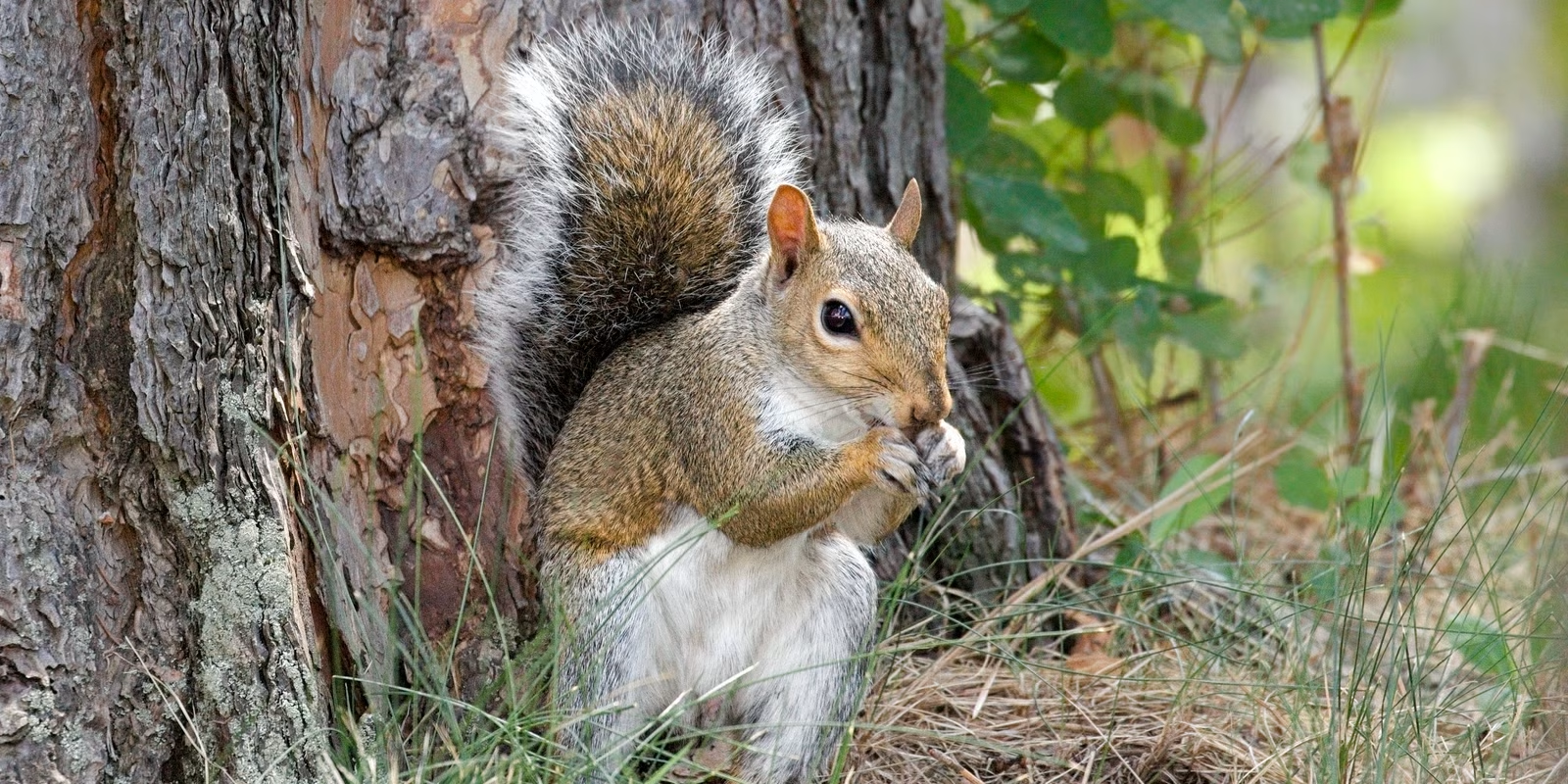
Alabama is home to three species of squirrels — gray, fox and southern flying squirrels — according to ADCNR wildlife information, but gray and fox squirrels are the ones hunters are most likely to encounter during the day.
Gray squirrels are the most common and are typically found in oak and hickory forests mixed with pine and other hardwoods. Acorns, hickory nuts, seeds and fruits are among their food sources, making hardwood areas a natural place for hunters to start looking.
Timing matters, too. According to ADCNR, gray squirrels are most active in the early morning and late afternoon.
Fox squirrels can be a different story. ADCNR says Alabama’s largest squirrel, weighing about 1½ to 2 pounds, tends to favor more open stands of oak, hickory, pine and hardwoods. They spend more time on the ground than gray squirrels and are generally later risers, becoming active around midmorning and again around midday or late afternoon.
Hunters without private property have plenty of options as well. ADCNR says Alabama has more than 1.3 million acres of public hunting land. But where you hunt can change the rules you need to follow.
Those headed to one of the state’s Wildlife Management Areas should check the requirements for the specific WMA they plan to visit, including license and check-in requirements. For small-game hunting, excluding waterfowl, a resident Wildlife Heritage License can be used in place of a resident state hunting license and WMA license.
For someone thinking about dusting off a shotgun or rifle and heading out for the first time in a while, there are a few other things to check before walking into the woods.
Alabama residents who are required to have a hunting license can purchase a Small Game license, which covers squirrels, for $23.40 for the 2026-27 license year. Those planning to hunt deer or turkey as well can opt for an All Game license for $35.30.
There are exceptions. Alabama residents 65 and older don’t have to purchase a hunting license, and resident landowners and their immediate family members who are also Alabama residents can hunt on their own property without purchasing one.
For younger hunters, hunter education may also be part of getting ready for the season. Anyone born on or after Aug. 1, 1977, generally must complete an approved hunter education program before purchasing a hunting license unless hunting under Alabama’s “supervision required” provision or otherwise exempt.
That provision gives someone new to hunting a chance to learn alongside a more experienced hunter. A person who hasn’t completed hunter education can purchase a license under “supervision required” status and hunt while under the normal voice control — and no more than 30 feet away — from a properly licensed hunter who is at least 21.
This year, even buying the license looks a little different. Licenses for the 2026-27 season are being sold through the state’s new My Outdoor Alabama system, which went live Aug. 24. The system can be accessed online or through the updated Outdoor AL app.
Before heading out, hunters should still check the current regulations for the property they plan to hunt, particularly on a WMA or other public land.
Then it’s a matter of finding the right patch of woods and picking the right time of day. With the season stretching through the end of February, Alabama hunters have plenty of mornings and afternoons ahead to take part in a hunting tradition that has been passed down through generations — or perhaps start a new one of their own.
Sherri Blevins is a staff writer for Yellowhammer News. You may contact her at [email protected].