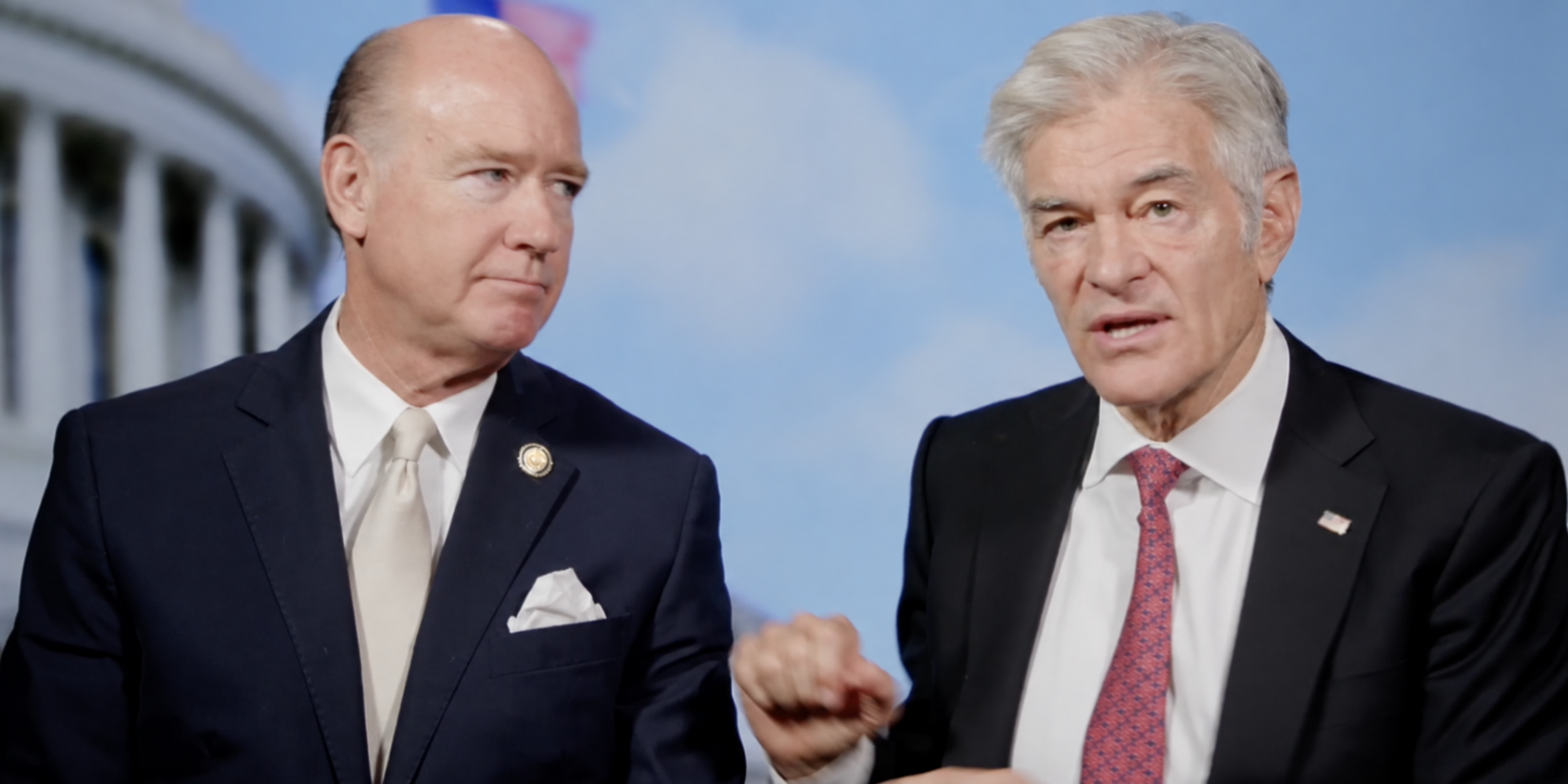
U.S. Rep. Robert Aderholt is highlighting Alabama’s $203 million federal rural health investment, telling Centers for Medicare and Medicaid Services Administrator Dr. Mehmet Oz that better access to care can be a matter of “life and death” for residents of rural communities.
Aderholt sat down with Oz in a video released this week to discuss Alabama’s share of the federal Rural Health Transformation Program, which was created under the Working Families Tax Cuts Act.
Thanks to President Trump and the Rural Health Transformation Program, Alabama is receiving $203 million to invest in new ways to bring better care closer to home.
It was an honor to sit down with @DrOzCMS and discuss this huge win for the residents of our rural counties who… pic.twitter.com/qBie0jkUq9
— Robert Aderholt (@Robert_Aderholt) September 22, 2026
Alabama received an initial fiscal year 2026 award of $203,404,327 through the program, part of a $50 billion nationwide investment in rural healthcare that will distribute funding to states over five years.
Aderholt said residents of his rural 4th Congressional District can face lengthy drives for medical care.
“It affects my district because that means that my constituents have to drive an hour, an hour and a half to get healthcare,” Aderholt told Oz.
He pointed specifically to time-sensitive emergencies such as strokes and serious vehicle crashes, saying the goal should be to make quality care available closer to home.
Aderholt then offered a personal example.
“My father had a stroke several years ago, and he got to the hospital within that golden hour,” Aderholt said. “He made a full recovery, so it makes all the difference in the world. It’s life and death.”
The federal program is intended to expand rural access to specialists and telehealth, strengthen the healthcare workforce and modernize technology used by providers.
Alabama has already committed $144 million of its award through 138 grants aimed at expanding access to care, strengthening the rural healthcare workforce and upgrading healthcare technology and infrastructure. The projects include telehealth and mobile care, mental health and substance-use services, emergency and maternal care, electronic health records and cybersecurity improvements.
The state’s broader plan includes 11 initiatives ranging from expanded rural physician and nursing pipelines to mobile cancer screening, maternal care, EMS improvements and regional specialty networks.
“Where you live should not determine the quality of healthcare that you get or how long you live,” Oz said. “For too many people in rural communities, getting the right care can mean traveling long distances, waiting too long to see a specialist, or going without care altogether.”
He said the investment is intended to change that by strengthening Alabama’s rural healthcare workforce, expanding specialist and telehealth access and using technology to better connect patients with providers.
Sawyer Knowles is a state and political reporter for Yellowhammer News. You may contact him at [email protected].