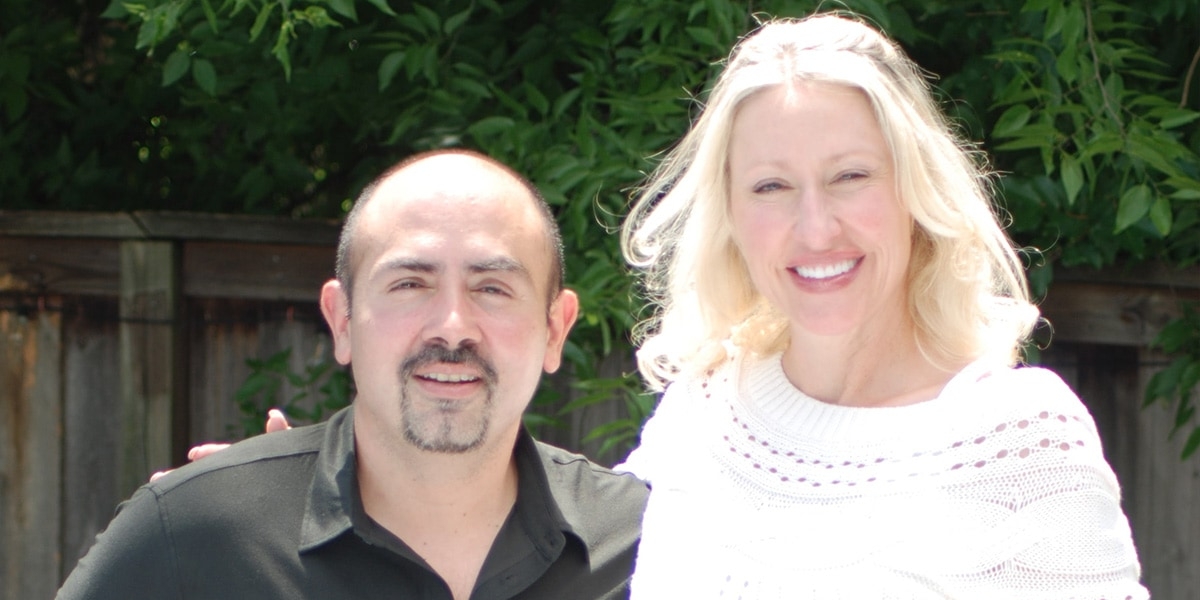
An Alabama physician is one year cancer-free after UAB doctors made a high-risk treatment decision they say saved his life from a rare illness that initially left him with virtually no chance of survival, according to the University of Alabama at Birmingham.
Dr. Edwin Villarreal’s diagnosis was hemophagocytic lymphohistiocytosis, or HLH, an aggressive condition in which the immune system becomes dangerously overactive. In his case, it was caused by an underlying lymphoma.
Doctors determined that, without intervention, the condition carried a 100% mortality rate.
Villarreal’s case required physicians from multiple specialties to move away from the standard treatment approach because he was too ill to undergo chemotherapy before doctors knew what was causing the HLH.
They concluded that removing his spleen offered the only realistic path to stabilizing his condition and identifying the underlying lymphoma.
Villarreal, an Alabama hospitalist and graduate of the UAB Marnix E. Heersink School of Medicine’s Montgomery campus, first noticed recurring fevers, weight loss and chills after exercising in January 2024.
As his symptoms worsened, he went to an emergency room, where a CT scan revealed an enlarged spleen.
Villarreal was hospitalized at UAB in August and diagnosed with HLH. The inpatient team consulted Dr. Gaurav Goyal, an associate professor in the Division of Hematology and Oncology who specializes in rare disorders such as HLH.
Doctors faced a difficult decision. Villarreal’s blood count was so low that performing a spleen biopsy was considered risky, and physicians could not begin chemotherapy without identifying the cause of the HLH.
With the spleen identified as the likely source of the problem, Goyal consulted Dr. Sushanth Reddy, a UAB surgical oncologist. Reddy said Villarreal was too ill to receive the standard treatment of chemotherapy for the underlying lymphoma.
A multidisciplinary UAB team met that night to weigh the risks of removing the spleen.
“If we only considered his numbers, we would not do a splenectomy because the mortality rate was 20 percent,” Goyal said. “However, when the mortality without doing the procedure is 100 percent, the risk-benefit ratio changes quite a bit.”
Physicians were equally candid with Villarreal. He said Reddy told him he might have only a week or two to live without the operation but warned that he also might not survive the procedure because of the risk of bleeding.
“Dr. Reddy told me that, if we don’t do this, you probably have a week or two weeks left, if anything,” Villarreal said. “The problem is, if I take you to the operating table, you may not survive either because you may bleed out.”
Villarreal chose to proceed with surgery the next morning.
The operation proved to be a turning point. According to UAB, Villarreal’s numbers began improving almost immediately after his spleen was removed.
The surgery also allowed doctors to diagnose diffuse large B-cell lymphoma, an aggressive lymphoma believed to have caused the HLH.
After the surgery, physicians cautiously began chemotherapy while monitoring Villarreal’s recovery before increasing treatment to full doses, according to UAB.
He completed therapy with virtually no side effects, made a full recovery and has remained cancer-free for the past year.
UAB says Villarreal’s recovery is already influencing care beyond his own case. The university has launched a clinical trial focused on HLH and now uses his case to help train residents at the O’Neal Comprehensive Cancer Center, Alabama’s only National Cancer Institute-designated cancer center.
“This is one story,” Goyal said. “But it has expanded options for patients across the state. Edwin’s case truly shows what’s possible when you have that level of collaboration under one roof.”
Sherri Blevins is a staff writer for Yellowhammer News. You may contact her at [email protected].