When I was growing up, Americans could disagree passionately about politics while remaining united on some fundamental principles. One of them was an understanding of the dangers posed by communism and Marxist ideology.
That conviction wasn’t confined to just Republicans or just Democrats. President John F. Kennedy understood that the contest with communism was about more than military power. It was a contest between fundamentally different ideas about human freedom. A generation later, President Ronald Reagan spoke with moral clarity about the failures of the Soviet system, pursuing policies that helped bring the Cold War to its peaceful conclusion.
Far-left ideology literally required the construction of a concrete barrier, the Berlin Wall, to keep people from trying to escape to liberty and free enterprise. While capitalism isn’t perfect, people still run toward it and away from socialism.
Americans saw what happened when governments accumulated enormous political and economic power. We understood why individual liberty, private property, free enterprise, and constitutional government were worth defending.
Today, some of those lessons appear to be fading from our national memory.
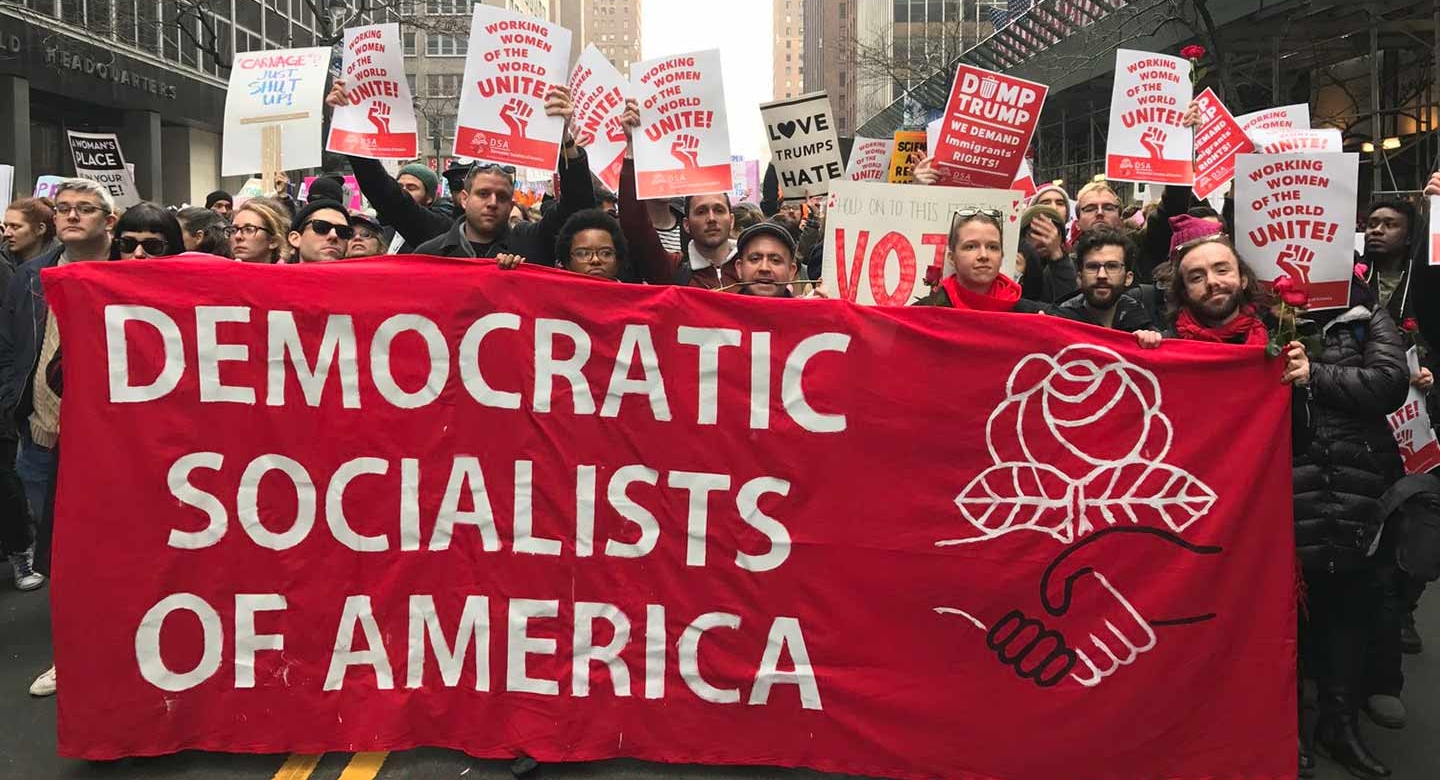
The Democratic Socialists of America (DSA) have infiltrated the Democratic Party and are currently pushing an agenda that isn’t just left leaning; it’s a direct threat to this nation’s way of life and our greatness as a nation.
The DSA recently released a program calling for changes that should concern Americans regardless of political affiliation. It advocates abolishing the United States Senate and replacing the president and Supreme Court with an executive and judiciary selected by and subordinate to Congress. It also calls for public ownership of America’s largest corporations and essential industries. I have the tremendous privilege of serving in the United States House of Representatives, and I believe deeply in the institution in which I serve. But I do not want Congress to possess unchecked authority over the other branches of our government.
The American founders deliberately divided federal power among three branches. The president is not supposed to be subordinate to Congress, nor is the judiciary. Congress writes the laws, the executive enforces them, and the courts interpret them. That arrangement can sometimes be frustrating and inefficient. However, it was designed that way because liberty is safer when power is divided.
The economic vision being advanced is equally troubling. The DSA program describes food, energy, medicine and transportation as goods and utilities that should no longer operate as for-profit businesses. It calls for publicly owned energy and transit infrastructure and for public ownership of the nation’s largest corporations and essential industries.
Consider what that principle would mean if carried to its logical conclusion. Some of America’s most innovative and economically important companies could ultimately come under government ownership rather than private ownership.
That is a profound departure from the economic system that made America the world’s greatest engine of innovation and opportunity. All of that would come to a grinding halt.
I understand why some Americans find promises of sweeping economic change appealing. Families are paying more for groceries, housing, utilities, and other necessities. People who work hard and still struggle to make ends meet have every right to demand that Washington address the cost of living.
We should not forget that during the Biden administration and Democrat control of Congress inflation surged to 9.1%, the highest level in four decades. Inflation is now at 3.4%. We would certainly like to see it come down further, but why would we want to achieve that by putting a socialist-infused Democratic Party back in power?
To that point, frustration with high prices does not make government ownership of the economy the solution.
History gives us ample reason for caution. Economies characterized by extensive central planning have repeatedly struggled with shortages, inefficient allocation of resources, weak incentives for innovation, and, in some prominent cases, devastating inflation. Government cannot repeal the basic laws of economics simply by declaring goods to be rights or transferring industries from private hands to public ownership.
We should also remember that America does not have to choose between ignoring the struggles of working families and abandoning free enterprise. We should pursue policies that make it easier to work, invest, build businesses, produce energy, and manufacture goods here at home. President Trump and Republicans in Congress have been working to do just that. With the One Big Beautiful Bill that Congress passed last year, we cut taxes, ended taxes on tips, and invested in America’s manufacturing base. The best example of that is right here in Alabama’s Fourth District, with the $2 billion Hadrian facility in Colbert County.
Competition and innovation, not greater political control over economic life, remain our strongest tools for creating broadly shared prosperity. Under Marxist ideology, everyone shares the poverty. Under capitalism, everyone has the opportunity to share the wealth.
The Cold War generation understood something we should never forget: freedom is not self-sustaining. Every generation must defend the institutions that preserve it.
We can debate taxes, spending, healthcare, and economic policy vigorously. That is democracy. But concentrating political authority in one branch of government while concentrating economic authority in government itself would move America in precisely the wrong direction.
The House of Representatives is scheduled to vote this week on a resolution condemning socialism. The measure will put Democrats on the record as to whether they support the influx of socialist candidates into their party ahead of the midterm elections.
The answer to today’s economic difficulties is not to resurrect ideas whose failures previous generations witnessed firsthand. It is to renew the principles that have served this country for 250 years: divided government, individual liberty, private enterprise, and freedom under the Constitution.
Robert Aderholt (R-Haleyville) represents Alabama’s 4th Congressional District. He is a senior member of the House Appropriations Committee.