The families who work the boats and docks in House District 105 do not need a lecture on what the commercial seafood industry means.
It is surnames on the stern, docks that have been working for generations, and a way of life that still puts Alabama shrimp, oysters, and fish on tables across this state.
That industry has been under siege for years. Cheap, subsidized foreign shrimp floods grocery stores and restaurant kitchens. Too often it is sold without anyone telling the customer where it came from or how it was raised. Prices collapse. Boats stay tied up. Young people leave the water because they cannot see a future in it.
I have spent my time in the House trying to give our fishermen and processors a fighting chance: country-of-origin labeling so Alabamians can choose Gulf product over mystery imports, tax relief for direct sales off the boat, oyster-shell recycling credits, and seagrass restoration so the nursery habitat that feeds the harvest does not disappear. Those are state tools. They matter. They are not enough by themselves.
Federal policy decides whether our people compete on a level field or get buried by dumped product from countries that do not play by our rules. That is where Senator Tommy Tuberville has shown up.
Coach has not treated Gulf Coast seafood as a photo opportunity. He has treated it as an industry worth defending. He pressed the U.S. International Trade Commission when it imposed duties on dumped frozen warmwater shrimp from Ecuador, India, Indonesia, and Vietnam, and called that decision what it was: a chance for Alabama shrimpers to compete if the rules are fair.
RELATED: Sen. Tuberville sounds alarm on radioactive imported shrimp after FDA issues eight safety alerts
RELATED: ‘Sharp teeth’: State Rep. Chip Brown files bill to penalize restaurants skirting seafood law
He has said in Senate hearings what every dock in my district already knows: most of the shrimp Americans eat is imported, much of it produced under conditions we would never accept here, and it is undercutting the men and women who work our waters.
He has pushed for stronger country-of-origin standards at the federal level and demanded answers when imported shrimp triggered repeated FDA safety alerts. He has backed tariffs and trade enforcement instead of pretending that “free trade” means we have to absorb everyone else’s subsidies. That is the same fight our labeling law is trying to win in Montgomery.
Washington and the State House have to pull in the same direction or the boats lose.
The port is part of the same story.
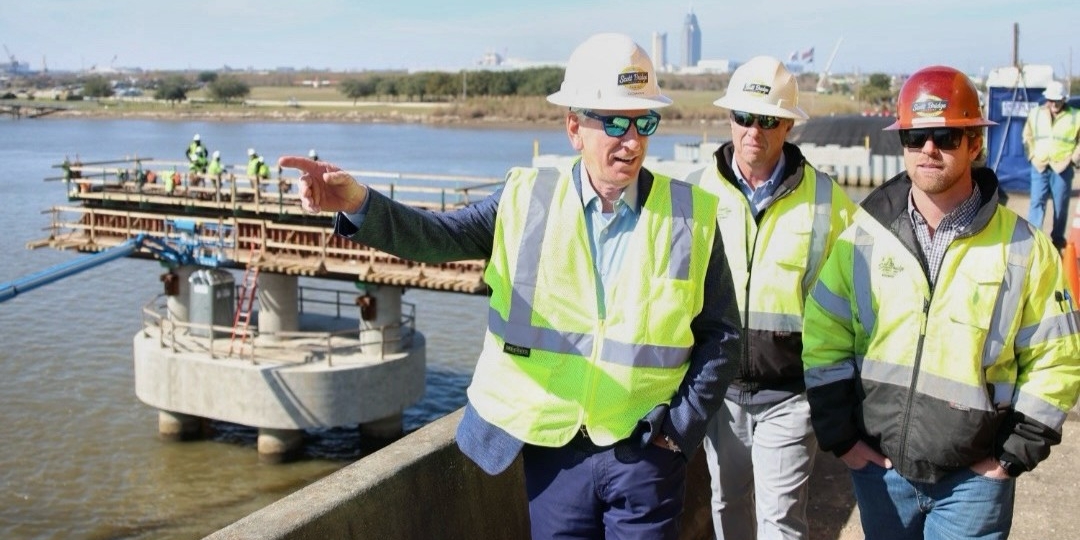
The Port of Mobile is one of the fastest-growing ports in the country and one of Alabama’s largest economic engines. Expanding capacity and keeping cargo moving are not abstract infrastructure projects. They are jobs, tax base, and the artery that moves Alabama products to the rest of the world. Senator Tuberville has secured federal support for the Alabama Port Authority and related waterway projects.
He has visited the Port Authority, credited the people who built the current expansion, and said a governor’s job is to take that work and run with it.
A lot of politicians will show up for a ribbon cutting. Fewer will spend political capital on trade cases, labeling, and the unglamorous work of keeping a working waterfront strong.
Alabama is choosing a governor this November. The next person in that office will set the state’s economic priorities, appoint the people who run our conservation and transportation agencies, and decide whether coastal industries are treated as heritage or as afterthoughts. Coach Tuberville has already shown, from Washington, that he understands the difference.
I represent the southernmost House district in Alabama. My neighbors do not need another speech about how much we love the Gulf. They need a governor who will fight the same fights we have been fighting in Montgomery – fair markets for our seafood, honest labeling, healthy habitat, and a port busy enough to keep this region growing.
That is the record Tommy Tuberville has built. That is why I am supporting him for governor.
State Rep. Chip Brown of Hollinger’s Island represents House District 105 and serves as chairman of the House Committee on Ports, Waterways, and Intermodal Transit.