A 2022 federal law sold as a drug-price fix has made Medicare drug coverage “four times higher for us than we ever paid before,” the director of Alabama’s public education health plan said Friday – and Alabama taxpayers are about to be asked for $222 million more to cover the gap.
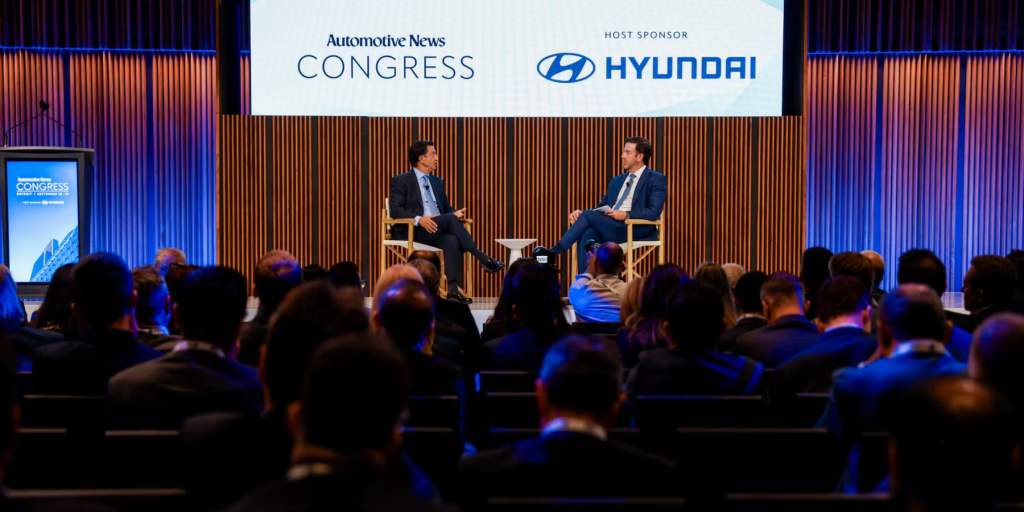
David Wales, director of the Public Education Employees’ Health Insurance Program, which covers roughly 350,000 Alabama educators, retirees and dependents, made the comments at Freedom First Alabama’s “Freedom Forum” on Friday.
Jason Isbell, Senior Vice president of State Government Affairs and Economic Development at Regions Bank, moderated.
Wales said the plan has held total cost growth under 5% a year since 1983. He said three forces broke that pattern: the organic growth of healthcare, a spike in utilization as procedures moved to outpatient settings, and the Inflation Reduction Act’s overhaul of Medicare drug payments.
“Medicare used to be the best business for us by far, extremely cheap because it was so heavily subsidized from the federal government,” Wales said. “When the Inflation Reduction Act changed that up, all of a sudden Medicare plans were extremely expensive.”
The law’s federal drug price negotiation wipes out manufacturer rebates on negotiated drugs and forces plans to cover them in every dosage form, Wales said.
Insurers bidding on multi-year Medicare contracts now inflate future-year prices because they cannot predict which drugs land on the list.
“They can give you a price for this year, but when you look out in future years, it’s much higher,” Wales said. That uncertainty drove the 10% shortfall PEEHIP once projected for fiscal 2027, he said.
The first 10 federally negotiated Medicare prices took effect January 1.
The Centers for Medicare and Medicaid Services announced prices for 15 more drugs in November 2025, including semaglutide, sold as Ozempic and Wegovy, effective January 2027 – and a third list is due for 2028.
Wales said the law’s $2,000 out-of-pocket cap, marketed as relief for seniors, did the opposite for group plans like PEEHIP, whose members already paid far less than that.
“It didn’t do that for group plans. What it did is it shifted more cost from the beneficiary to the plan itself,” he said.
“You haven’t really reduced the cost of the drug,” Wales said. “You just moved it from one place to the other, and unfortunately, many of the regulatory items that we see are targeted at that last step instead of getting at the beginning of that supply chain to truly lower the cost.”
Isbell said the audience should be clear about who pays when a public plan absorbs a mandate. “When it comes to the public plans, PEEHIP, SEIB, it’s not the business that necessarily has to absorb those costs. It’s us, right? It’s the taxpayers,” he said.
Wales said PEEHIP “is primarily funded from state dollars, and then it’s secondarily funded from member dollars,” and that once cost containment is exhausted, “we really hit a hard wall of not a lot of good options.”
PEEHIP’s board voted earlier this month to request $222 million more from the Education Trust Fund in fiscal 2028.
The request would raise the state’s monthly contribution per member from $1,048 to $1,226.
The next day, the State Employees’ Insurance Board asked for a $75 increase in the state’s monthly contribution per employee, a change that would cost the General Fund an estimated $480 million.
Alabama Department of Finance Director Bill Poole, who departs from that role this week, warned both boards of “tightening budgets on the ETF side and a very, very challenging budget next year on the General Fund side.”
Wales said Friday that a mandate forces a cost into a system where every price is already negotiated against every other price, and the pressure spreads.
“It creates pain points throughout the rest of it,” he said. “When you have that coverage mandate come in, then it exacerbates every issue of plan management.”
He defended prior authorization against a growing push to restrict it, saying denials are the small share that “runs afoul” of national clinical standards and that the process “eliminates tens of millions of dollars of bloat” while catching dangerous drug interactions.
He also warned lawmakers that copay accumulator bills spreading through other statehouses would turn manufacturer coupons into a way for drugmakers to zero out a patient’s deductible on the plan’s dime.
“That individual, that patient, really hasn’t paid anything,” he said.
Wales said the next fight is already visible: Medicare’s temporary federal coverage of GLP-1 weight-loss drugs ends after about a year, and those patients will “come knock on our door saying, ‘What are we supposed to do?’”
The State Employees’ Insurance Board approved its first employee premium increase in 11 years earlier this month.
Freedom First Alabama launched in March with the Business Council of Alabama, the Alabama Farmers Federation and the Alabama Policy Institute among its founding members.
Grayson Everett is the editor in chief of Yellowhammer News. You can follow him on X @Grayson270.