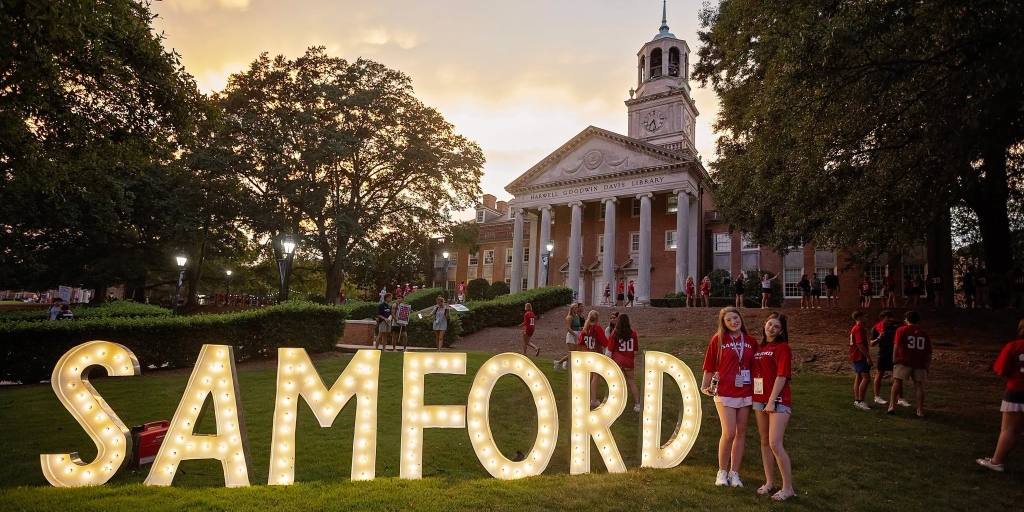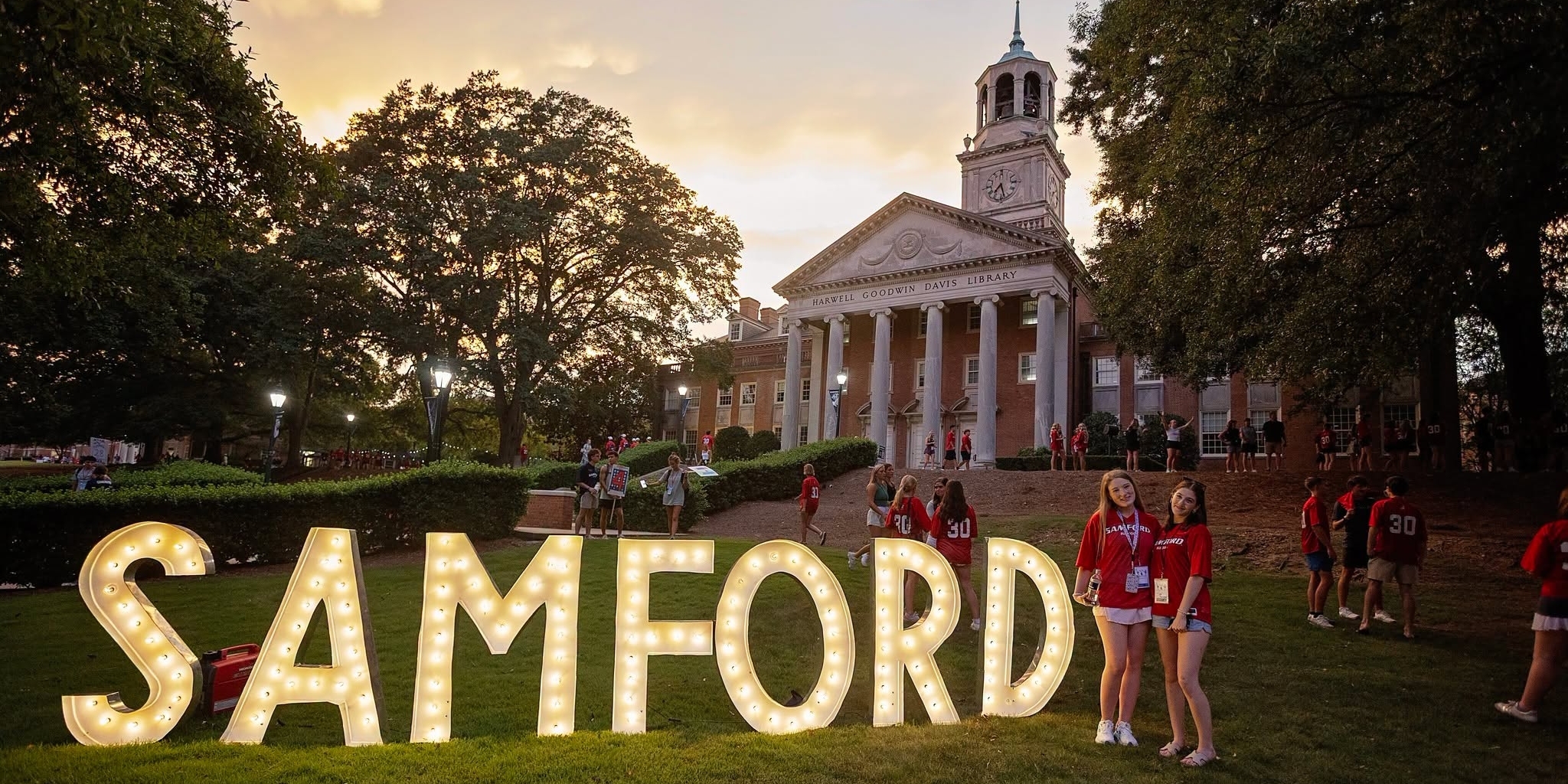
Students buying meals, families booking hotel rooms and crews building new campus facilities all contribute to Samford University’s economic impact in Alabama, which a new study estimates at $1.08 billion during fiscal 2025.
The Public Affairs Research Council of Alabama estimates that activity associated with the Homewood university supported 7,646 jobs statewide through university operations, campus investment, visitor spending and out-of-state student spending.
The total measures economic activity associated with those four sources, including their effects on other businesses and workers across Alabama.
Samford’s role as an employer provides the foundation. The university reported $218.7 million in operating expenditures and employed 2,157 faculty, staff and student employees during fiscal 2025. The study estimates that its operations supported $473 million in statewide economic output and 3,230 jobs.
As a private university, Samford does not receive state appropriations for general operations.
“As Samford University broadens its national profile, the university’s economic footprint increasingly benefits the residents of Alabama. More than $1 billion in economic impact is a testament to Samford’s growing significance to the Birmingham region and Alabama,” said Samford President Beck A. Taylor.
“Sustained enrollment growth across two decades has introduced our state to new generations of Samford students, many of whom remained here after graduation to build careers and families. That momentum coincides with Samford expanding investments in faculty, staff and transformative campus construction projects.”
Beyond its daily operations, Samford draws visitors to Homewood for athletic events, performances, lectures, conferences, summer camps and alumni and family gatherings.
The study estimates that spending associated with campus visitors supported $277.3 million in statewide economic output and 2,334 jobs. That includes spending on lodging, food, shopping, entertainment and transportation. Campus residents and employees were excluded from the visitor population used in the study.
Students arriving from outside Alabama bring another source of spending to surrounding communities.
In fall 2025, 3,843 of Samford’s 6,324 students — about 61% — came from other states. Their living expenses, separate from payments made directly to the university, supported an estimated $111.9 million in statewide economic output and 849 jobs.
Campus construction also contributed substantially to the fiscal 2025 total.
Samford reported $117.8 million in capital expenditures during the year, largely driven by a 165,000-square-foot Campus Recreation, Wellness & Athletics Complex and new residence halls adding 653 beds to central and west campus.
The study estimates that capital investment supported $217.7 million in statewide economic output and 1,233 jobs. The university described fiscal 2025 as an unusually high year for capital spending, making construction a particularly significant part of that year’s findings.
Samford’s connection to Alabama’s economy also extends beyond students’ time on campus.
Of its 59,179 living alumni, 29,443 — nearly half — reside in Alabama. Among those Alabama residents, 16,865 live outside Jefferson County.
“Samford’s influence stretches beyond higher education,” said Birmingham Mayor Randall Woodfin, a graduate of Samford’s Cumberland School of Law. “As a net importer of talent, the university fuels our region’s workforce with professionals who thrive in high-demand fields and strengthen many communities.”
A separate workforce analysis included in the study found that occupations represented among Samford-associated professional profiles overlap with Alabama workforce needs, including nursing, pharmacy, other health care professions, software development, accounting and management.
PARCA conducted the economic study using information supplied by Samford and external data sources.
Sherri Blevins is a staff writer for Yellowhammer News. You may contact her at [email protected].