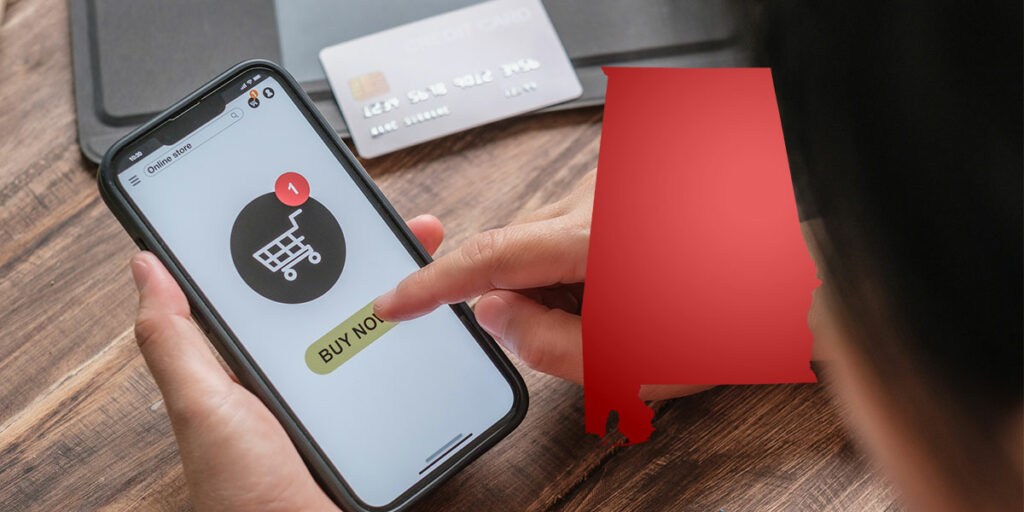
The City of Mobile is joining a lawsuit against Alabama Department of Revenue Commissioner Vernon Barnett, escalating a growing legal fight over how the state collects and distributes revenue from online purchases under the Simplified Sellers Use Tax (SSUT).
In a news release from Mobile on Monday, Mayor Spiro Cheriogotis said Mobile is “losing $34 million a year” under SSUT and warned the impact will grow as e-commerce expands.
“If we continue to allow local dollars to be redistributed across the state, cities like Mobile will not be able to maintain the services citizens expect and rely on every day,” Cheriogotis said.
“Mobilians’ tax dollars should be reinvested in their own community to enhance public safety, support economic development and improve local infrastructure. Instead, we are losing $34 million a year to SSUT, and this problem is only going to get worse as online sales continue to grow.”
SSUT was created by the Legislature in 2015 as a voluntary, simplified option for certain remote sellers to collect a flat 8% tax on sales shipped into Alabama, rather than calculating and remitting the varying state and local sales tax rates that apply across jurisdictions.
In its announcement, Mobile argued the flat-rate system can result in higher effective taxes for customers in lower-tax jurisdictions and, at the same time, reduces revenue for cities that rely heavily on sales taxes to fund local government operations.
Mobile also contends that taxes paid by Mobile residents are being redistributed statewide under SSUT’s population-based local distribution formula.
“Whether you live in a small town or a major city, every Alabama community deserves to be treated fairly,” Cheriogotis added.
“The current SSUT structure isn’t fair to anyone, and left unchanged, this system will continue to decimate municipalities across the state. Mobile cannot sit on the sidelines while these critical decisions about our city’s future are made in the courts.”
According to the announcement, Mobile is seeking to join the suit filed in August by the City of Tuscaloosa and Tuscaloosa City Schools in Montgomery County Circuit Court.
That lawsuit challenges the fundamental legality of aspects of SSUT and alleges the program is being applied beyond its intended scope.
Among its claims, Tuscaloosa’s complaint alleges ADOR has allowed companies with a physical presence in Alabama to participate in a program designed for sellers without an in-state footprint.
On its SSUT program page, ADOR describes an “eligible seller” as one selling into Alabama from outside the state and “does not have a physical presence in the state,” and notes that a 2017 amendment limits continued participation if a seller establishes nexus via a storefront or certain affiliations.
Tuscaloosa’s filing also outlines constitutional and administrative challenges, including the program’s “participant’s choice” structure and disputes over how certain delivery platforms are treated under SSUT rules.
Other municipalities have already lined up behind Tuscaloosa.
The Mountain Brook City Council voted unanimously in July to join the lawsuit, arguing the current distribution method shortchanges cities with high volumes of online purchases. Last week, the City of Madison held an informational meeting with Mayor Maddox to learn more.
The SSUT is a major revenue stream statewide.
The Department of Revenue’s 2024 annual report lists total SSUT collections of about $850.7 million in FY 2024, with marketplace facilitators accounting for the majority.
Grayson Everett is the editor in chief of Yellowhammer News. You can follow him on X @Grayson270.