There are 126 days until Alabama’s statewide primary election on May 19, and what once felt like a lifetime away is suddenly just around the corner.
The Alabama Poll just wrapped up our second look at the 2026 Republican primary, and if you’re wondering where the real action is, it’s the U.S. Senate race.
The good news for political junkies is that we’ve got a crowded field, plenty of uncertainty, and a ton of persuadable voters. The bad news – for the candidates, anyway – is that there’s not much time left to introduce yourself, define yourself, and (just as importantly) make sure your opponents don’t define you first.
At this point, I’ve focused on the Republican side because, candidly, that’s where the drama is. Democrats have three candidates running for the open Senate seat, and while someone will win their nomination, deep-red Alabama means the eventual Democratic nominee is headed into the general election as a heavy underdog.
Whatever is missing on the Democratic side is more than made up for in the Republican brawl – so since that’s why you’re here, let’s get into it.
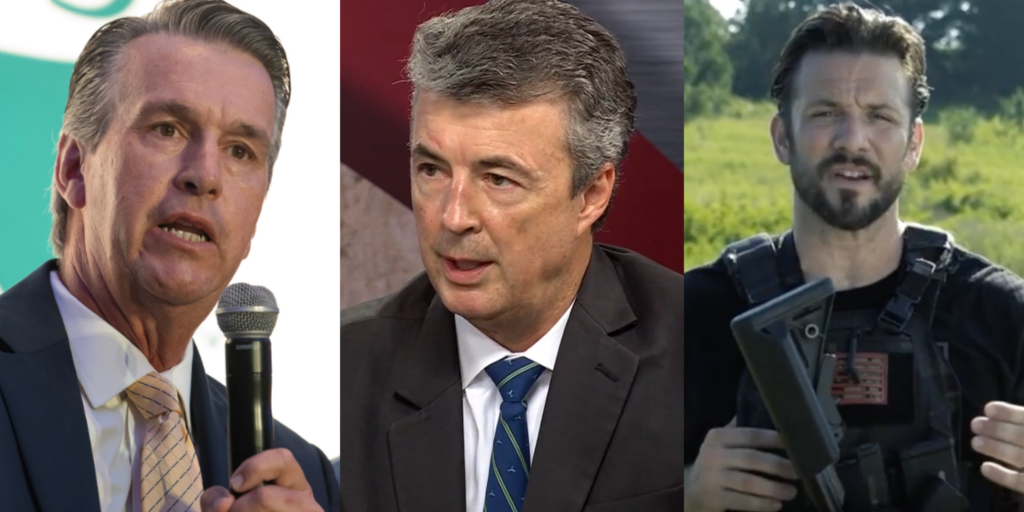
Republicans currently have a five-person field: Attorney General Steve Marshall, Congressman Barry Moore, Jared Hudson, Rodney Walker, and Morgan Murphy.
Based on our December 2025 polling, this is Steve Marshall’s race to lose. The only real question is whether he can finish the job without a runoff. That’s a high bar, but it’s not a crazy one – and here’s why.
First, Marshall starts with the strongest fundamentals in the field: high approval, low disapproval, and – most importantly – enough familiarity that voters aren’t squinting and asking, “Wait, who?”
Overall, Marshall clocks in at 46% approve / 12% disapprove. That’s a 3.8:1 approval ratio. Generally, I like to see candidates north of 3:1 if they want a healthy launchpad. Marshall clears that threshold.
His regional numbers are also solid:
- Birmingham: 45% / 13% / 42% Unknown, Never Heard Of
- Dothan: 56% / 8% / 36%
- Huntsville: 51% / 9% / 40%
- Mobile: 29% / 12% / 59% (and yes, everyone struggles in Mobile)
- Montgomery: 46% / 14% / 41%
The Dothan number jumps off the page – and I’ll come back to why in a moment. Bottom line: Marshall begins this race as someone voters not only recognize but generally like.
That matters because his opponents are going to have to spend real money to change the shape of that image – and that’s harder to do when voters already have a positive impression.
Most people assume Congressman Barry Moore is Marshall’s main competition. That’s fair – but Moore has a unique set of issues to work through.
He should have a natural base in the Wiregrass, but he’s also coming out of a bruising intra-party fight and, at least in our numbers, hasn’t fully recovered. His approval/disapproval picture is uneven, and he’s still operating from a limited geographic footprint.
Outside his home territory, he’s simply not well known enough yet to be dominant statewide.
Take Birmingham, the most expensive media market in the state: Moore is at 14% approve / 5% disapprove, with 80% saying they don’t know him or haven’t heard of him. That means he’s got to spend heavily just to get to “Hello, nice to meet you,” much less to “Yes, I’m voting for you.”
In Huntsville, he’s at 23% / 4% / 73% unknown. In Montgomery, he improves to 44% approve / 8% disapprove, with 49% still not knowing him.
But here’s the part that should worry him: even near home, he’s carrying some baggage.
In Mobile, he’s at 26% approve / 23% disapprove, with 51% not knowing him. That’s basically a coin flip – and you don’t want your “known” voters splitting down the middle. The bright side is that high unknown gives him room to improve.
And then there’s Dothan, which matters because it’s as close to his natural base as you’re going to get in a statewide poll. There, Moore sits at 61% approve / 28% disapprove – a 2.1:1 ratio – with only 11% not knowing him.
That’s not fatal. But it’s a warning light. If you’re already that defined in your backyard – especially with that level of disapproval – you’re not starting from scratch statewide. You’re starting with a pre-existing narrative, and you’ve got to spend money and time fixing it. Money can be found. Time can’t.
So, the question for Moore becomes simple: can he raise enough, fast enough, to introduce himself statewide and improve his image where he’s already best known? That’s a tall order with 126 days on the clock.
The remaining candidates are, at this stage, largely unknown:
- Hudson: 14% approve / 2% disapprove, but 84% don’t know him
- Walker: 7% / 2%, with 91% not knowing him
- Murphy: 4% / 2% – effectively starting at zero (though he just reported raising over $1 million in his first quarter, which can change the trajectory quickly)
For these candidates, “unknown” is both blessing and curse. The blessing is that you have room to grow. The curse is you’re not on the board yet – and in a race with limited time, it’s hard to build statewide recognition from scratch unless you have real resources and a clear lane.
All of this brings us to what matters most: the ballot test. In a head-to-head matchup today, Marshall leads with 30%, followed by:
- Moore: 12%
- Hudson: 8%
- Walker: 3%
- Murphy: 1%
From Moore back, you’re essentially looking at a statistical tie given the margin of error (4%). But the biggest number on the page is this: 46% undecided. That means the race is far from settled – but it also means the candidates have a shrinking window to make their case.
So, here’s the picture: Steve Marshall is in the driver’s seat, but he still must run a real campaign and finish strong. He has a plausible path to winning outright in May. He starts with 30%, he’s well-liked, and nearly half the electorate is still shopping.
Is it realistic for him to pull 20 points from the undecided pool and clear 50%? It’s hard – but it’s not out of the question.
And for everyone else? The message is even simpler: start now. Because in 126 days, voters aren’t going to reward late arrivals. They’re going to reward the candidates who showed up early, defined the race, and made it easy for people to say “yes” when they finally step into the voting booth.
The clock is ticking.
Michael T. Lowry is the founder and principal of The Alabama Poll and the founder of Backstop Strategies, a Washington, D.C.-based government affairs firm. A native Alabamian, he has more than 30 years of experience in politics and government and most recently served as chief of staff to U.S. Rep. Robert Aderholt.