Lockheed Martin is expanding its hypersonic missile manufacturing operations in Alabama after securing a $694 million U.S. Air Force contract to produce a weapon capable of traveling more than five times the speed of sound.
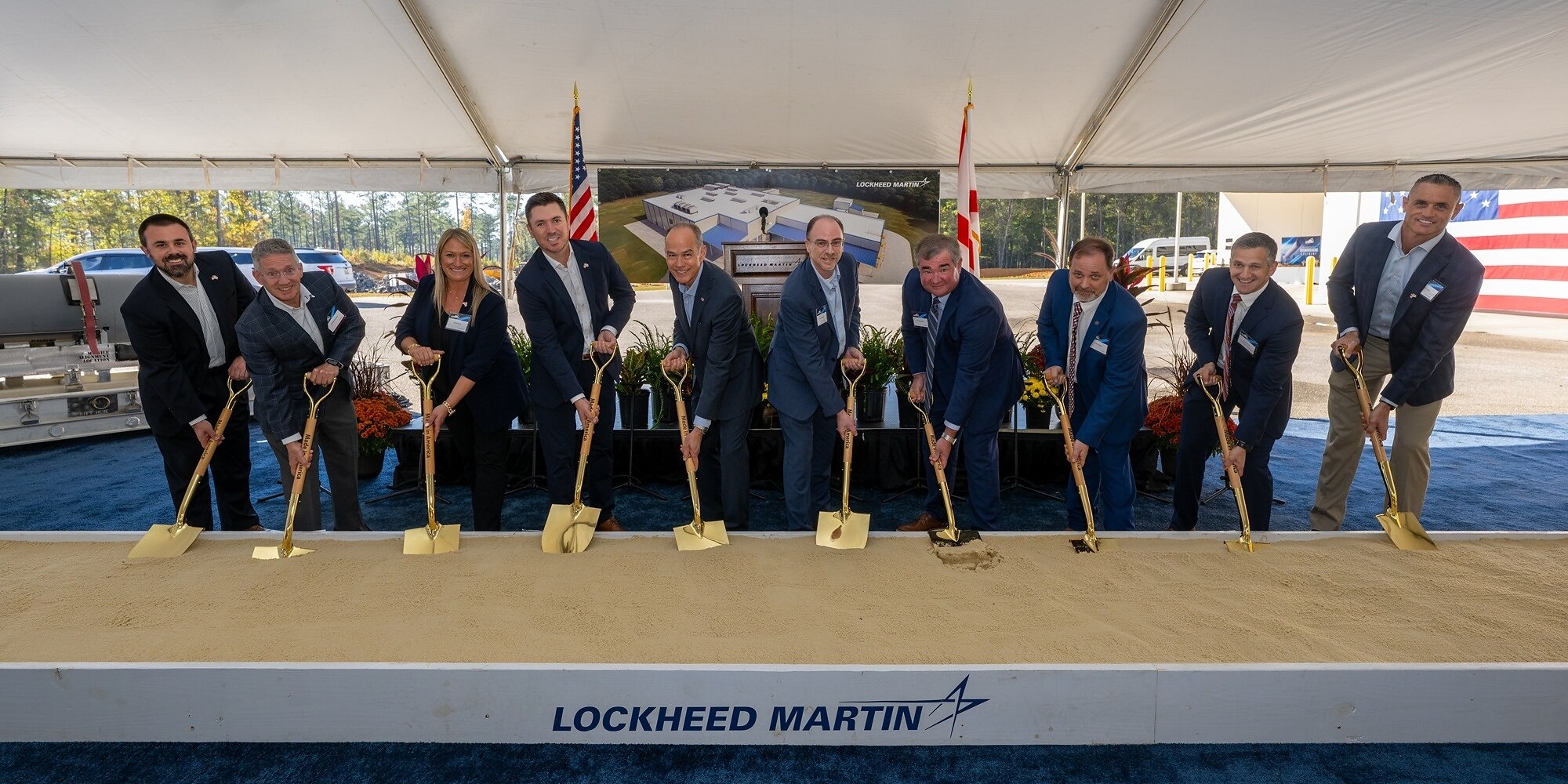
The company announced the award Tuesday as it broke ground on a 47,000-square-foot expansion of Building P-20 at its production facility in Troy.
The project will triple the building’s existing production space for the Air-Launched Rapid Response Weapon (ARRW), a hypersonic missile designed to be launched from the Air Force’s B-52 bomber.
Lockheed Martin said it has invested $67 million in the expansion and production equipment ahead of receiving government funding. The company expects the project to create jobs over the next four years but did not disclose how many.
The groundbreaking follows a separate expansion announced in May, when Lockheed Martin began construction on an 87,000-square-foot Munitions Production Center in Troy to support Terminal High Altitude Area Defense (THAAD) interceptor production and future Next Generation Interceptor work.
At the time, the company identified ARRW among the programs slated for additional facility expansions in Alabama. The latest groundbreaking advances those plans while adding a $694 million Air Force production contract.
From testing to production
ARRW is designed to travel at speeds exceeding Mach 5, strike targets from long distances and maneuver to overcome enemy defenses, using advanced materials to withstand extreme heat and guidance technology to maintain accuracy during hypersonic flight, according to Lockheed Martin.
“The ARRW production contract award showcases Lockheed Martin’s ability to develop and begin production on cutting-edge systems at unprecedented speed and scale,” said Tim Cahill, president of Lockheed Martin Missiles and Fire Control. “ARRW expands our weapon systems portfolio and launches a critical, high-precision, and sustained hypersonic capability that will enhance the U.S. Air Force’s strategic advantage across multiple domains.”
The contract marks a turnaround for ARRW, which faced an uncertain future following testing setbacks.
In written testimony to a House Armed Services subcommittee on March 29, 2023, then-Air Force acquisition chief Andrew Hunter said the service did not intend to purchase additional ARRW missiles after the program’s prototype testing concluded as reported by Air & Space Forces.
However, during a June 5, 2025 covered by Defense Scoop, hearing before the House Armed Services Committee, Air Force Chief of Staff Gen. David Allvin said the service was seeking funding for ARRW in its fiscal 2026 budget, signaling renewed plans to move the weapon toward production.
The new contract moves ARRW from development and testing into production, providing the Air Force with a path toward fielding the hypersonic weapon.
The Air Force has not disclosed how many missiles will be produced or when deliveries will begin, citing operational security concerns.
Building on Alabama’s missile manufacturing footprint
The latest investment adds to Lockheed Martin’s growing missile production operations in Alabama, including facilities in North Alabama.
In 2021, the company opened its 65,000-square-foot Missile Assembly Building 4 in Courtland to support hypersonic weapons programs, including ARRW.
More recently, Lockheed Martin opened an 88,000-square-foot missile assembly facility in Courtlandin June 2026. That facility, known as MAB-5, supports the separate Next Generation Interceptor program being developed for the Missile Defense Agency.
During the Space and Missile Defense Symposium in Huntsville in August, Lockheed Martin officials highlighted the company’s expanding missile manufacturing capacity across Alabama.
The company employs nearly 4,000 people statewide and plans to invest $8 billion to $9 billion through 2030 to meet growing demand for military munitions.
Lockheed Martin said the Troy expansion will incorporate advanced manufacturing, robotics and digital technologies to support ARRW production as the program moves forward.
Courtesy of 256 Today