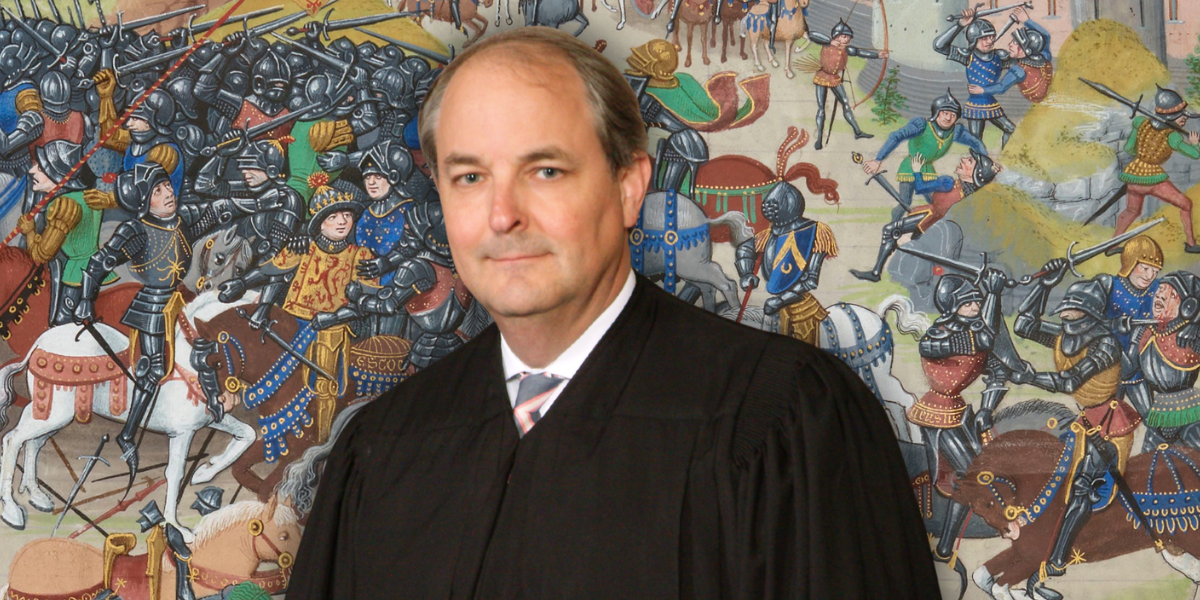
In 1426 – exactly 600 years ago- a small contingent of fewer than 600 English soldiers found themselves surrounded behind the walls of the village of Saint-James-de-Beuvron by more than 16,000 French troops led by Arthur de Richemont, the Constable of France.
It should have been a brief siege and a massacre.
But it wasn’t.
England held vast territories in France, yet its authority was tenuous. Alliances shifted constantly. Brittany, a territory of strategic importance, had switched sides from England to France; its loyalty determined England’s security in northern France.
The King sent Sir Thomas Rempston to Brittany with a small force to apply pressure and remind the Breton’s of England’s reach. It was partially a raid, but also a political signal.
France organized a massive army to expel the English presence when they had withdrawn to the village of Saint-James.
Here the English would take their stand.
To send a message, the French summarily executed English defenders in a nearby village. So, when the massive French army, 25 times the size of the English garrison, surrounded the village, the English had no allusion of the consequences of defeat.
Yet medieval warfare was not decided by numbers alone. It was decided by cohesion, leadership, terrain, and morale: the will to stand fast when retreating would be easier.
The English commander knew that if his small force broke, Brittany would fall fully into French hands, and England’s position in the region would collapse. But if they held, the impact would ripple far and wide.
Great military victories often hinge on leadership under pressure. Rempston’s decision was simple but profound: fortify, discipline, and endure.
He knew it would be suicide to attempt open battle, so he turned the village into a defensive porcupine. Barricades were strengthened. Positions were assigned, and every soldier understood his role.
These English soldiers were seasoned veterans. They had seen French armies break before disciplined resistance. They trusted their commander, and, most importantly they trusted each other.
Outside the walls, French artillery began bombarding the defenses. The siege stretched from late February 1426 into early March. Stones battered walls. Breaches appeared. Pressure mounted.
But the English line held.
With no surrender, the French decided to attack directly. Thousands pressed against breaches in the walls. The assault seemed overwhelming, but the English held.
They did not abandon their positions and rush forward toward the French. They held the French in confined spaces where numbers mattered less. Every narrow street became a killing ground.
After several days of stalemate, the French misidentified a small English detachment as fresh English reinforcements and panicked.
Confusion multiplied as rumors of English reinforcements raced through the ranks; a sense of certain victory evaporated. The massive French army began to lose cohesion.
The English sensed this change and surged forward to engage the confused enemy. The French assault melted into disorder as confidence became fear. Soon the line buckled, and the French began to flee. When morale faltered, recovery became impossible, and the retreat became a stampede.
Against all odds the English succeeded.
The Battle of Saint-James was not won by miracle or accident: it was won by leadership, discipline, and morale. Those were the necessary ingredients for a smaller force to defeat a larger one. The Battle of Saint-James demonstrates a timeless principle applicable in many things: power and success are more than numbers. The human element is critical; when there is a will to achieve, encouraged by strong leadership and the discipline to obtain a common goal, victory results.
The contrary is also true. The beginning of defeat occurs when leadership melts to skepticism, anxiety becomes fear, and confidence fades. Once morale drops, the possibilities for success does too.
With the French routed, English reinforcements arrived and advanced to assert control over more of Brittany. The Britton Duke was so shaken by the defeat of his massive army that he agreed to a truce. At that point, diplomacy shifted, and England’s position in the region stabilized.
Word of the triumph became known throughout France and in England. Once again, English arms had defied the odds. Once again, discipline had humbled superiority in numbers. In a war defined by fragile alliances and psychological contests as much as by territory, perception mattered.
The Battle of Saint-James became proof that English could not be easily crushed, developing a myth that English soldiers were superhuman and capable of miraculous achievements. Joan of Arc would challenge this assumption later.
Like David, Rempston did not defeat Goliath with brute strength. He defeated him by refusing to fight on the giant’s terms and trusting in his disciplined training and not giving counsel to his fears. By standing firm and waiting, the English troops were ready to act when the French become most vulnerable.
The French army was the giant, but giants often fall not because they are weak, but because from overconfidence, they underestimate smaller, disciplined opponents.
Though Saint-James did not decide the Hundred Years’ War, it offers enduring lessons. Discipline sustains courage when numbers intimidate. Leadership under siege defines outcomes. Resilience can outweigh manpower.
The battle reminds us that success in the crucible of conflict is often based on confidence, unity, and resolve. Resources are always limited; to prevail, the side best able to use its scarce resources most effectively wins the day. The resource of human capital and the will to succeed can never be underestimated or overstated.
On a cold March day in 1426, 600 stood against an army and did not yield. They held their ground. They trusted their commander. They kept their formation when the enemy pressed in, and then they advanced.
History often celebrates the largest battles and the grandest campaigns, yet sometimes the most powerful stories are found where courage outweighs calculation, where discipline defeats mass, and where resolve ultimately breaks an army.
For strength is not measured in numbers, but in the will to stand fast when all logic says to flee.
Will Sellers is a graduate of Hillsdale College and is an Associate Justice on the Supreme Court of Alabama. He is best reached at [email protected].