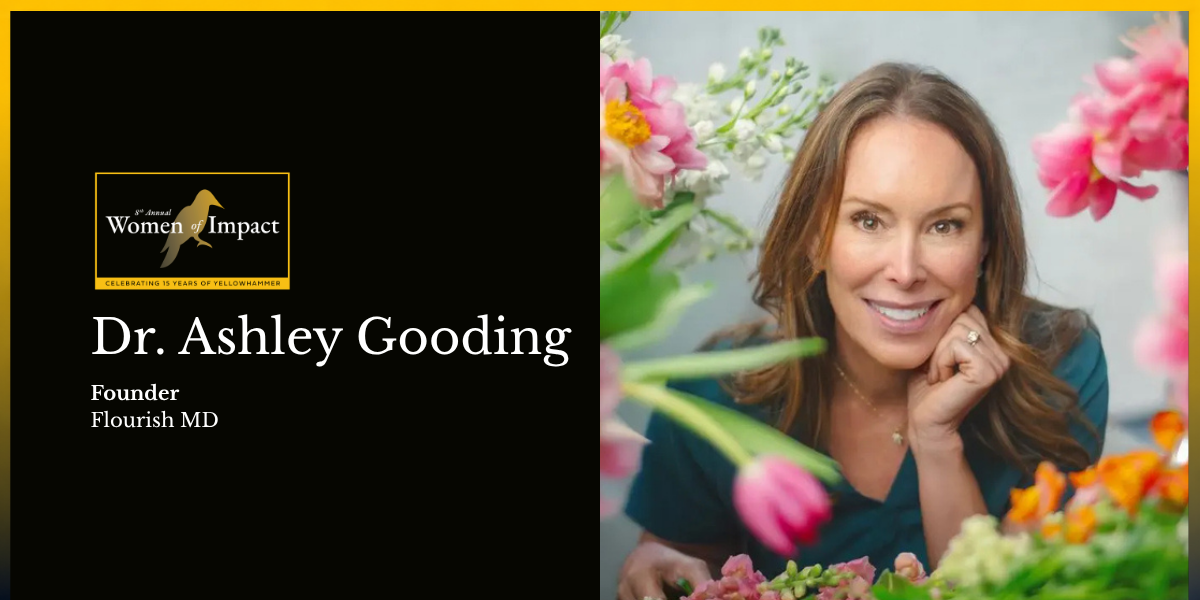
Dr. Ashley Gooding always knew she wanted to be a doctor. She dressed as one for career day in kindergarten.
“My grandfather was a physician, and from a very young age I knew I wanted to follow in his footsteps,” Gooding said. “I admired the role he played in his community.”
Today, Gooding is a board-certified Ob/Gyn and Menopause Society Certified Practitioner with more than two decades of experience. She’s the founder of Flourish MD, where she’s built a practice around the kind of care she believes women deserve — unhurried, evidence-based, and rooted in trust.
Finding the perfect fit
Gooding’s path to obstetrics and gynecology came through the guidance of a mentor, general surgeon Dr. Carol Leitner, who recognized something in Gooding that pointed toward the specialty.
“She recognized that I loved building long-term relationships with patients while also enjoying procedures and surgery,” Gooding said. “She encouraged me to consider obstetrics and gynecology because it offered the best of both worlds.”
That combination suited Gooding’s instincts as a problem solver.
“I’m naturally a problem solver and love putting pieces of a puzzle together,” she said. “Ob/Gyn has been a perfect fit for that curiosity.”
A foundation built in Chicago, brought home to Alabama
After medical training, Gooding completed her residency at Northwestern Memorial Hospital before returning to Alabama — a homecoming she always knew was coming. Along the way, she credits guidance from Dr. Mack Barnes, who shared her Northwestern ties.
“I believe there’s value in training somewhere different from where you ultimately practice,” Gooding said. “Exposure to different perspectives and approaches broadens your thinking.”
Her time at Northwestern shaped more than her clinical style — it shaped the direction of her entire career. She trained during the years the medical community was learning to interpret data from the Women’s Health Initiative, a period that taught her to evaluate evidence critically rather than react out of fear.
“As a result, I remained comfortable prescribing hormone therapy for appropriate patients over the past two decades,” Gooding said. “That experience ultimately shaped my passion for menopause care and led me to the work I’m doing today.”
Generations of care
Few specialties allow a physician to walk alongside patients across as many chapters of life as Ob/Gyn — a reality Gooding said has defined the most meaningful moments of her career.
“I’ve cared for teenagers coming in for their first visits, delivered babies, and then years later helped those same women navigate perimenopause and menopause,” Gooding said.
Toward the end of what she calls her “first career” as a traditional Ob/Gyn, that generational thread became literal.
“I started caring for women in pregnancy who I had delivered,” Gooding said. “And even a father of a new baby who reminded me that I had delivered him many years ago. Those relationships are incredibly meaningful and a constant reminder of why I chose this specialty.”
Staying equipped, mind and body
Between running a concierge gynecology practice and staying active with her running group, the “Gyne Girls,” through races like Hood to Coast and the 29029 Everesting challenge, Gooding said her patients and colleagues are what keep her motivated.
“I have the privilege of working with brilliant women every day, both as patients and as peers, and they inspire me to keep learning and growing,” she said.
Running has become a way to combine physical challenge with continued learning, often paired with lectures and podcasts from experts in her field.
“We’ve come a long way from the Audio Digest cassettes that my grandfather had in his car,” Gooding said. “Even back then I loved listening to those, although I certainly had no idea what most of it meant.”
One trip in particular stands out: a six-day running and camping trip along the Transrockies Run with two of her Gyne Girls, an attorney, a psychologist, a physical therapist and other women reflecting on their careers.
“We had six days of running and camping to analyze the history of our careers, and what the next half would look like,” Gooding said. “I think several of us made life changes after that transformative week.”
Lessons that outlast the advice itself
Gooding credits her grandfather and Dr. Leitner as the two figures who shaped how she practices medicine and leads.
“My grandfather taught me the value of being present in your community and building relationships that extend beyond the exam room,” Gooding said. “Dr. Carol Leitner taught me to trust my instincts and pursue a career that aligned with both my talents and my passions.”
One lesson in particular has guided her career.
“People may not remember every detail of what you said, but they will remember how you made them feel,” Gooding said. “That principle guides how I care for patients and how I lead.”
Opening the door early with Girl Talk
Gooding has spent years helping teach “Girl Talk,” a program for girls as young as 8 designed to open conversations about women’s health long before most people think to have them. She’s quick to note she didn’t create the program herself.
“It started as a collaboration by a team of doctors and nurses at Shelby Baptist Medical Center,” Gooding said. “I have had the opportunity to help develop the curriculum and continue teaching the program in various settings over the years.”
What keeps her coming back is what she hears afterward.
“I love hearing from mothers and young women who tell me that something they learned during a Girl Talk session helped them better understand puberty or navigate a difficult situation later on,” Gooding said.
For Gooding, impact in this context is simple.
“Impact means helping girls feel informed, confident, and comfortable in their own bodies,” she said.
Changing the conversation around menopause
Gooding is active in both The Menopause Society and the International Society for the Study of Women’s Sexual Health — fields she said remain widely misunderstood.
“I wish more women knew that they do not have to simply suffer through perimenopause and menopause,” Gooding said. “Many women experience symptoms that affect their sleep, mood, cognition, relationships, and quality of life, yet they often assume it’s something they must tolerate.”
She’d like to see more done on the medical side, too.
“Women can spend one-third to one-half of their lives in the menopausal transition and postmenopausal years, and they deserve evidence-based care during that journey,” Gooding said. “Better education for both patients and clinicians can be transformative.”
A hope for the next generation
Gooding’s hope for Alabama’s next generation of female leaders is rooted in the very cause she’s built her second career around.
“My hope is that the next generation of female leaders continues to flourish through every stage of life, including perimenopause and menopause,” Gooding said. “Too many talented women step back from leadership roles or leave the workforce because of symptoms that are often misunderstood or untreated.”
“When women feel healthy, informed, and supported, they can lead with confidence and continue making an enormous impact in their families, workplaces, and communities.”