The U.S. and Israeli attacks on Iran have dramatically increased oil prices. Iran has “closed” the Strait of Hormuz through which 20 percent of the world’s oil flows. Yet insurance availability is reportedly halting shipping.
There’s a lot of economics to unpack. Let’s start with gas prices. AAA reports a national average price of $3.59, up 65 cents from a month ago. Why have prices risen so much if the U.S. is an oil net exporter and gas at stations now was refined before the war?
First, the oil market is global. Buyers denied oil from the Persian Gulf will look for other suppliers, including American oil. So, its price will rise.
Second, market prices adjust to future events. Suppose oil shipped today shows up at gas stations on April 1. Could the price stay at say $2.50 a gallon until March 31 and jump to $3.50?
No. Gas station owners on March 31 would wait to sell gas the next day for a dollar more. Because gas can be stored, the price rises immediately. This will lessen any later shortage.
A lack of insurance has reportedly kept oil tankers out of the Strait. Business involves numerous risks, some fundamental and others tangential. Suppose you open a clothing store. People not buying your clothes is a fundamental risk; a tornado destroying your store is a tangential risk. Insurance lets entrepreneurs shift some risks.
Price fluctuations make the oil business risky, but oil tankers could also be sunk by a storm. Insurance can cover the risk of tankers sinking.
The potential loss on an oil tanker is enormous. Large tankers cost between $100 and $120 million and hold 2 to 4 million barrels of oil, so the cargo is also worth $100 million or more. Tankers have crews of 15 to 35, each with friends and relatives who would mourn their death. Spilled oil could cause environmental damage.
A $500 million loss if sunk seems possible. A competent crew which avoids typhoons keeps the risk of sinking low as well as the cost of insurance. Iran threatening to sink ships elevates this risk exponentially.
Reimbursement of financial losses when bad things happen is enormously valuable. Insurance is not charity, rather a contract both parties benefit from. Investors in insurance companies do not give away but are willing to risk their money in exchange for premiums.
Viable insurance requires that actuaries estimate loss probabilities. When risks increase quickly, a prudent insurer avoids exposure.
Another element of insurance is reinsurance. Insurance companies can shift some of their risk, especially for large losses, to other investors through reinsurance. The Trump Administration is assisting the market here.
President Trump has authorized the U.S. International Development Finance Corporation to offer $20 billion in reinsurance for insurers’ coverage. Is this a wise use of government funding?
To evaluate, let’s consider the private market alternative. The market would resume issuing coverage eventually. Insurers would have to locate investors willing to lose $20 billion in a worst-case scenario.
Imperfect information would also delay coverage. Imperfect information refers to any situation where some relevant information is not known. A problematic form is asymmetric information, where one party is better informed than another. Asymmetric information can yield paradoxes, like Groucho Marx’s famous line, “I refuse to join any club that would have me as a member.”
The U.S. military knows more about Iran’s capability to attack ships in the Strait than insurers. And this capability changes daily as bombing strikes continue. Nonetheless, insurers will reasonably discount U.S. assurances that Iran cannot damage ships.
Every delayed shipment further disrupts the oil market. Waiting for insurance markets to restart risks triggering a global recession.
I believe in limited government. But assisting the insurance market quickly benefits virtually all Americans, given oil’s role in our economy. Of course, insurance only matters if vessels can safely traverse the Strait.
This event highlights why Congress needs to control spending and borrowing. Uncle Sam must have the credit needed to spend when truly needed.
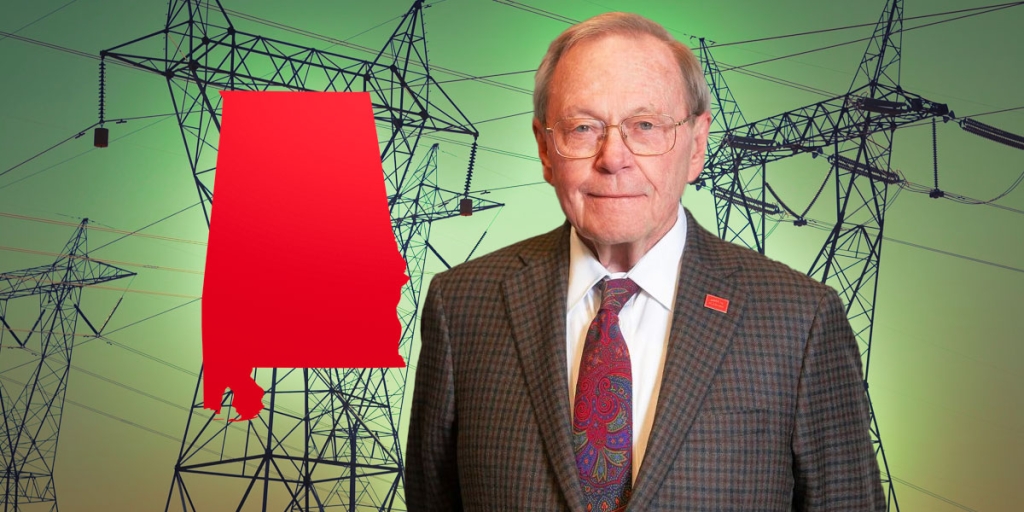
Daniel Sutter is the Charles G. Koch Professor of Economics with the Manuel H. Johnson Center for Political Economy at Troy University. The opinions expressed in this column are the author’s and do not necessarily reflect the views of Troy University.