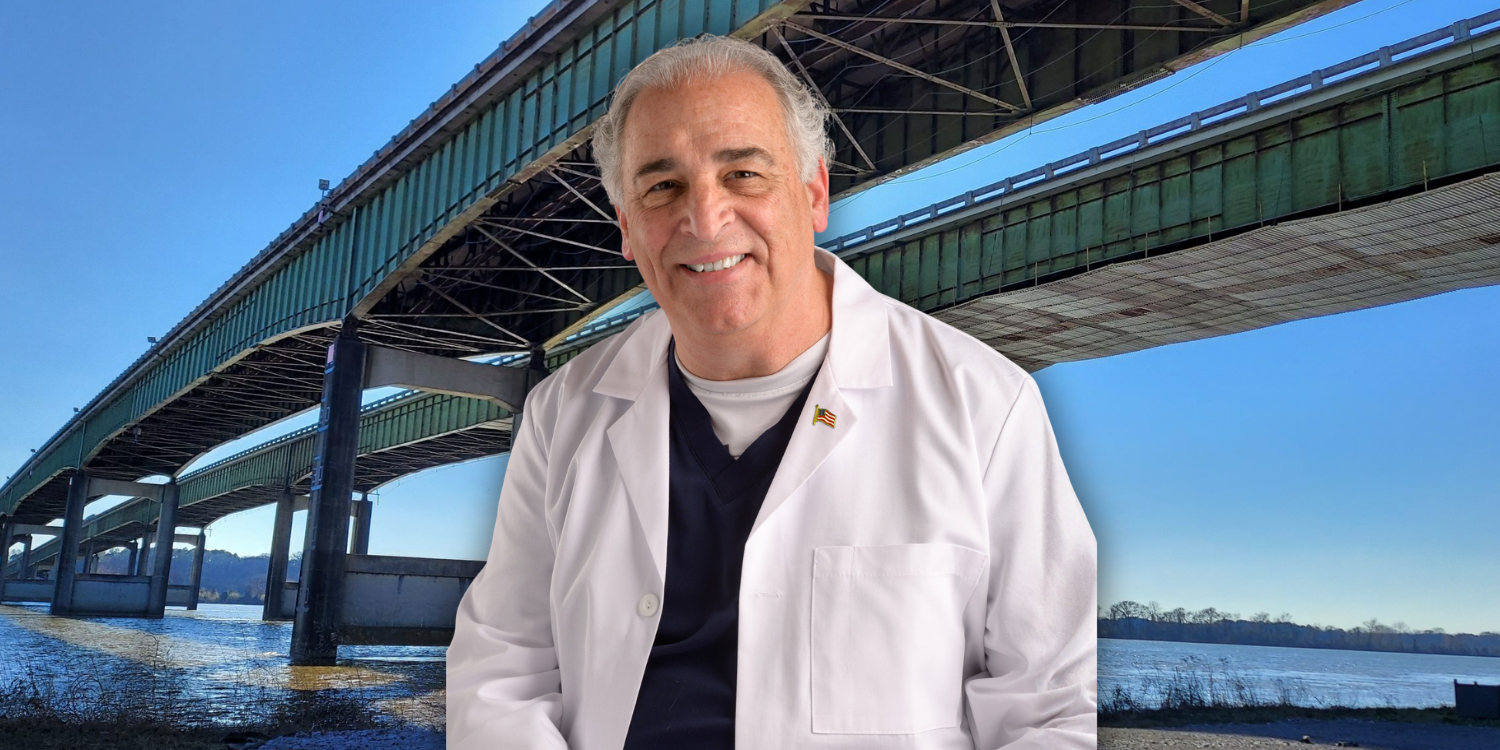
You can feel it every time you cross the river at Decatur—North Alabama is outgrowing its old roads.
For decades, the Tennessee River crossing at Decatur has carried the weight of a region that’s quietly become one of the most dynamic corridors in the Southeast. Huntsville’s rocket-fueled growth, the rise of Redstone Arsenal, the Toyota-Mazda plant, and the expanding web of suppliers and logistics hubs have all leaned on the same aging bottlenecks. We talk a lot about innovation, but we’re still funneling 21st‑century growth through mid‑20th‑century infrastructure.
That’s why the conversation about a new Tennessee River bridge can’t just be about relieving traffic on Highway 20. It has to be about where that bridge goes—and what kind of future it unlocks.
If we’re serious about long term economic development, the new bridge shouldn’t simply parallel the existing crossings. It should connect Interstate 65 to Tanner, crossing the river west of the Lawrence–Morgan county line and opening up a largely underutilized stretch of Alabama that’s been sitting on the sidelines of the boom.
That alignment does three things at once.
First, it creates a true north–south spine that ties I‑65 directly into the western side of the Tennessee Valley, instead of forcing everything through the same narrow choke points at Decatur. A bridge and highway corridor from I‑65 to Tanner and then south toward Lawrence County would give industry, commuters, and freight a faster, more reliable route that doesn’t depend on already strained infrastructure.
Second, it finally puts Lawrence County in the game.
Right now, Lawrence County lives in the shadow of Huntsville’s success without fully sharing it. Courtland, with its airfield, rail access, and open land, is a natural candidate for the kind of strategic investment that can rebalance growth across the region. I have recently argued that the new Space Academy should be located in Lawrence County—specifically Courtland—and this is not just a sentimental case. It’s a strategic one.
A Space Academy in Courtland would be more than a school; it would be a signal. It would say that the future of aerospace, defense, and advanced manufacturing in Alabama aren’t confined to one city. It’s a regional ecosystem. But ecosystems need arteries. Without a modern, direct connection from I‑65 across the river and into Lawrence County, Courtland is a compelling idea trapped behind a practical barrier.
That’s where the new bridge comes in.
A Tennessee River crossing west of the current Decatur bridges, tied into a new highway corridor, would give Courtland and the surrounding area the infrastructure backbone it needs to support a Space Academy, research facilities, training centers, and the spin‑off businesses that inevitably follow. It would shorten travel times, make site selection easier for industry, and turn what is now “out of the way” into “right on the way.”
Third, this alignment spreads opportunity instead of just rearranging congestion.
If we simply build another bridge in the same place, we’re treating a symptom, not the disease. Traffic might move a little faster, but the underlying imbalance remains: some communities are saturated with growth, while others are stuck waiting for a chance that never quite arrives. By pushing the crossing west and tying it to I‑65 and Tanner, we create a new growth corridor that doesn’t cannibalize Decatur—it complements it.
Decatur still benefits. So does Huntsville. But now Lawrence County, and especially Courtland, has a credible path into the future instead of watching it pass by on the other side of the river.
Critics will say this is ambitious, expensive, and politically complicated. They’re right. Big moves always are. But the question isn’t whether it’s easy; the question is whether it’s worth it.
Do we want North Alabama to be a patchwork of winners and bystanders, or a connected region where prosperity doesn’t stop at a county line? Do we want the Space Academy—and the next generation of Alabama’s space and defense workforce—to be locked into the same crowded corridors, or do we want to use it as a catalyst to lift up a community that’s ready to grow?
A new Tennessee River bridge is coming. The only real question is whether we build it where it’s convenient—or where it’s transformative.
Connecting I‑65 to Tanner, crossing west of the Lawrence–Morgan line, and driving a modern corridor toward Courtland would do more than ease traffic. It would open up a quiet corner of Alabama to the kind of opportunity that changes lives, not just commutes.
If we’re going to build a bridge, let’s make sure it doesn’t just cross water.
Let’s make sure it crosses into the future.
Angelo “Doc” Mancuso is a Dermatologic Surgeon who previously served in the Alabama State House of Representatives. He is an Independent Candidate for Alabama State House District 7.