3 years ago

EXCLUSIVE: The complete Bentley-Mason affair audio recordings and transcripts

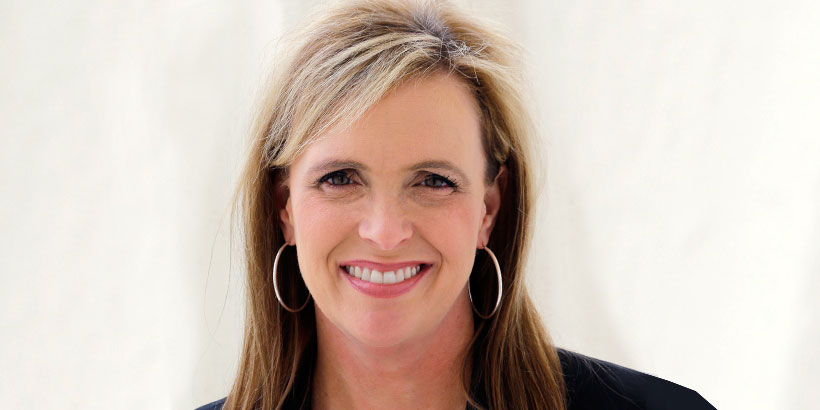
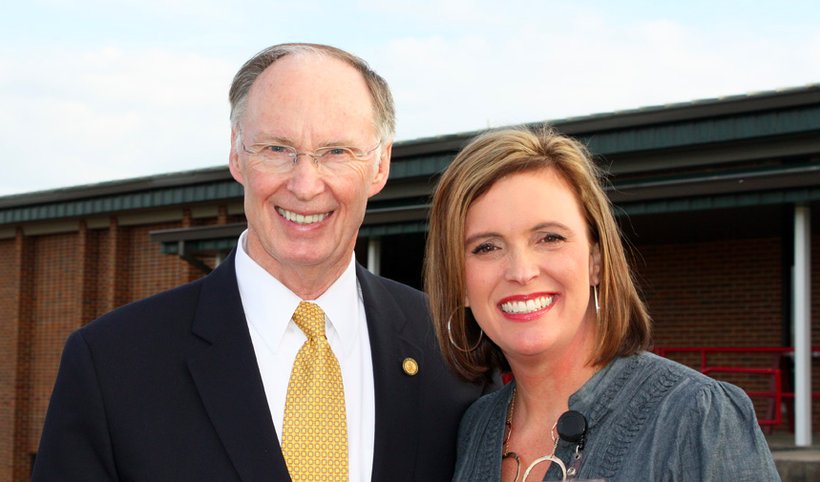
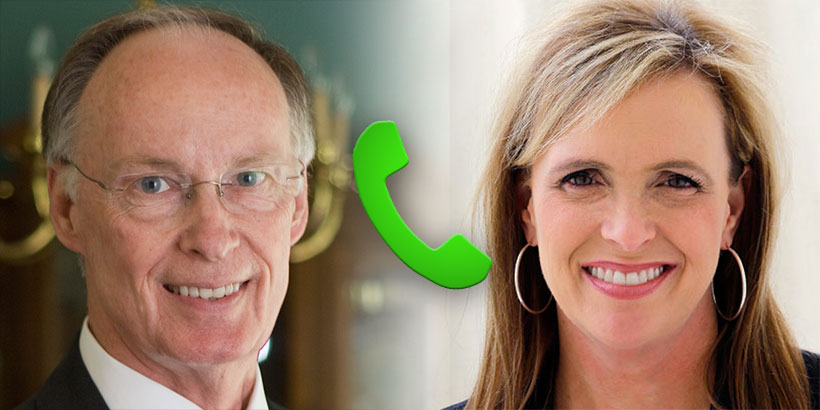
Then-First Lady Dianne Bentley, suspicious that her husband, Governor Robert Bentley, was having an affair with his senior advisor, Rebekah Mason, on multiple occasions pressed “record” on her cell phone, left the room, and captured the governor having intimate conversations with his mistress.

Included in those recordings, which were obtained by Yellowhammer News, is overwhelming evidence that Governor Bentley and Mrs. Mason had an intense emotional and — based on their discussion of past events — physical relationship with each other.

Governor Bentley has apologized for making “inappropriate” comments to Mrs. Mason, but has denied their relationship was physical.

The complete audio recordings and transcripts can be found below.

BEACH, BREASTS AND BOXER SHORTS


(Video above: Audio recording of conversation between Gov. Robert Bentley and Rebekah Mason)

Well, we just got home and Dianne’s going for a walk on the beach, so that worked out perfect.

I’ll be able to talk to you, just for a few minutes.

It’s beautiful, a beautiful day — cold. It’s cold, though. It is here, the wind’s blowing.

Hey, stay there for just a minute, I’m fixing’ to come up there and sit on the back porch with you. Can I sit by you, and can you put your head on my shoulder? I’ll put my arm around you.

What’s songs have you been listening to?

Well, I was so afraid — this just worked out perfect — because I was so afraid I just wasn’t gon’ have a chance to talk to you…

Well, I’m sorry, baby. You know, it’s just — you know how it is. I know. We do. I do and you do. It’s just — we do. We really work hard, baby, we really do. Hey, I love you. I know you do. Hey, listen, sweetheart, I want you to have a good time, ok?

Look, baby, you’ve been getting up early for me for a long time.

(Laughs)

Bless your heart.

I love when you come to see me. You know, I’ve been thinking about — I’ve been thinking about, I think I am going to rearrange the office if Wanda retires. She’s not gon’ retire, she’s going to work part time, but I think that would be a good time to do it.

(…)

I don’t want ‘em right there. Honestly, I really don’t. And it doesn’t have anything to do with you and me — well, part of it does — but really and truly I don’t think somebody needs to be right there listening to every word that is said in that office; I just really don’t.

(…)

What, baby?

I do you, too, baby. I do, Rebekah. I just, I miss you. I wish I was with you right now. You know, it is, it is scary. I almost… I kinda, do you just start worrying about us just a little bit?

(…)

You know the other thing, too, baby, we are so much alike. I know, we are. We are.

(…)

Well, I love you, and I do. You know, I worry about sometimes I love you so much, I worry about loving you so much. I do. I do. You know, I feel like, all the time I’m thinking, “How can I contact her? How can I call her? How can I text her? How can I be in contact with her? How can we do this?”

(…)

Constantly.

I know that.

I know.

Well, we do. You know, it’s just, a while ago I text you and I said, “I’m sorry I haven’t been able to call,” I said something along the lines of, “How much time,” or, something like, “I’m sorry I’ve not had…” It went to Zach.

Well, no, he said, he text me back. He said, “Did you get the videos,” and he said, “You sent it to the wrong person, did you get the videos?” And I text him back, I said, “Yea I did, Zach.” I said, “Thanks.” I said, “I didn’t mean to send this to you, I had some people I needed to call.” So, it was fine… He couldn’t tell who I was sending it to. And it didn’t say, “Hey, baby, I love you so much and I’d like to spend the rest of my life with you…”

(laughing)

You’d kiss me? I love that. You know I do love that. You know what? When I stand behind you and I put my arms around you, and I put my hands on your breasts, and I put my hands on you and pull you in real close. Hey, I love that, too.

(…)

Put my hands under your shirt.

(laughing)

That did you in?

Oh, babe. I know. I’m thinking about that right now, so I better quit.

You were thinking about (it)? Yea, I could tell you were thinking about it last night.

I changed the subject, didn’t I?

(…)

I know, babe. It’s ok. Everything’s gon’ be fine. We’re gon’ be alright this week. I know, I know, I know. I know it is. I know.

Hey, I love you. I love touching you. I do. Hey, I do, I do love putting my hands (inaudible) and just pulling you in real tight. I do, I do, I do enjoy that.

(…)

But, baby, let me tell you what we’re gonna have to do, we’re gon’ have to start locking the door. If we’re gonna do what we did the other day we’re gonna have to start locking the door.

You know what, it is kinda scary. Somebody open that door? Mmm.

(…)

It is a beautiful day… It is. It’s a little cool down here because the wind’s blowing. I mean, it is a beautiful day.

(…)

Hey, let me call you and let me look at you. Can I? Hey, I’ve got about five minutes, ok? Ok, I’m gon’ hang up. Alright. Bye.

(FaceTime ringing sound)

Bentley: Where are you? Oh, there you are.

Mason: I’m right here!

Bentley: Hey!

Mason: Can you see me?

Bentley: I can, I can. Can you see me?

Mason: (inaudible)

Bentley: Well, it’s your favorite shirt.

Mason: (inaudible)

Bentley: Hey, you look beautiful.

Mason: (Giggles) (Inaudible)

Bentley: Hey, listen, listen to me. Take your earring off and let me kiss your ear.

Mason: (Giggles) (Inaudible)

Bentley: Oooh shoot! Let me kiss that left ear, ok? Can I whisper something in that ear?

Mason: Here you go (inaudible)

Bentley: Hey, I love you. Hey, you look great.

Mason: (Inaudible)

Bentley: Hey, it is. Do you want to see something that’s pretty?

Mason: (Inaudible)

Bentley: It is, isn’t it?

Mason: (Inaudible)

Bentley: I wish I could hold you real tight right now.

Mason: (Inaudible)

Bentley: I think you look beautiful right now. Our phone is breaking up, isn’t it?

Mason: (Inaudible)

Bentley: I lost you. Now I’ve got you back! I got you back. I got you back.

Mason: (Inaudible)

Bentley: I did. I did. It’s good. They came this morning, fact. See, I thought I was gon’ stay here this afternoon and wait on them. But they came this morning. Bless his heart, this little boy from (Elrod?)

Her: (Inaudible)

Bentley: Yea, I know. He came this morning before I had my clothes on.

Mason: (Inaudible)

Him: He just got to see my boxer shorts. No. Hey, you’ve seen those. Listen, he didn’t see my boxer shorts. I did actually put my pants on before I went to the door.

Mason: (Inaudible)

Bentley: Matthew and Katie and Riley are coming.

Mason: (Inaudible)

Bentley: Hey, I’m gon’ call you back on the phone, ok?

Mason: (Inaudible)

(Back to cell phone)

Hey baby. Yea, they’re coming tonight.

I know, bless her heart, I haven’t seen little Riley but three times since she was born. So I’m looking forward to seeing her. I think they’re gon’ stay ’til Monday. Matthew’s gon’ help me put the beds and stuff together in the new house. So we’ll spend a little time together.

You can text me any time you want to. We may not be able to talk tomorrow, but who knows?

I probably will. But I’ll be thinking of something.

Yea. You could feel my hand. Uhhh… What’s that song? “The magic moment.” Ohhh (inaudible).

I know. I know, I know.

Well, is it, is it bothering you?

Ok. Ok.

Mmm. Hey, sweetheart (inaudible)… I do. I know, we have a good time together. We do.

Baby, our conversation is fixin’ to come to an end.

Well, I’m talking about in the next three or four minutes. But before it does, please have a good time. And listen, don’t worry, we will be in contact, ok?

It is. It really is right now. Listen, Matthew and Katie are gon’ be here. This is gon’ be a good weekend. I mean, it’s really been good. It’s been good. So you just — everything’s fine. And, anyways. One more time, let me tell you, I love you, baby. Ok? I do. I love you, sweetheart. And have a good time and just think about, if you’re thinking of me, you know that I’m thinking of you, ok? Bye, bye.

Well, I’m gon’ have to go. I love you, baby. I do love you. We’ll stay in contact, ok? Alright, bye, bye, sweetheart.

LOVER’S QUARREL


(Video above: Audio of a conversation between Gov. Robert Bentley and Rebekah Mason)

Hey, baby. I have been surrounded by people all day long. And then I’ve been called by eight million folks from Montgomery. I get texts from everybody in the world from Montgomery. And you know what? They said, “I sure do hope you’re having a good time at the beach.” And I started to say, “Y’all are crazy as hell,” too.

You know, I love you.

I’m sorry.

How you doin’?

No, I’m not talking about you. I’m talking about Blaine calls me fifteen times, and Bill O’Conner calls me. And we’ve gone all over the whole county trying to find furniture. And I ain’t paying $1,500 for a piece of furniture, you know? Well, Dianne’s not trying to do that anyway.

And y’all go to the play in a few minutes?

(inaudible)

That’s why I’m stressing out ‘cause everybody’s around and I’ve had security guards everywhere I’m going… (inaudible)

You’ve got folks near you?

Well, I’m sorry, baby… I’m just going through the frustration that I’ve had all day long.

(Inaudible)

No, I’m not mad at you, I’m just… Well, sweetheart, it’s not your fault. It’d be this way and it doesn’t have anything to do with you and I texting. This is this life.

(…)

Anyway, y’all had a good day? Have you had a good day?

Sweetheart, you seem mad. You miss me?

I told you it was not you, ok?

Well, I have had a million folks calling me. It’s just amazing. When I leave it’s like, “No, I know you’re on vacation, but (inaudible).”

Hey, I love you. And I miss you.

Did you buy some pretty stuff?

What’s the matter, baby?

Are you having one of your down times?

I’m sorry. Baby, hey listen, sweetheart, don’t get mad at me.

(…)

I know, you don’t know when you can text me, when you can call me. I know that. I know. I know that, sweetheart…

Ok. Ok, I’m sorry. I’m sorry.

Baby, it’s not your fault. I am…

You can do it…

I know, sweetheart. I’m sorry. I’m sorry. I’m sorry. Please, baby, don’t. Just don’t. Listen, baby, I know. I know.

I thought we had a lot of good contact today.

(…)

Look, sweetheart… You do the best you can, and I’m doing the best I can, ok? I really am. I really am. Look, I have to fight for everything (inaudible), ok? I mean, I really… Baby, let me tell you, I’m looking right now at a text from Wanda that says, from Pam Chestnut, “Can Cary and Franklin have at least an hour following staff meeting on Monday morning? That would be a great time to get bills signed and returned. We also need to schedule some time Tuesday as well, just in case.” And you know what I’m thinking? I’m thinking, “That time isn’t your time, that’s the time I want to spend with Rebekah, ok?” You know, baby, so…

(…)

I’m sorry.

(…)

You need to tell me when you’re going and coming back. I know what you’re saying. I do… Baby, I do care. I wanted to know. See that’s why I didn’t text you last night. I honestly thought that you were at the play last night. That’s why I didn’t text you, ok?

Well, but I appreciate you (inaudible). What time y’all leaving? You leaving at 6 o’clock? You gotta leave. Ok, baby, I know you gotta go. Please, listen, Rebekah. Listen to me, ok? I love you. I go through a lot and you go through a lot. We both go to a lot of trouble just trying to be together.

And, sweetheart. Listen to me. I love you. I’m telling you I do. Alright?

But I love you.

(inaudible)

Did that picture bother you?

I’m sorry.

Well, baby, we have to go on with life. If we don’t then things are gon’ fall apart, ok?

(…)

No, you can feel any way you want about it and I understand that.

(…)

Baby, I love you, ok? I love you. And I know, baby, we’re in a difficult situation, ok? And unless I make things as normal as possible here, it’s gon’ be hell, ok?

(…)

Please don’t do that. Baby, just don’t…

(…)

It hurts.

(…)

What can I do? You get through at what time tonight, 9? Our time? Ok.

Can I just text you then tonight (inaudible). Ok. I will.

Listen, have a good time tonight, ok? I’m sorry. Can I tell you that I love you and you believe it? I do. I’m telling you I do, baby. I am, sweetheart, please, I’m just doing the best I can, ok?

Ok, sweetheart. Alright you’ve got to go, ok? (Inaudible).

I’ll text you tonight, ok? I promise.

Baby, I want to.

Baby, I, Rebekah, have I ever said (inaudible). I told you I loved you because I’ve loved you forever… This is not something new, I’ve loved you forever. I’ve loved you for many, many years. I’ve loved you for, I know, four. And I love you more now today than (inaudible). And I miss you. And I miss you. And I wish you were here with me right now, ok? And I wish I could hold you and I wish I could kiss you and I wish, you know, I wish that — I do.

You’ve gotta go now. They’re gon’ wonder where you are. Alright. You have a good time now tonight, and I’ll text you after a while. Nine o’clock our time? You’ll get it when you get back. Ok. Ok. I love you. Alright, sweetheart. You have a good time tonight.

You have a good time and I’ll talk to you later, ok? Maybe tomorrow I’ll talk to you. Ok. I love you.
6 mins ago

Matt Might’s personal quest sparks UAB precision medicine revolution

For Dr. Matt Might, director of the Hugh Kaul Precision Medicine Institute at the University of Alabama at Birmingham, the future of medicine revolves around physicians harnessing information on a scale unimagined by patients today.

“Data is the greatest drug of the 21st century,” said Might, who discovered a rare genetic disorder affecting his young son. “In terms of impact, I don’t think any drug will outperform data in overall ability to improve and extend human life.”

Of course, doctors already rely on detailed patient information when making diagnoses and creating treatment plans. But tomorrow’s medicine, as envisioned by Might, elevates and expands the power of the information at their command.

1237

By combining medical knowledge with computational analysis and new techniques such as genomic sequencing, physicians will be able to create customized, data-driven treatments for individual patients rather than follow protocols for attacking a certain disease.

“One of the key things to understand in precision medicine is that it is actually easier to treat a patient than a disease,” Might said. “When you are treating a disease you have to find something that works for every patient with that disease.

“If you’re treating a patient, you just have to find out what works for them. That can be very, very different.”

Powerful new tools

Might, who advised President Barack Obama on precision medicine and turned down Harvard and other suitors before coming to UAB in July 2017, believes these new tools will forever change the way physicians provide care once they are widely adopted.

Genetic testing is already helping unravel medical mysteries, especially when it comes to diagnosing rare diseases. But it will play a greater role in the future, when oncologists can routinely sequence the genome of a tumor to see if its mutations call for a specific medicine, Might said.

Already at UAB, doctors can examine a mental health patient’s DNA for clues about how he or she will respond to particular antidepressants, allowing them to rule out medications that would be less effective or cause side effects.

In addition, physicians will be able to tap into a bottomless well of knowledge. Might has collaborated with other researchers to develop an artificial intelligence agent called MediKanren that can search more than 25 million published papers for insights that can pinpoint new treatment options for puzzling medical conditions.

“Everything in medicine is changing as a consequence of the data available and the computational power to analyze that data. This is definitely a pivotal moment, a sea change moment. Medicine is not going to look the same in 10 years,” he said.

Despite his enthusiasm for precision medicine, Might never set out to become a leader in the field. In fact, at the time his voyage started, he was pursuing a career as a computer scientist, working on projects such as cybersecurity and programming languages for supercomputers.

He was also dad to a newborn son, Bertrand, born in December 2007.

The ‘diagnostic journey’

Bertrand was just 2 months old when Might first noticed a problem. His son’s movements were uncontrolled rather than circular and fluid, as they should have been. Four months later, Bertrand’s pediatrician agreed that something was wrong – he just didn’t know what it was.

At that moment, Might and his wife, Cristina, embarked on what he calls a “four-year diagnostic journey.” Over time, Bertrand’s problems multiplied. Full-blown seizures. Movement disorder. Developmental delay. And, strangely, he couldn’t cry tears.

Might was determined to solve the mystery. Eventually, Duke University scientists performed genetic sequencing on Bertrand and his parents to see if they could detect a mutation driving the youngster’s problems.

The results pointed to a malfunctioning NGLY-1 gene, which produces an enzyme needed to break down certain abnormal proteins as part of a recycling process in the body.

“Almost no one had heard of NGLY-1. It didn’t exist as a disease. It barely existed as a known gene. That gene had never been linked to human health in any way, shape or form,” Might said.

Thus, a rare genetic disorder known as NGLY-1 deficiency was discovered. Bertrand was “patient zero.” That meant doctors told Might there was little that could be done for his son until more patients with the condition were identified.

In 2012, Might published a blog post called “Hunting Down My Son’s Killer” that described Bertrand’s symptoms. It received widespread attention. Within weeks, patients began popping up all over the world, enabling research into the condition to begin.

At home, Might struggled with how to help his son.

Using his background as a computer scientist, he set up a computational analysis to identify compounds that might be useful to treat Bertrand’s condition. He quickly found 70, including 14 already approved by the FDA.

At one point, additional testing showed that Bertrand’s condition had triggered a deficiency of N-acetylglucosamine, a readily available glucose derivative. Might purchased some and, after testing it on himself, began giving it to his son.

Days later, Might noticed tears rolling down Bertrand’s face. For the first time, he had discovered a remedy to help his child. Critically, the tears halted the corneal erosion that threatened Bertrand with eventual blindness.

Other discoveries followed. Using MediKanren, Might learned that research indicated a common supplement, sulforaphane, could counter a certain molecular function triggered by NGLY-1 deficiency.

“Sulforaphane is abundant in broccoli, but not abundant enough. You’d need about 60 pounds of broccoli a day. Most fifth-graders don’t eat their own body weight in broccoli each day, but you can get it in a pill form that is highly concentrated. So he has been on that for about two months now, and for me, I think it is definitely making a difference.”

Might is now investigating whether some of the movement disorder aspects of Bertrand’s condition are similar to Parkinson’s and looking into whether treatments for that disease might benefit his son.

“I think, at last, we are moving on all fronts for Bertrand. We’re addressing seizures, eyes, movement disorders and development with this large cocktail of drugs we’ve assembled for his condition,” he said.

Creating an ‘algorithm’

Might is using the lessons he learned in his quest to help Bertrand to scale up the precision medicine initiative at UAB, using what he’s dubbed the “algorithm of precision medicine.”

At its core, the approach centers on harvesting every bit of data about a patient. Genomic sequencing is an important component because it provides a peek into the patient’s unique molecular makeup. But even information contained on a Fitbit or Apple watch can be part of the mix.

Computational technologies and deep reasoning tools such as MediKanren add a new dimension.

“We’re beginning to bring computation into medicine in a very serious way,” Might said. “Previously, it’s been largely used in a superficial way. Now we’re looking at it from more of a big data optimization perspective.”

At the Hugh Kaul Institute, made possible by a $7 million philanthropic gift in 2015, Might and his team maintain a focus on rare diseases through precision therapeutics, acting as what he calls a “clinic of last resort” for patients interested in engaging in targeted research to advance therapies for their disorders.

The institute, which has a staff of nearly a dozen, can provide physicians searching for treatment options with a research report containing recommendations personalized for an individual patient.

Precision oncology is a specific UAB focus. In one case, a genomic scan of a patient’s prostate tumor revealed mutations more consistent with ovarian cancer. Physicians were able to successfully treat the patient with medicines used to treat that form of cancer, Might said.

“Cancer is one of those things where precision medicine is the answer. Every cancer is unique,” he added. “You always need an individually tailored treatment. If you really want to treat cancer right, you’ve got to treat every cancer like a rare disease. That’s the key.”

Might sees the components of precision medicine flowing across all medical disciplines at UAB, expanding until its tactics become the standard of care for all patients.

“At UAB, we’re in the process of making everything precision medicine so that one day it won’t be precision medicine, it will just be medicine,” he said.

This story originally appeared on the University of Alabama System’s website.

Courtesy of Alabama Newscenter

13 hours ago

Plant Gaston APSO members cheer special-needs children with fishing days

Most anglers head to the lake for relaxation and sport: Even on a bad day of fishing, one leaves in a better mood. Catching some fish – big or small – gives a feeling of accomplishment.

Multiply that feeling by 100. That’s the joy felt by special-needs children from six elementary, intermediate and high schools, including Jemison, Vestavia Hills, Thorsby and Wilsonville.

The past two weeks, school systems have bused special-needs classes to Wilsonville, where Plant Gaston members of the Alabama Power Service Organization hosted children and school staff. Across the highway from the plant, a bucolic scene awaits. A 3-acre pond holds bream and bass up to 2 pounds and more, perfect for holding by small hands.

567

Gaston APSO hosts Jemison kids in fishing from Alabama NewsCenter on Vimeo.

More than 60 APSO members, including several employees from Local 2077 of the International Brotherhood of Electrical Workers (IBEW), helped during the six fishing events. Gaston folks helped youngsters bait their fishing poles with bits of hot dogs and helped them reel in the catch.

(Courtesy of Alabama Newscenter)

14 hours ago

Competition fuels twin medical students at University of South Alabama

While they were still playing high school football in Oneonta, brothers Ethan and Thomas Boyd were already certain of a few things. Chief among them was that they wanted to become physicians, followed closely by the desire to attend the University of South Alabama.

Fast forward a few years and the Boyd brothers – twins born minutes apart – just finished their first year of medical school at the USA College of Medicine. And in a surprise to both, they are attending the university on track and field scholarships, having traded the pigskin for Sun Belt Conference competitions in events like hammer throw and shot put.

746

The 23-year-olds are fiercely competitive, but not in the way many of their classmates and teammates assume: They are best friends, study mates and the one person on campus each is sure he can trust 100 percent. The Boyds challenge each other in the film room, as well as in preparing for the classroom. And Thomas, the younger brother by 120 seconds, says that connection helps them be their best selves.

“I think that in whatever we’re doing, it tends to elevate us a little bit, because we’re really competitive in pretty much everything we do,” Thomas said. “With us being so close and doing everything the same, part of that is competing against each other.”

Both agree their mom is the origin of that competitiveness, and they love her all the more for it.

“Growing up, if I made a 95 on a test and Thomas made a 98, it would be, ‘Ethan, why didn’t you make a 98?’” Ethan said. “I’m not sure how everybody else does it, but my mom was the best.”

He credits his pediatrician back home in Oneonta with awakening the desire to pursue medicine, all the way back in elementary school.

“He made it to where it wasn’t such a brutal thing to go to the doctor,” Ethan said. “And I always thought that made a big difference.”

He and Thomas just finished their second semester as medical students, and the experience has provided a few surprises, contrasted against their expectations as younger men. Ethan said the first few days doing lab work with cadavers was a bit of a shock, but “you get accustomed to it pretty quickly and I’ve had a good experience.”

For Thomas, the surprise was the flexibility of his schedule, something both men said set USA apart, especially for student-athletes. Initially he was doubtful he’d be able to continue to compete in track and field when he started medical school.

“I know for me, that has been a huge help,” Thomas said. “As flexible as they’ve made things, it’s allowed that to be a reality.”

But it’s no small feat for the Boyds to be highly competitive as redshirt seniors on the track and field team, and keep up their studies as they move through medical school. Both credit the discipline learned as athletes training year-round, and accountability to the other brother, but it still falls on each man to make sure the work gets done, and done correctly.

“It is a lot to handle, but I think you just have to be where your feet are, give 100 percent where you are and manage your time wisely,” Ethan said. “When you’re doing schoolwork, you have to completely focus on school.

“When I’m out practicing, I can’t be thinking about what I learned in school that day or thinking about what happened on the test.”

Ethan and Thomas have been fortunate during their playing careers to avoid major injury, but both say they are interested in pursuing orthopedics – careers that could cross over into sports medicine. And it’s possible one or both could end up as surgeons, although Thomas might shift to another role in the operating theater: anesthesiologist.

“I liked anesthesiology growing up and thought it was a cool job, just based off of how much you get to see,” Thomas said. “But, being in sports in high school, a lot of the doctors I knew were orthopedic surgeons. So when I started shadowing, the more I watched, the more I thought, ‘I really think I would enjoy this line of work.’”

To listen to the brothers, USA is the exact place they need to be as they discover what their career passions are and how to best achieve them. Coaches and professors at the university have proven a willingness to help them reach their goals, but it’s not something the Boyds take for granted. Neither is the support of their younger brother or parents, who recently relocated to Virginia.

As they move forward through medical school, they continue to rely on each other, and the competitive spirit that has fueled them as far back as T-ball, when they were children.

“It’s great to have a friend in what you’re doing,” Thomas said. “And if you are having a problem, being able to bounce that off of somebody, whether in track or in school, there’s always a different set of ears that a lot of times will understand something that you didn’t quite pick up.”

This story originally appeared on the University of South Alabama’s website.

(Courtesy of Alabama Newscenter)

15 hours ago

Student-powered produce stand opens at Birmingham’s Woodlawn High School

People living in east Birmingham now have a new place to buy fresh fruits and vegetables: their nearby high school.

The Farm Stand opened Thursday afternoon at Woodlawn High School. Operated by students, the Farm Stand gives neighbors a place to purchase fresh fruits and vegetables grown at the school in conjunction with the city’s Jones Valley Teaching Farm program. Amanda Storey, executive director of the Jones Valley Teaching Farm, says the Farm Stand was made possible through a grant from Gov. Kay Ivey as part of the Alabama Healthy Food Financing Act.

311

“It gives our students a chance to connect with our neighbors and also be able to provide a service to their neighborhood,” Storey said. “It’s a win-win for everybody.”

The Farm Stand is in a part of Birmingham the U.S. Department of Agriculture calls a “food desert,” which is an area without easy access to fresh, healthy and affordable food. Josh Carpenter, director of Economic Development for the city of Birmingham, says the Farm Stand solves that problem and helps students.

“Woodlawn is a great proof-point of what is possible when we really dedicate resources and time to this type of engagement,” Carpenter said. “Some of these students are thinking not just about how to grow vegetables, but then, ‘What does the irrigation system look like?’ and they’re conceptualizing their own careers as plumbers and electricians. That type of development comes foundationally through these types of experiential work-based learning, so they’ve really laid the groundwork for apprenticeships in the city.”

The Jones Valley Teaching Farm operates seven farms throughout Birmingham, engaging more than 4,500 students from pre-K through high school in a hands-on, food-based education model. Storey says the program helps students grow life skills.

“One of the biggest pieces that you learn when running a farm is that seeds take a long time to grow,” Storey said. “We’re all so used to instant gratification, the process of growing food is something that really instills leadership and patience and all of these life skills that are so important for young people. Being able to be front and center in leading a project, when you’re in high school, I think is so important for student growth and for life growth.”

The Farm Stand is open Tuesdays, Wednesdays and Thursdays from 3:00-5:30 p.m. For more information, visit the Jones Valley Teaching Farm online at jvtf.org.

(Courtesy of Alabama Newscenter)

16 hours ago

APC, Nature Conservancy receive environmental award

Alabama Power and The Nature Conservancy (TNC) have received a Partners for Environmental Progress (PEP) Environmental Stewardship Award for their partnership last year on an oyster reef project in Mobile Bay.

Alabama Power and TNC teamed up to help preserve the reef at Helen Wood Park on Mobile Bay. TNC worked with the Alabama Power Foundation to fund restoring the reef using new, innovative oyster “castles” to replace the bagged oyster shells originally used to build the reef.

The bagged oyster shells did not hold up well to the Mobile Bay waves. Oyster castles are much like large concrete interlocking blocks. They are stronger than bagged shells and better withstand wave action from boats in the bay.

255

The reef helps attract and foster oyster settlement and creates a habitat for fish and other marine life. It also helps protect against erosion and provides a stable shore.

Funding for the project was provided by the Alabama Power Foundation andAlabama Power Service Organization partnered with TNC for volunteers to rebuild the reef.

Accepting the award were Plant Barry Manager Mike Burroughs, TNC Coastal Conservation Specialist Jacob Blandford, External Affairs Manager Beth Thomas, Customer Service Manager and 2018 APSO President Erin Delaporte, TNC Marine Program Director Judy Haner and Mobile Division Vice President Nick Sellers.

PEP is a coalition of business and education leaders who share the vision of applying science-based environmental best practices to business and community issues. PEP’s 200 business members along the Gulf Coast value the area’s unique natural resources, as well as the thriving economy.

PEP members understand the future of the Gulf Coast depends on ensuring a balance between business development and job creation, industrial growth and a healthy environment.

Since 2005, the PEP board of directors has presented the Environmental Stewardship Award to recognize members whose work has made a significant, positive contribution to the Gulf Coast region in three crucial areas: economic growth, environmental health and social responsibility.

TNC works across all 50 states to conserve land and water. The organization works with private and public partners to ensure lands and waters are protected for future generations.

TNC members believe that people and nature can thrive together and the organization looks for real-world solutions to environmental issues, including food and water security and city growth.

(Courtesy of Alabama Newscenter)