It was one of the great honors of my life to represent Alabama in the United States Congress and to work alongside business and community leaders throughout Mobile and across the Gulf Coast.
My time in Congress also taught me something about the enormous responsibility we place in the hands of our elected leaders. The decisions they make affect our livelihoods, our communities and our future. Nowhere is that responsibility greater than when it comes to the security of our nation and the men and women we send into harm’s way.
Congress holds the power of the purse, and one of its most important responsibilities is ensuring our military has the resources it needs to defend America.
During my time in the House, I was proud to serve on the House Armed Services Committee, where I saw firsthand how much careful work goes into building the legislation that funds and equips our military. Each year, much of that work comes together through the National Defense Authorization Act, or NDAA.
As Congress debates this year’s NDAA, Alabama has an especially important seat at the table. Congressman Mike Rogers serves as chairman of the House Armed Services Committee, putting an Alabamian at the center of some of the most consequential national security discussions taking place in Washington.
At a time when our military faces growing threats around the world, Chairman Rogers has never wavered in his support for the brave men and women who defend our country.
He understands that maintaining peace requires maintaining strength, and that our service members should never be asked to confront tomorrow’s threats with yesterday’s technology.
Those threats have changed dramatically over the past decade. Recent events in the Middle East have demonstrated the growing danger posed by drones, missiles and coordinated attacks designed to overwhelm traditional defenses.
Protecting American troops requires more than simply buying additional weapons. It requires detecting an incoming drone when it is still an hour away rather than overhead and giving commanders the ability to identify missile threats early and use the best available weapon to destroy them.
The radars and interceptors capable of doing much of this already exist. The challenge is connecting them so they operate as one integrated system, and that is where the Integrated Battle Command System, or IBCS, comes in. IBCS is the Army’s program of record for integrated air and missile defense.
Rather than relying on individual radars and weapons systems operating independently, it connects sensors and interceptors across the battlefield, giving commanders a clearer picture of incoming threats and more options for defeating them. Much of that work is being done in Huntsville, where Alabama’s defense and aerospace sector has become a national leader.
The system is already deployed in Europe and the Pacific, and expanding its availability could give American forces additional capabilities in places such as the Middle East.
The NDAA would support additional IBCS battalions at a cost that is relatively modest compared with many other major defense systems, a practical investment in technology that protects American lives while making better use of systems taxpayers have already purchased.
The importance of IBCS is not limited to battlefields thousands of miles away. It matters here at home, too.
The program supports nearly 3,500 jobs in Huntsville and across Alabama and generates approximately $1 billion in economic activity in our state, in fields ranging from software development and engineering to advanced manufacturing.
That story is repeated here in Mobile.
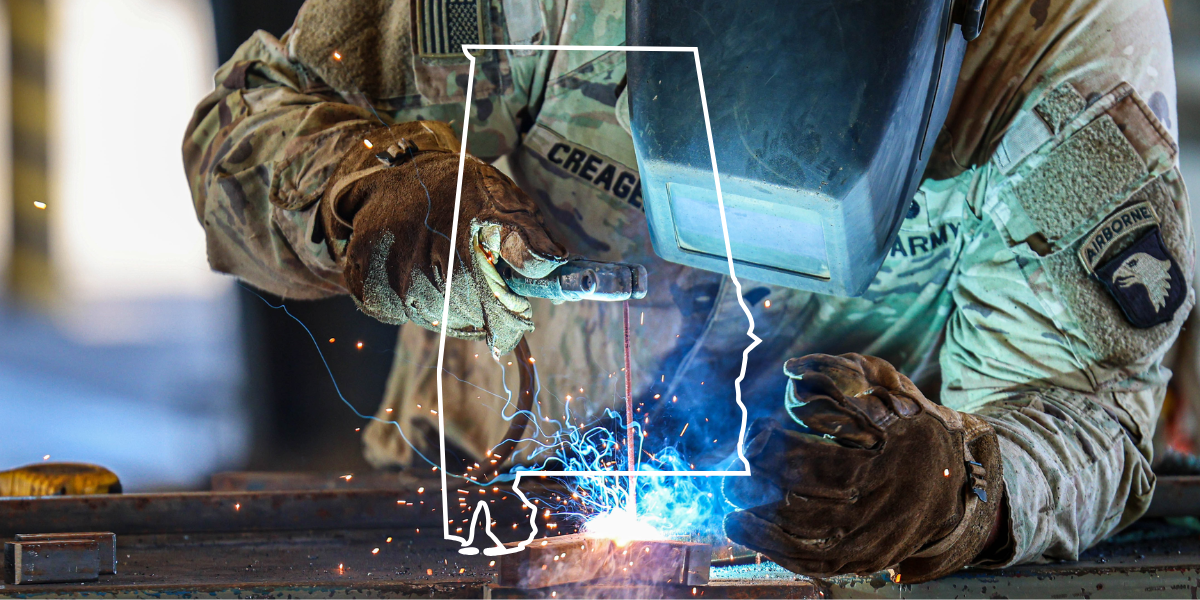
Our shipyards build vessels for the U.S. Navy that carry out many of these same missions, from missile defense to power projection around the world, and that work supports thousands of jobs across our region. The skilled tradesmen and women who weld hulls, run electrical systems and outfit combat systems bring the same precision and reliability that define Alabama’s defense industry statewide.
From Mobile’s shipbuilders to Huntsville’s engineers and software developers, Alabama workers help design, build and maintain many of the systems our service members depend on.
Whether it is a next-generation Navy vessel underway in the Gulf or a battle command system tracking a missile halfway around the world, Alabama workers show up, and they deliver. That is something all Alabamians should be proud of.
But ultimately, this debate is about more than jobs or economic development. It is about making sure the men and women of the U.S. military have every possible advantage when we ask them to defend us.
The NDAA provides resources for modern air and missile defenses, munitions, military modernization and improvements to the quality of life of our service members and their families. Passing it is one of Congress’s most fundamental responsibilities.
America’s service members are counting on Congress to get this right. So are their families. And in an increasingly dangerous world, so is the rest of the country.
As this legislation moves through Congress, Chairman Rogers has fought to ensure our military has the resources it needs while recognizing the extraordinary contribution Alabama workers make to our national defense.
He and the other members of Alabama’s congressional delegation who support a strong national defense deserve credit for that work.
Congress has a responsibility to provide our military with the tools necessary to protect America.
Alabama has a responsibility, too. When America needs ships, missiles, aircraft, advanced technology and the systems that tie our defenses together, Alabama’s workers have repeatedly shown they are ready to answer the call.
Supporting this year’s NDAA is an investment in America’s security and in the Alabama workers who are helping to preserve it.
Give us the mission. Alabama will handle the rest.
Bradley Byrne is a former member of Congress and is the president and CEO of the Mobile Area Chamber of Commerce.