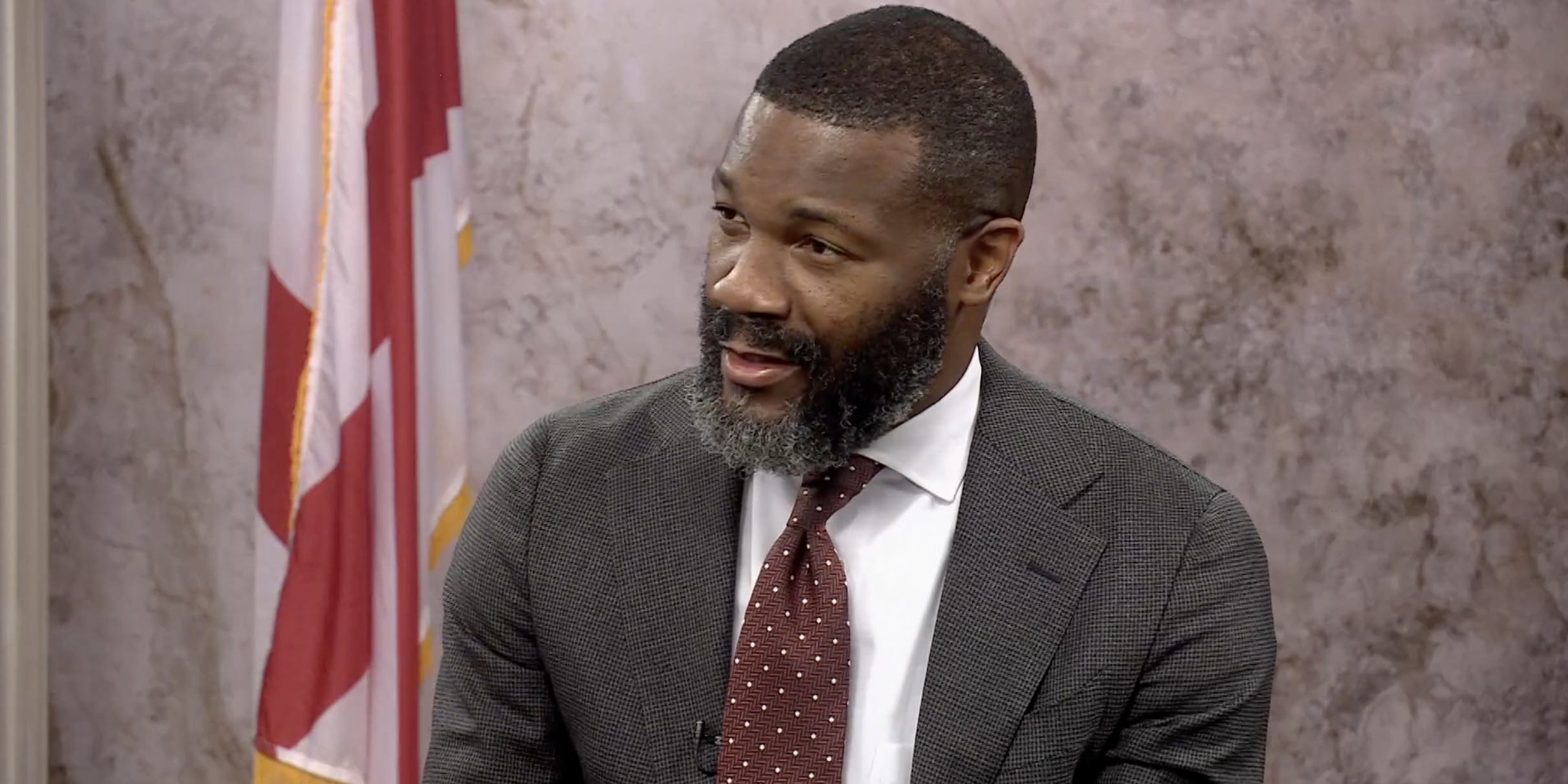
Birmingham Mayor Randall Woodfin is asking state lawmakers for additional tools to help stabilize neighborhoods and address long-standing issues tied to vacant and tax-delinquent properties, saying accountability for absentee property owners is key to revitalization efforts.
Like many older industrial cities, Birmingham has grappled with population loss and a growing inventory of vacant or tax-delinquent properties, which officials say can slow redevelopment and burden local governments with maintenance and public safety costs.
City leaders argue that current state property laws offer limited enforcement mechanisms for municipalities seeking to address absentee ownership and stabilize neighborhoods.
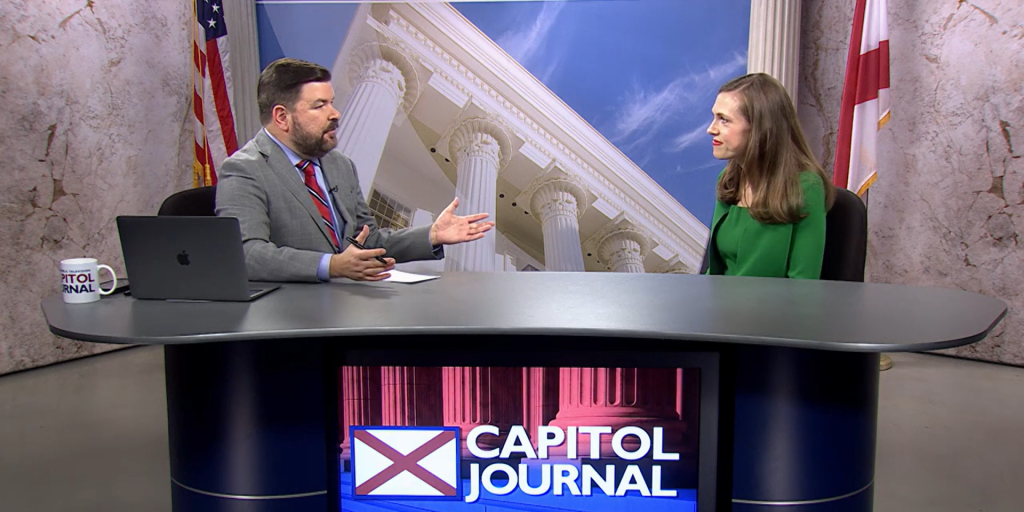
Appearing on Alabama Public Television’s “Capitol Journal”, Woodfin said his message to legislators can be summed up in one word: accountability.
“The City of Birmingham, we are fortunate to be a city of 200,000 residents, 23 communities, 99 neighborhoods,” Woodfin said. “But we have some challenges around neighborhood revitalization.”
Woodfin says decades of population decline as a contributing factor, noting that vacant and tax-delinquent properties have created a persistent strain on the city.
“When you had a significant decrease in population, like we have over the last 60 years, it’s left a lot of tax-delinquent properties for the city to have to fend for itself,” he said. “And I appreciate the state having and creating very strong laws for property owners.”
But Woodfin argues that municipalities need more leverage to ensure basic property maintenance, particularly when owners live out of state.
“Within that, what the city of Birmingham needs for revitalization to work — for neighborhood stability to work — is accountability,” he said. “Let’s say you are a homeowner and this is your house. On each side of your lot, on one side you have an empty lot with overgrown grass. On the other side you have an abandoned house. Both are privately owned. They both may be owned by an absentee owner who doesn’t even live in the state.”
The mayor said the city is not seeking to take private property, but rather to require owners to maintain or demolish blighted structures.
“What we’re simply requesting is more accountability for them to do their part. Keep that lot maintained and cut. And or tear this property down,” Woodfin said.
He added that the scope of the issue is significant, with thousands of properties affecting neighborhoods across the city.
“For us as a city, we have over 15,000 tax-delinquent properties,” he said. “It puts a strain not only on that resident in the middle, like you for that example. But it puts a strain on our public tax dollars, having to be used to go on private property to make sure you, the homeowner in the middle, is safe and taken care of.”
Woodfin said he is encouraged by early conversations with lawmakers and emphasized that the city’s request is focused on shared responsibility among property owners.
“We’re not trying to take anyone’s property from them,” he said. “You consider your own neighborhood where you live. You have a simple expectation when you walk out of your door. One, I’m going to take care of my own property. And two, your neighbor’s going to take care of theirs. And that is literally all this is about.”
The issue of neighborhood stabilization and property accountability is expected to be part of broader legislative discussions this session as municipalities seek additional authority to address blight and redevelopment challenges.
Sherri Blevins is a staff writer for Yellowhammer News. You may contact her at [email protected].