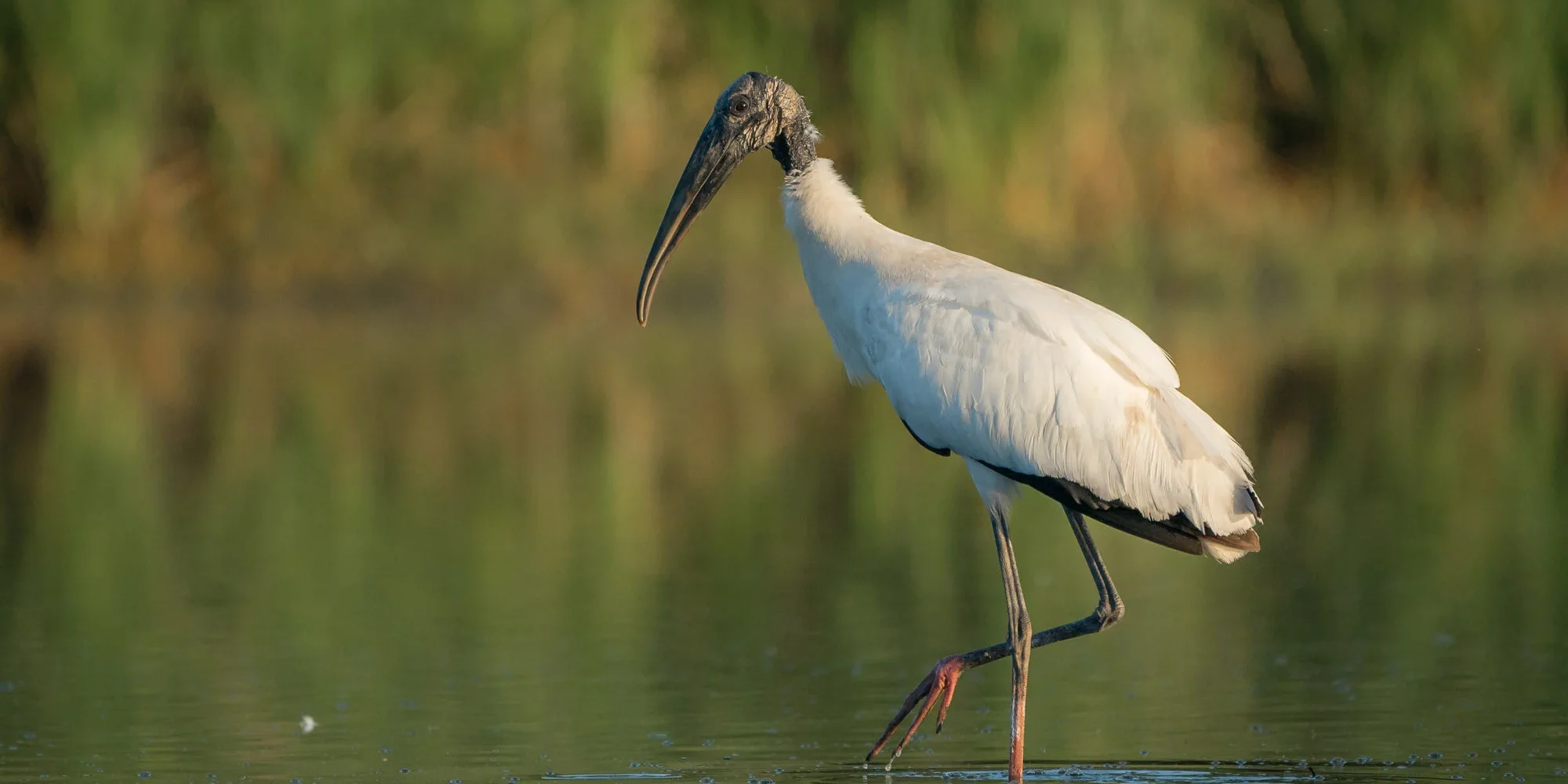
The U.S. Fish and Wildlife Service has removed the U.S. distinct population segment of the wood stork from the federal list of endangered and threatened wildlife, marking a recovery milestone for a species that now inhabits parts of Alabama and the broader Southeast.
Federal officials described the move as a major conservation milestone and the first bird delisting highlighted under the Trump administration in the current term. According to the Service, 36 species have been delisted from Endangered Species Act protections due to recovery since 2017, reflecting what officials describe as results-driven conservation partnerships and species management.
“The wood stork’s recovery is a real conservation success thanks to a lot of hard work from our partners,” said U.S. Fish and Wildlife Service Director Brian Nesvik. “The Trump administration is working quickly to remove federal protections from species that no longer need them, and I’m proud that the wood stork is another example of that.”
The wood stork was listed under the Endangered Species Act in 1984 when the bird was nearing extinction. It is the only stork species that breeds in the United States, and its population had fallen by more than 75% since the 1930s at the time of listing.
Officials attributed the steep decline primarily to habitat loss, particularly the reduction of critical wetland breeding and foraging areas in South Florida.
Recovery efforts over the past several decades have reversed that trend. Today, the breeding population is estimated at between 10,000 and 14,000 nesting pairs across roughly 100 colony sites — more than double the number of nesting pairs and more than triple the number of colony sites recorded when the species was first listed.
Wood storks are now found across the coastal plains of Mississippi, Alabama, Florida, Georgia, South Carolina, and North Carolina, reflecting a broader regional recovery and expansion into suitable wetland habitats.
The Service says the birds have adapted to additional nesting environments, including coastal salt marshes, flooded rice fields, floodplain forest wetlands, and human-created wetlands.
Even with the delisting, the agency will continue oversight through a 10-year post-delisting monitoring plan to ensure the species remains stable. Supporting documents, rulemaking materials, and public comments are available here under docket number FWS-R4-ES-2022-0099.
The delisting is scheduled to become final on March 12, 2026.
Sherri Blevins is a staff writer for Yellowhammer News. You may contact her at [email protected].