Alabama is reinforcing its role as a regional leader in advanced medical care after The University of Alabama at Birmingham performed the Southeast’s first robotic kidney transplant earlier this month, a milestone that could expand access to lifesaving procedures as the demand for organ transplants continues to grow nationwide.
According to federal transplant data, more than 28,000 kidney transplants were performed in the United States in 2023, up from more than 25,000 the previous year, underscoring the ongoing need for innovative approaches to transplantation.
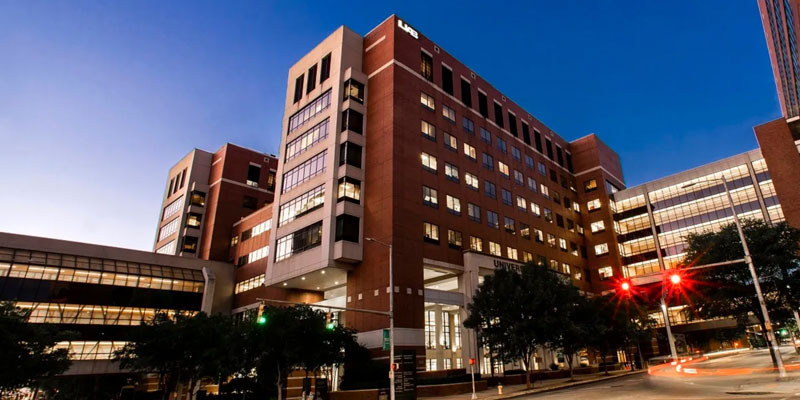
UAB Medicine announced that its transplant team completed the robotic-assisted kidney transplant on January 15, 2026, marking the institution’s first procedure of its kind and a significant step toward minimally invasive transplant options.
The procedure was performed by Michael Hanaway, M.D., surgical director of the Kidney Transplant Program, and Muhammad Rabbani, M.D., assistant professor in the Division of Transplantation.
“The advance of robotic surgical procedures over the last 10 years would suggest that robotic procedures in kidney transplantation represent its future,” Hanaway said. “We are excited to be the first center in the Southeast United States to offer this option for our patients.”
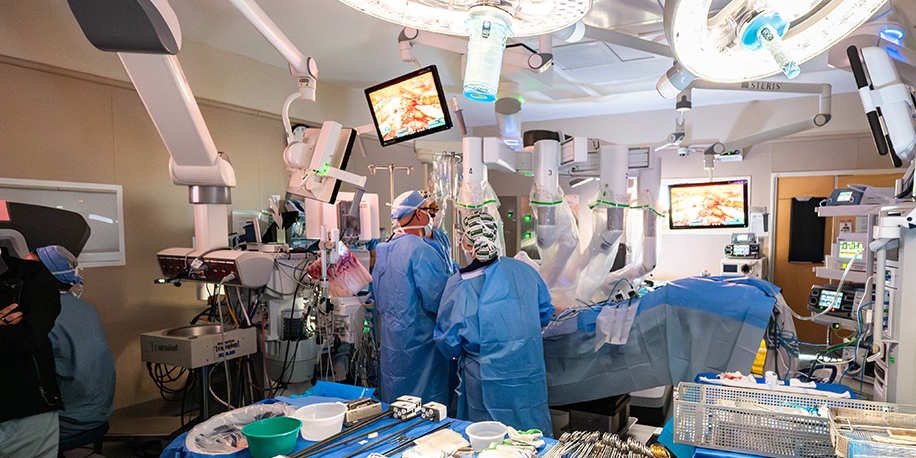
Unlike traditional open surgery, robotic kidney transplantation allows surgeons to operate from a console using robotic instruments inserted through small incisions, while a surgical assistant remains at the patient’s side.
UAB officials say the minimally invasive approach can offer several benefits, including smaller incisions, reduced pain, shorter hospital stays, and quicker recovery times for patients.
“While all patients will benefit, this will uniquely improve outcomes for patients with elevated BMI or other advanced diseases that might struggle with postoperative pain or larger incisions,” said Jacqueline Garonzik Wang, M.D., Ph.D., division director of Transplantation and co-director of the UAB Comprehensive Transplant Institute.
“This milestone represents a meaningful evolution in how we bring state-of-the-art care to our patients,” Garonzik Wang added. “By leveraging newer technology, we will be able to offer lifesaving kidney transplant to more patients and significantly improve outcomes for our recipients. This will result in more transplants, shorter hospital stays, decreased pain and decreased recovery time.”
Robotic surgery also provides improved visualization and precision, allowing surgeons to better access difficult anatomical areas, Hanaway said.
UAB has a long history in organ transplantation, having completed its first transplant in 1968 and continuing to advance research, training, and clinical care in the field. Today, UAB performs more than 400 transplants annually and is home to the largest comprehensive transplant program in the Southeast, completing about 100 more transplants each year than any other program in the region.
UAB officials say the integration of robotics into transplant surgery reflects the institution’s commitment to innovation and could help expand access to transplantation as rates of end-stage renal disease continue to rise across the region.
Sherri Blevins is a staff writer for Yellowhammer News. You may contact her at [email protected]