Last week, I and Dr Scott Harris, ADPH State Health Officer, were invited by Eli Lilly to attend the announcement of the largest single investment in Alabama’s history.
Over the last couple of years Governor Kay Ivey, along with Commerce Secretary Ellen McNair, have been working hard to get Lilly, the most valuable pharmaceutical company in the world, to invest in Alabama.
There is an old African proverb that says “it takes a village to make a difference.” The same can be said for economic development.
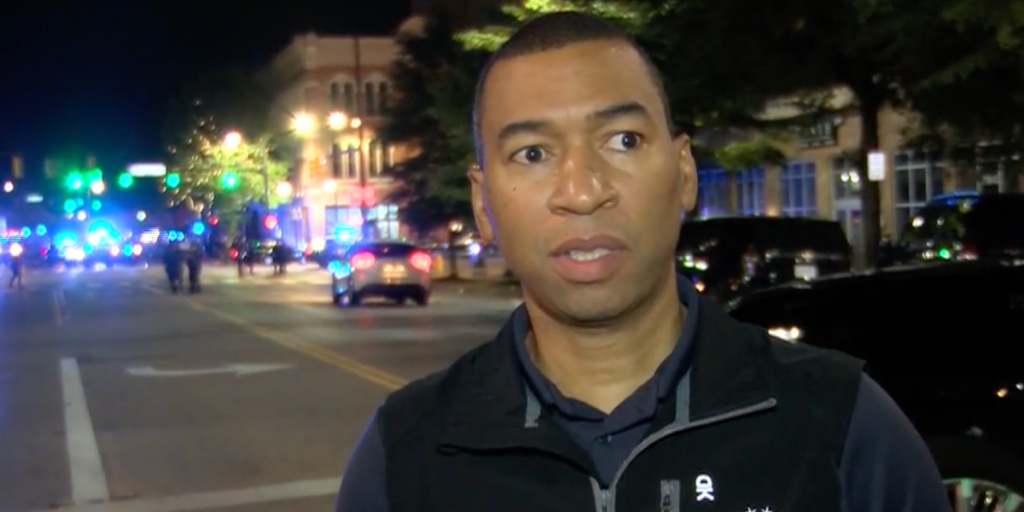
Secretary McNair, the architect of the Hyundai miracle in Montgomery, had a large cast of workers, including Huntsville Mayor Tommy Battle, the Huntsville Chamber Of Commerce, Senators Katie Britt and Tommy Tuberville, State Senator Sam Givhan and many others to make this investment happen.
This vision actually began in November 2020 in the midst of the Covid pandemic. At that time, I was in the middle of the Covid fight, and frankly, was getting very depressed at the increasing number of people dying of Covid.
On a Friday morning, I got a call from an executive that I did not know at Eli Lilly. He said that they had just received emergency use authorization for a new medication called a monoclonal antibody and he asked if I would help with this effort.
By that time, I was working with Dr. Mike Saag at UAB to try to develop treatment modalities for Covid. We had made podcasts and reached out to patients, as well as physicians to try to give advice and treatment options. We had tried many modalities, including Zithromax, vitamin D, hydroxychloroquine and ivermectin. None of these turned out to be of any benefit, especially hydroxychloroquine and ivermectin.
When I agreed to help, they flew down from Indianapolis, where Eli Lilly is based, to Montgomery, Alabama, where they educated me on the new medication called Bamlanivimab. As it turned out, the VP of Eli Lilly was Dr. Carl Garner whose in- laws were members of the Poarch Creek Indian Tribe.
He said he was worried that they would not survive at their age and asked if I would use the new medication on them. I agreed and was educated on the medication, but there was a problem, as this had not gone through the proper channels at the hospital.
I called Dr. Scott Harris who agreed with the request and authorized Eli Lilly to send the medication. As you may recall, this was an unusual time and transportation was pretty much at a standstill.
Dr. Garner arranged an Uber driver to send 20 doses of the new medication to Baptist Hospital in Montgomery Alabama. It arrived the next day and that Saturday, I gave the first doses of this monoclonal antibody to these individuals. This had only been given to a handful of individuals outside of clinical trials in the entire U.S.
When I called the patients the next day, I was fearful that I may have killed them. I was relieved to find that they were significantly better. Dr. Garner then assured me that he would see that Alabama got all the monoclonal antibodies that I needed.
I gave the remaining doses that weekend to people from the Mobile area and some very sick elderly patients in Montgomery. At that point, I felt that we had a great treatment and I called my colleague Dr. Mike Saag at UAB. With the help of ADPH and Dr. Scott Harris, we set up infusion centers across the state. Dr. Saag set them up at UAB and Dr. Bill Admire established centers in Mobile.
The Medical Association under the guidance of President Dr. Aruna Arora, started doing podcasts, which eventually were broadcast all over the United States, as well as some European countries. Dr. Garner continued to assist us and give us all the support that we needed.
Two months later in January, I received a call from a doctor in North Carolina requesting that I treat a patient with the new medication. He had seen our podcasts and requested that he transfer the patient to us. I suggested that he try some of the local medical centers, which were leaders in the area, but I was informed that they only were doing this in a study and it was not guaranteed that his patient would get the medication.
I agreed to treat him, but was not sure how he would get here. The doctor told me that he would be flying by private plane and the next morning, he arrived at the infusion center that we had established at Jackson Hospital.
He was an elderly gentleman who was incredibly grateful but very sick. Four days after the infusion, he was back at work and incredibly thankful.
I was then called and informed that I, as well as the ADPH and Dr. Harris, “had been vetted.” I was told that this patient’s partner was Ken Langone. I was familiar with Mr. Langone from CNBC as he had taken Ross Perot’s company public and was cofounder of Home Depot.
He had also given $750 million to establish the Langone Medical Center in New York. He called Eli Lilly, as he was the largest private investor in the company, and wanted to know why his partner was sent to Alabama. He was told by Eli Lilly that he was sent to “the Covid guy” and Dr. Harris’ ADPH had provided the infusion to more individuals per capita than any other state.
We had patients come to Montgomery from all surrounding southeastern states and as far as way as Wyoming and Switzerland. By that time, we have been contacted by Operation Warp Speed, who complemented Dr. Harris and ADPH and asked us to be spokesmen to the other states who were slow to adapt this life-saving therapy.
Later, I talked to Mr. Langone who sent me his autographed book and was very kind. I told him that we would help his medical center anyway we could.
Throughout the pandemic, Dr. Garner continually assisted us and gave us thousands of the life saving doses. From the beginning of the pandemic, Dr. Garner said that he wanted to pay back his state. He was raised in Decatur, Alabama, and educated at Auburn University. He then climbed the ladder to be the Senior VP at Eli Lilly.
Under his guidance not only were the Bamlanivimab Monoclonal Antibodies invented, but also the treatment for Alzheimer’s and most recently, the GLP-1 drugs were developed under his leadership.
He is active on Auburn University’s advisory board and was appointed to Speaker Nathaniel Ledbetter’s longevity task force. Dr. Garner wants to create more opportunities in Alabama with Eli Lilly and we plan to have strategic meetings with HudsonAlpha in the first of the year to further this partnership.
The successful treatment of two Poarch Creek Indians with Covid, who happened to be the in-laws of Dr. Garner, has progressed to starting a $6 billion partnership with the State of Alabama that I think is only the beginning of a great partnership.
Dr. Garner states that while Alabama is now the leading export state for automobiles, he hopes that it will become a pharmaceutical giant as well. Over 300 sites were looked at for this plant and Huntsville was selected.
Thank God we had an insider on our side! I believe that Dr. Garner will go down in Alabama history as someone who has forever changed healthcare in the State of Alabama.
Dr. David Thrasher is a pulmonologist and longtime resident of Montgomery. He advised city, state and national leaders through the Covid-19 pandemic and served as the Montgomery County Coroner for over a decade. In 2024, he was selected for Alabama Healthcare Hall of Fame.