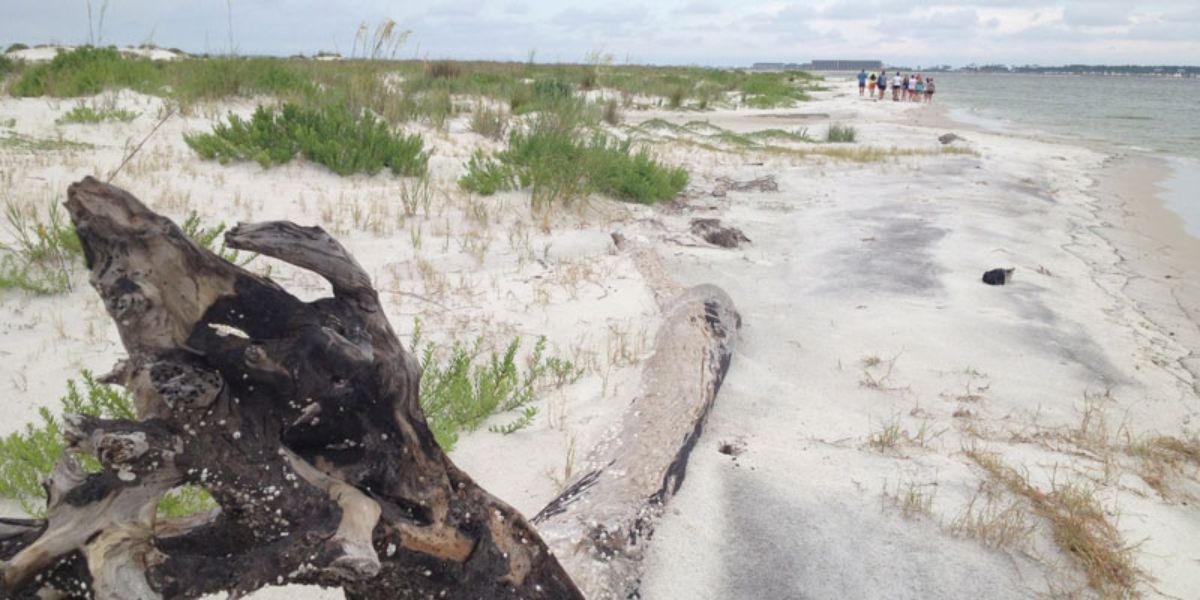
The Mobile County Health Department (MCHD) has lifted a swim advisory for Dauphin Island’s East End after follow-up testing showed bacteria levels have fallen back below federal safety standards.
The advisory had been issued earlier this week after water samples at the site showed elevated levels of enterococcus bacteria, which can indicate the presence of harmful pathogens and increase the risk of illness for swimmers.
ALdotcom reported that testing conducted by the Alabama Department of Environmental Management (ADEM) recorded 221 enterococcus colonies per 100 milliliters on April 7, following a reading of 121 per 100 milliliters the previous day—both exceeding the Environmental Protection Agency’s safety threshold of 104 per 100 milliliters for marine waters.
Health officials use enterococcus bacteria as an indicator of water quality because high concentrations suggest that other disease-causing organisms may be present. These bacteria are commonly found in the intestines of humans and other warm-blooded animals.
The advisory remained in effect until testing confirmed levels had returned below the EPA standard, with continued monitoring conducted at the site.
The bacteriological monitoring program is operated through a partnership between the Alabama Department of Public Health and ADEM under the EPA’s Beaches Environmental Assessment and Coastal Health (BEACH) Act. The program routinely collects water samples from 25 coastal recreational sites across Mobile and Baldwin counties, including Dauphin Island’s East End.
Sampling frequency varies by season, with higher-use sites tested once or twice weekly during summer months and less frequently during cooler periods.
Officials say bacteria levels in coastal waters can rise following heavy rainfall due to stormwater runoff, sewage system overflows, and failing septic systems, though no specific cause has been identified for the recent spike at Dauphin Island.
Dauphin Island Mayor Jeff Collier expressed concern about the advisory and uncertainty about its cause, noting the area’s importance as a popular destination for swimming and fishing.
The East End sits at the mouth of Mobile Bay, where water draining from much of Alabama and parts of Mississippi flows into the Gulf, making it difficult to pinpoint a single source of contamination.
Sherri Blevins is a staff writer for Yellowhammer News. You may contact her at [email protected].