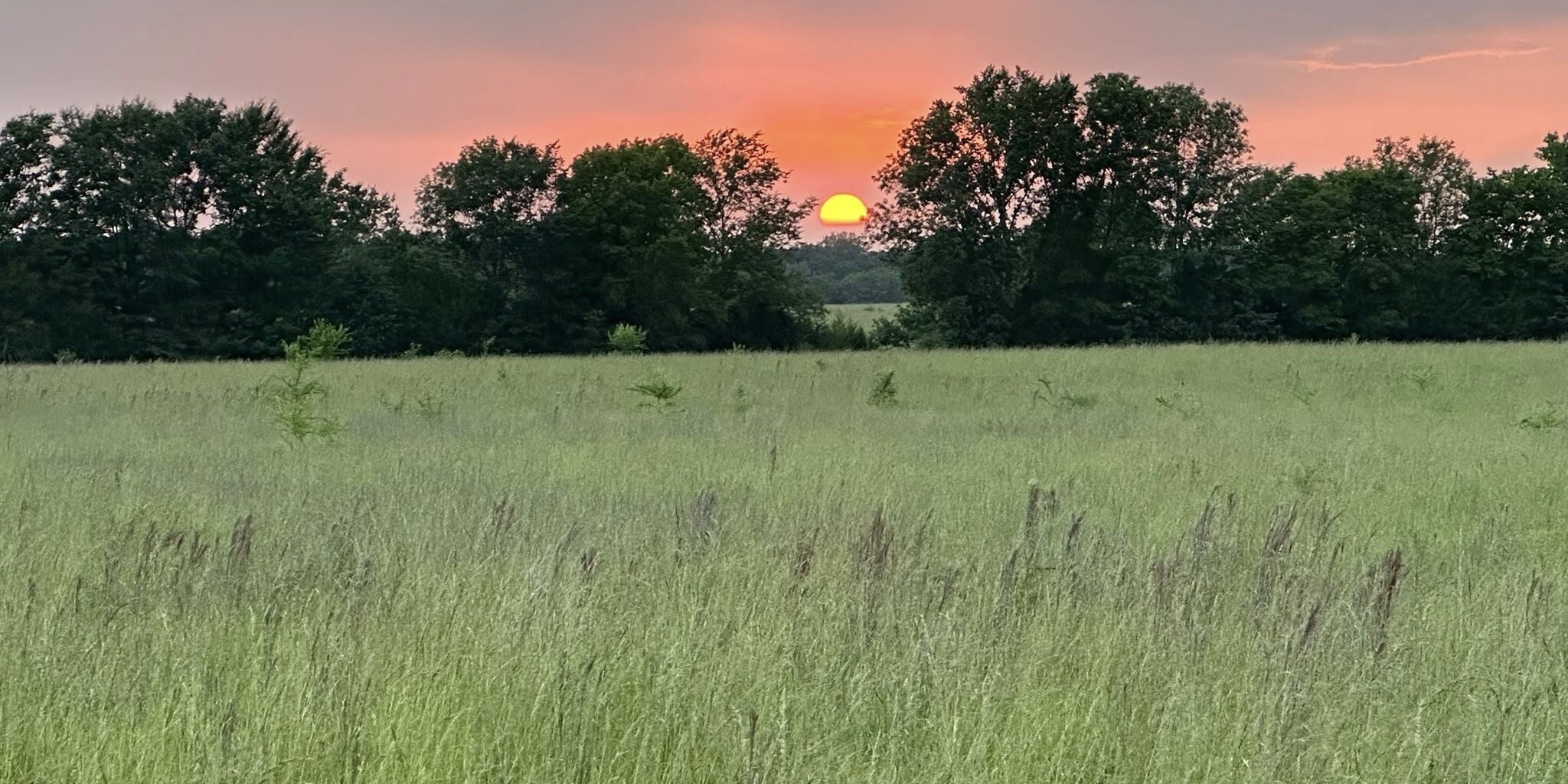
Alabama is known for its forests, rivers, wetlands, and rich biodiversity—but much of the state was once covered by native grasslands and prairies.
Before widespread agricultural development and fire suppression, these grasslands stretched across central and northern Alabama, especially in the Black Belt region. Today, more than 90 percent of Alabama’s native grasslands have been lost, making prairie ecosystems some of the most threatened habitats in the state. Without immediate and coordinated conservation and restoration efforts, many of the species that depend on these landscapes could disappear entirely.
What Alabama’s Grasslands Looked Like Historically
In the early 19th century, federal land surveys documented extensive prairie systems across Alabama. The Black Belt’s dark, fertile soils supported native grasses and wildflowers adapted to periodic fire and grazing.
As settlement expanded, much of that land was converted to agriculture. Crops such as cotton, corn, and hay replaced native vegetation. Over time, fire suppression allowed trees and invasive species to encroach on remaining prairie areas.
Researchers estimate that in some regions, up to 99 percent of original prairie habitat has been eliminated or significantly altered. Although Alabama ranks among the most biodiverse states in the country, its grasslands represent one of its most reduced ecosystems.
The urgency of the situation is clear, according to the Southeastern Grasslands Institute:
“Grassland loss is the single greatest conservation issue currently facing eastern North American biodiversity. Our precious Southern grasslands are nearly extinct and the species that depend on them are fading fast. Many of our Southern grasslands that managed to persist through the past 200 years have disappeared in the past quarter-century. What will the next 25 years bring? If we want to reverse the tide of grassland biodiversity loss, our response must be rapid as well as unparalleled in its magnitude.”
Why Grasslands Are Ecologically Important
Grasslands play a vital role in Alabama’s environmental health. Native prairie grasses develop deep root systems that help stabilize soil, reduce erosion, and improve water infiltration. These root systems can also store carbon and improve long-term soil quality.
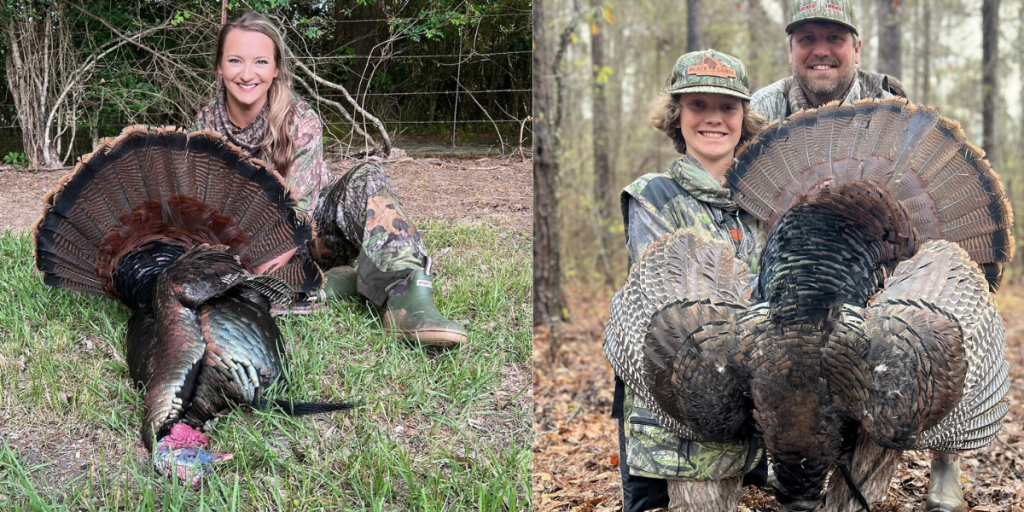
Above ground, prairie ecosystems provide habitat for pollinators, migratory species, and game animals such as bobwhite quail, white-tailed deer, and wild turkey. Many plant species found in Alabama’s prairie remnants are regionally unique and adapted specifically to local soil and climate conditions.
For years, much of Alabama’s conservation focus centered on forest restoration. More recently, researchers and conservationists have emphasized that grasslands require targeted restoration efforts of their own.
A Statewide Seed Collection Effort
In 2026, the Southeastern Grasslands Institute, based at Austin Peay State University, launched a major initiative to collect native prairie seeds across Alabama.
The project is funded through an $800,000 grant from the U.S. Fish and Wildlife Service and will continue for two years. Field teams plan to complete approximately 200 native seed collections by fall 2027.
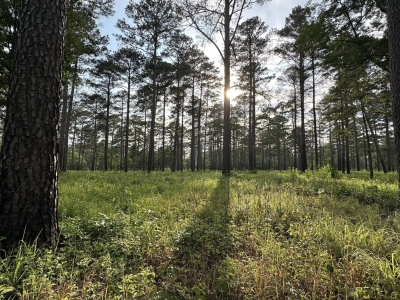
Collection sites include the Black Belt, the Coosa Valley east of Birmingham, and the Moulton Valley near Huntsville. In areas where prairie systems extend beyond Alabama’s borders, teams will also collect in neighboring states.
The purpose of the project is to preserve locally adapted plant genetics and build a supply of native seed for restoration efforts. Using seeds sourced from other regions is not always effective, as plant populations adapt over time to specific soil types, rainfall patterns, and temperature conditions. Locally collected seed improves the likelihood of successful restoration.
The Process Behind Seed Banking
Seed collection isn’t a simple task, as it requires significant fieldwork. Researchers must first identify viable plant populations and obtain landowner permission. They often return multiple times throughout the growing season to monitor plant development. Seeds must be harvested at the correct stage of maturity and in quantities that do not harm existing populations. After collection, seeds are cleaned, cataloged, and prepared for long-term storage.
The long-term goal is not simply preservation, but production. The institute aims to partner with growers to increase the supply of native prairie plants and develop a commercial market for Alabama-adapted species; currently, that market is limited in much of the South.
Funding and Restoration Support
Additional restoration funding is becoming available at the state level. The Alabama Soil and Water Conservation Committee recently established the Alabama Black Belt Prairie Initiative, which provides more than $17 million in funding to support prairie restoration efforts by landowners in the region.
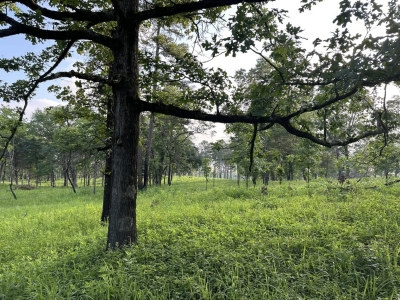
Federal conservation programs through the United States Department of Agriculture also offer cost-share opportunities for habitat restoration, including prescribed burning and invasive species management.
Restoring prairie ecosystems is a long-term process. It often requires multiple years of management, including controlled burns and ongoing monitoring. However, conservation leaders believe that with sufficient seed supply, funding, and landowner participation, tens of thousands of acres could eventually be restored.
What This Means for Alabama
Alabama’s grasslands may have been largely lost, but the work to restore them is underway—and every effort counts. From statewide seed collection initiatives to local restoration projects, experts are taking concrete steps to rebuild these critical ecosystems.
Organizations such as the Alabama Wildlife Federation, the Alabama Forest Land Trust, and the Native Habitat Projectcontinue working with landowners and communities to increase awareness and encourage restoration. The seed collection initiative is a critical first step. Without a reliable supply of locally adapted native seed, large-scale prairie restoration would be difficult to achieve.
For Alabamians, there is also a role to play: whether managing land, planting native species, or supporting conservation programs, individual and community actions can make a real difference.
The survival of Alabama’s prairies and the wildlife they sustain depends on swift, coordinated action—and the time to act is now.
Courtesy of SoulGrown Alabama