A Mobile County lawmaker has introduced legislation aimed at tightening enforcement of Alabama’s seafood labeling requirements for restaurants and increasing penalties for violations.
State Rep. Chip Brown, (R–Hollinger’s Island), announced he has filed House Bill 444, a measure designed to strengthen the state’s existing seafood labeling statute and close what he described as compliance loopholes.
“Our current labeling law is designed to inform consumers and encourage restaurants to use seafood products harvested in Alabama, but too many owners are exploiting loopholes or simply refusing to follow its requirements,” Brown said. “This legislation adds sharp teeth to the statute and includes strong penalties for restaurants that continue thumbing their noses at state law.”
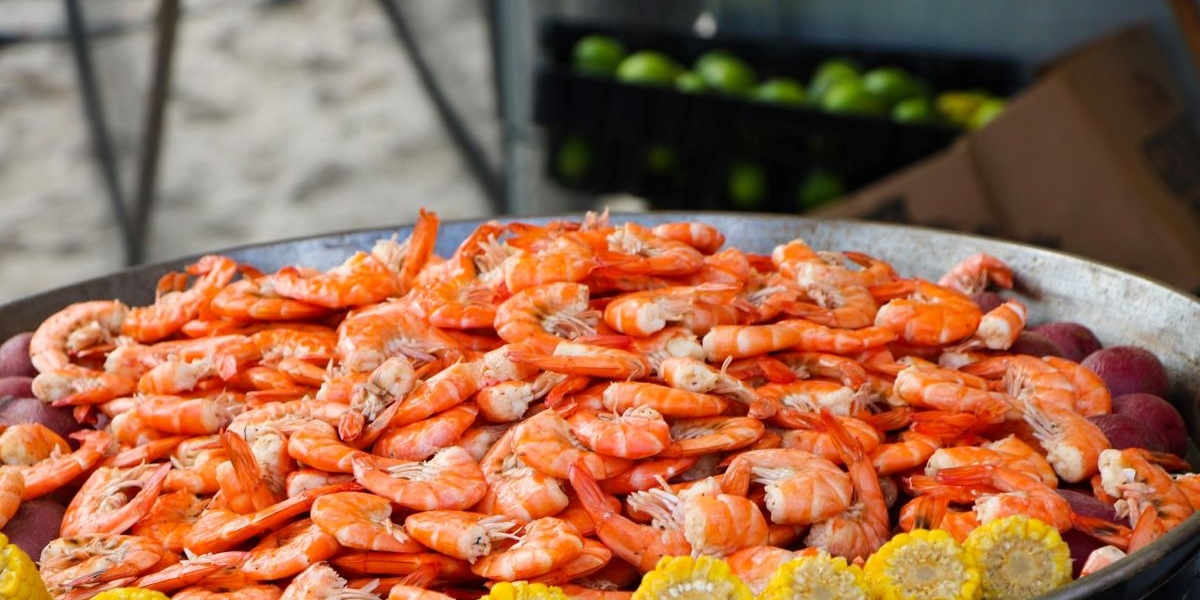
Under current Alabama law, restaurants must disclose whether seafood items are domestic or imported either on menu listings or on clearly visible signage for diners. Establishments are also required to indicate whether fish and shrimp products are farm-raised or wild-caught.
Civil penalties, including monetary fines, can already be assessed by the Alabama Department of Public Health for noncompliance, but Brown’s office said some restaurants continue to ignore the law or exploit perceived gaps in enforcement.
House Bill 444 would add several new enforcement mechanisms. The proposal calls for an automatic five-point deduction from a restaurant’s publicly posted health sanitation score if it fails to meet seafood labeling requirements. It would also authorize the Alabama Department of Agriculture and Industries to genetically test seafood products served by restaurants to verify their origin.
The bill would remove signage as an acceptable disclosure method and instead require country-of-origin labeling directly on menus. It further directs the Alabama Department of Public Health to regularly inspect food service establishments for compliance and to regularly publish the names and addresses of restaurants found to be in violation of the seafood labeling law.
The measure has been referred to the House Health Committee for consideration and, if approved by lawmakers and signed into law, would take effect October 1, 2026.
According to Brown’s office, Alabama lawmakers originally enacted the state’s seafood labeling law in 2024 following a widely reported case in neighboring Mississippi involving a restaurant that admitted serving imported, low-grade frozen fish while marketing it as premium fresh Gulf seafood.
Sherri Blevins is a staff writer for Yellowhammer News. You may contact her at [email protected].