In 1809, American Revolutionary War hero John Stark wrote the words, “Live free or die: Death is not the worst of evils.” Though he was too ill to attend himself, Stark welcomed soldiers who had fought alongside him at the Battle of Bennington 32 years earlier to a dinner at his home. He ended his prewritten toast with those now-famous words.
The men who fought to establish this great nation understood what it meant to live on the other side of “life, liberty and the pursuit of happiness.” They knew the cost of surrendering freedom and warned future generations about the dangers of allowing those hard-fought liberties to slip away.
Unfortunately, in 2026, it seems that is exactly what we have done. It is alarming to watch how many Americans willingly, almost gleefully, cede pieces of their freedom and privacy to federal and local governments. In the name of “the greater good,” many have accepted countless intrusions into their personal lives: facial recognition at airports, overly personal questions at the doctor’s office, and the unchecked collection and sale of their online data.
Few people object because it happens gradually. It is a slow creep that most barely notice. A series of small concessions that, over time, can transform a nation into something unrecognizable. One day, we may look around and wonder how we arrived at a place where the freedoms we once took for granted have quietly disappeared.
FISA, the Patriot Act, and other examples of government surveillance have already shown us that we live in an America where citizens are increasingly monitored, often without their permission. Over the past several months, another example has emerged that is drawing renewed attention: Flock cameras.
Many Americans, especially Alabamians, have become increasingly uncomfortable with the idea of cameras quietly tracking their movements every day. But what exactly are Flock cameras? Flock cameras are owned by Flock Safety, a company founded in 2017 and headquartered in Atlanta, Georgia.
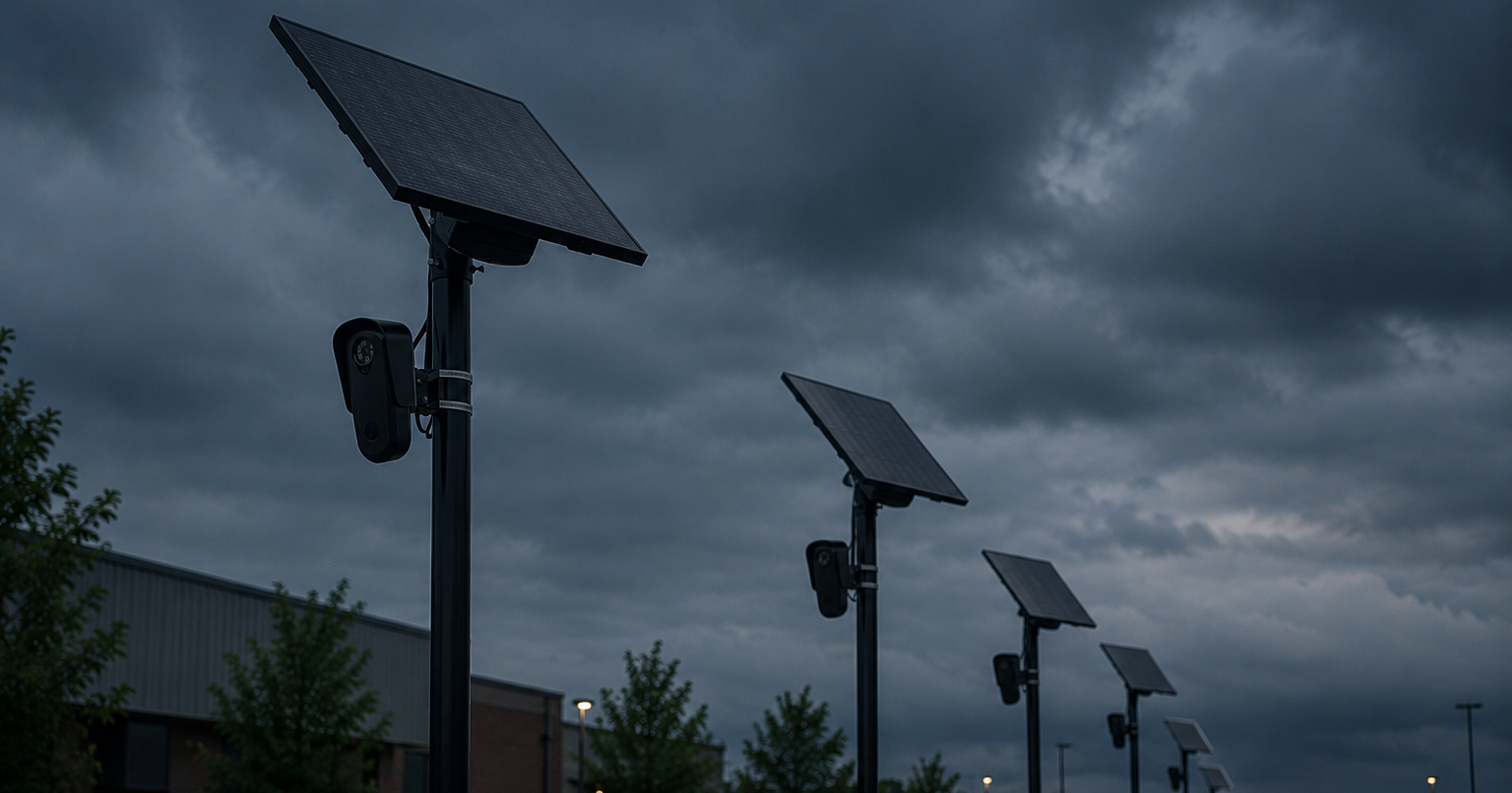
According to Flock’s own website, its cameras are mounted on roadside poles or near neighborhood entrances and use computer vision and artificial intelligence to photograph passing vehicles, capture license plates, and record details such as vehicle make, model, color, and bumper stickers.
Law enforcement agencies and private communities use the technology to identify vehicles potentially connected to crimes.In practical terms, when a vehicle passes a Flock camera, its license plate is scanned by artificial intelligence and stored in a searchable database accessible to law enforcement, Flock Safety, and potentially other organizations. Supporters argue that these systems have helped solve crimes, locate missing people, and assist law enforcement investigations.
However, there are also troubling examples of how these systems can be misused.In Alabama, both the Moody and Springville police departments reported officer terminations related to unauthorized access and use of Flock footage. Officers allegedly used the system to track women across the state for personal reasons. In another case, an Alabama man was cited for running a red light in Florida and has spent months fighting the charge.
The vehicle was his, but a friend had borrowed it, and the man was still in Alabama when the violation occurred. Imagine the crime wasn’t merely running a red light but something worse, meanwhile your car is being flagged for the crime.Perhaps the most concerning aspect of AI-powered surveillance systems is not just what they can do today, but what they may be capable of doing tomorrow.
In June of this year, Leonardo Systems introduced its SignalTrace software, which can integrate with existing camera networks. Using signals from Bluetooth-enabled devices such as AirPods, Apple Watches, AirTags, and smartphones, the technology can create a digital fingerprint associated with individuals and vehicles.
That information can potentially be used to track a person’s movements over time.Leonardo’s website describes SignalTrace as technology that can “transform publicly available signals into actionable insight.” The larger concern is what happens to that information after it is collected, who has access to it, who controls it, and whether that data can ultimately be sold or shared.This is a concern Calera Police Chief Hyche recently addressed in a Facebook post.
While the chief’s willingness to engage with community concerns should be commended, two sentences from his final paragraph deserve careful consideration. He wrote, “I can only address the aspects of Flock I have control over. How the company uses, or shares data is outside of my control.”
That statement should concern every American. Naively, many people respond in support of Flock cameras and surveillance saying, “If you aren’t doing anything wrong, you shouldn’t care if cameras are watching you.” But that argument ignores several important issues. First, unchecked surveillance raises serious constitutional concerns, particularly regarding the protections of the Fourth Amendment.
The government’s ability to access personal information has historically been limited by the requirement of legal oversight, including warrants in many circumstances. Second, the definition of “wrong” could very well become subjective. What is considered acceptable today may be viewed differently tomorrow.
A political opinion, a religious belief, or participation in a lawful protest could potentially become a target under a future administration with different values. Simply holding unpopular views should never warrant someone’s movements being tracked and stored for future use. Once Pandora’s box is opened and government or private entities are given broad access to personal information, it becomes incredibly difficult to close it again. Flock cameras are no exception.
Perhaps we should remember Benjamin Franklin’s warning: “Those who would give up essential Liberty, to purchase a little temporary Safety, deserve neither Liberty nor Safety.” The challenge before us is simple: We must decide whether we are willing to trade away pieces of our liberty in exchange for the promise of safety. History shows that freedom, once surrendered, is seldom regained.
To follow new episodes, clips, and live broadcasts from The Rightside, follow on all channels: YouTube @therightsidemedia, Facebook @Rightside.Media.AL, X @Rightside_Media, and Rumble @RightsideRadio.