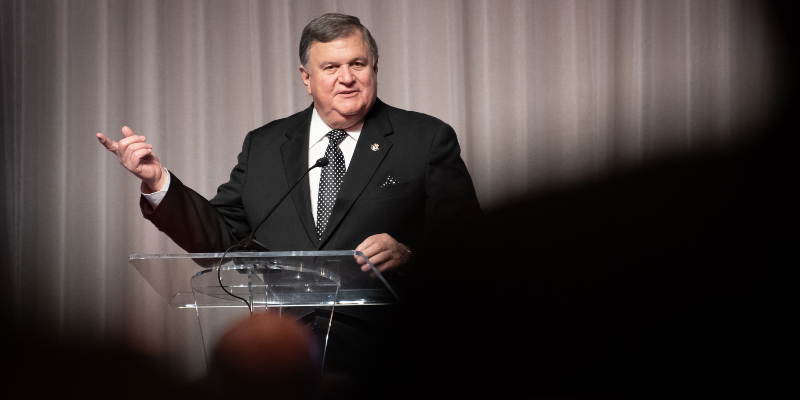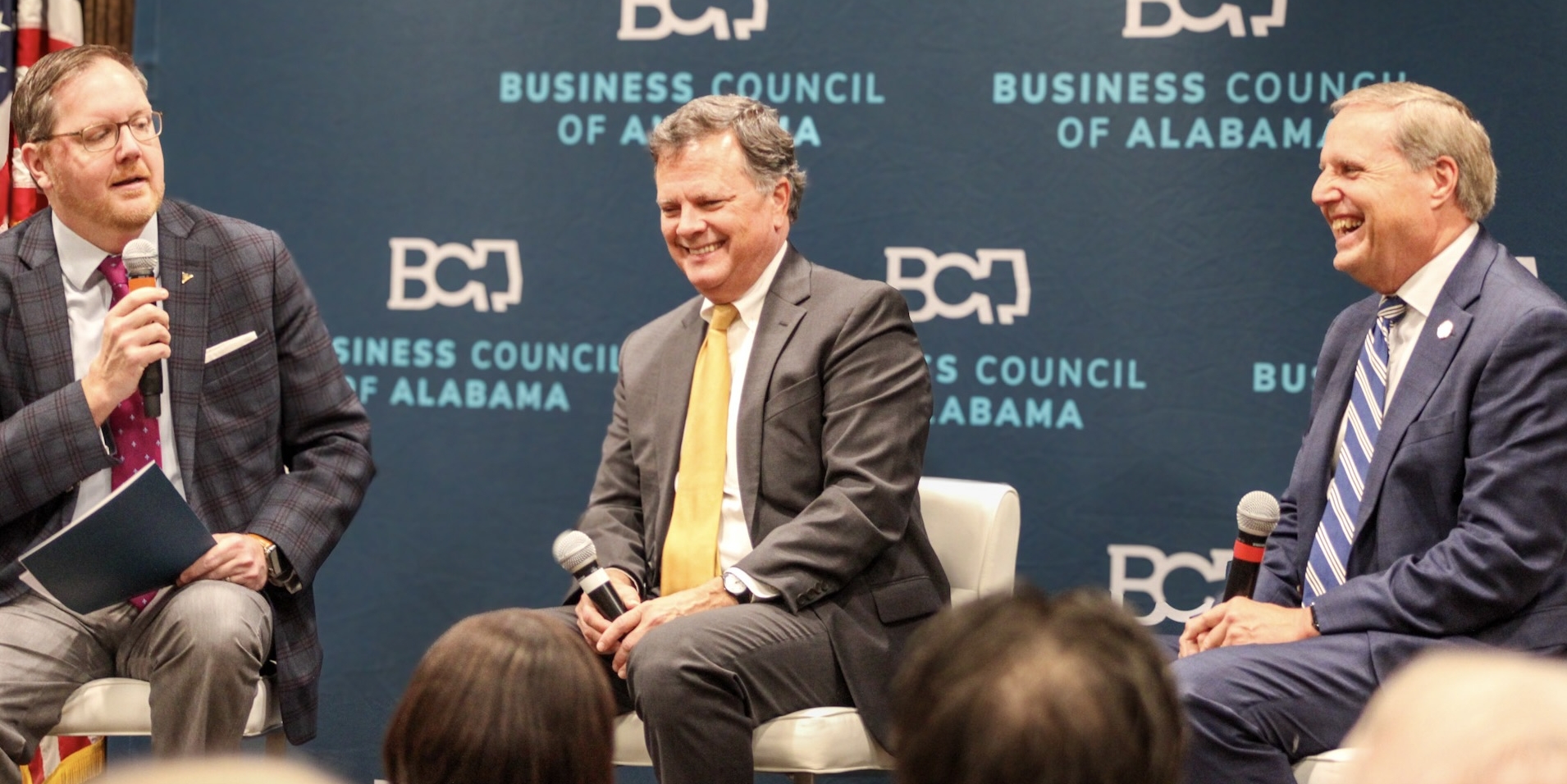
The Alabama House and Senate Education Trust Fund budget committee chairmen addressed the Business Council of Alabama’s Tuesday morning briefing, and discussed budget priorities, their working relationship, and the future of education in Alabama.
State Sen. Arthur Orr (R-Decatur) and State Rep. Danny Garrett (R-Trussville) agreed that managing expectations will be a key challenge this session.
“The money has been pretty lofty, but now, with PEEHIP and other needs taking a large part of that, the capacity to maneuverability that we’re going to have is declining substantially,” Orr said.
“So the membership, they’re still thinking up here, and managing those expectations is going to be difficult.”
RELATED: Ledbetter: PEEHIP costs ‘not sustainable’ as lawmakers weigh teacher pay and insurance
After several years of unusually strong, post-pandemic growth in the Education Trust Fund, Orr said the picture is changing.
ETF receipts are down about 2.3% early in FY2026 — while the state’s PEEHIP bill is projected to climb toward about $1.1 billion by FY2027.
With roughly 72% of PEEHIP funded out of the ETF, he said that squeeze leaves far less “new” money to spread around for raises and new initiatives than many lawmakers and stakeholders have gotten used to in recent years.
Both chairmen pointed to the CHOOSE Act, the landmark 2024 school choice bill, as transformative legislation.
“The world out there is customization, flexibility, and choice in every aspect of our lives,” Garrett said. “We have this education box that we step into, and we don’t have that. I think we’ve opened that door. The market will tell us where that goes and how it goes, but I think it can be the driver.”
Orr said he believes the biggest changes in education over the next decade will involve technology.
“I don’t think we have a grasp yet of what the implications are of AI,” Orr said. “There is so much educational technology product coming online that is moving the needle. The technology used in the classroom is something that our state is going to need to be very much friendly to, as long as it’s proved out.”
The chairmen also discussed their working relationship. Garrett recalled reaching out to Orr when he first took over as House budget chair.
“I said, I know this: you make your worst decisions when you have a lot of money,” Garrett said. “You know where the bones are buried. You know all the traps. Let’s work together on how to spend this money wisely.”
“Philosophically, we’re very similar,” Garrett added. “We have the same approach to the numbers. We do have disagreements. We do have discussions behind closed doors. But I think, really, we’re aligned mentally with what we need to do, and that’s really get money into the classroom.”
Orr agreed.
“It has worked well, just being able to focus on the issue and not House versus Senate, your team, my team,” Orr said. “Focusing on the problem or the need that the state has and then approaching it from that level.”
Orr also referenced a recent New York Times article highlighting Alabama’s progress on literacy and numeracy.
“The Numeracy Act and the Literacy Act, and how much of an impact they have had on our state, which has been a good thing, and finally, we’re getting some national props for the headway we’ve been making these past few years,” Orr said.
Tuesday was day 11 of the legislative session. There are 19 legislative days remaining.
Sawyer Knowles is a capitol reporter for Yellowhammer News. You may contact him at [email protected].