The Alabama State Board of Education is taking a closer look at virtual public schools, including student outcomes and accountability. As the Executive Director of Alabama Virtual Academy (ALVA), I welcome that conversation. Every educator wants students to learn, grow, and become productive members of society.
I spent more than two decades serving in Alabama’s public school system. I began teaching social studies at Buckhorn High School in 1998, served as a reading specialist with the Alabama Reading Initiative, and later served as an assistant principal and principal before serving as the curriculum and technology coordinator for Athens City Schools.
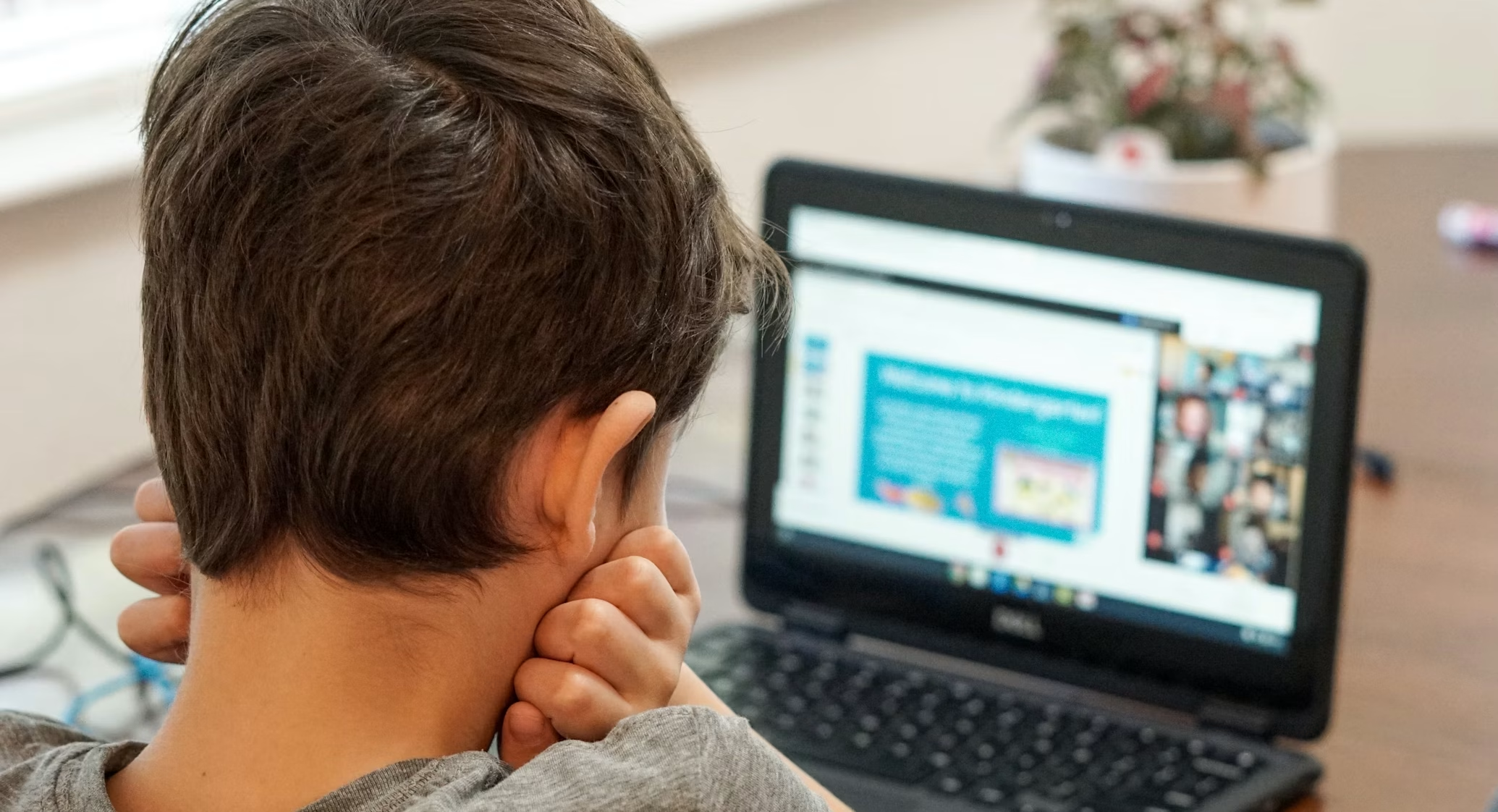
Today, I lead ALVA, a tuition-free virtual public school and a program of Eufaula City Schools. Our school is staffed by Alabama-certified teachers and aligned with our state’s academic standards.
I joined ALVA because I kept meeting students who needed something a campus-based model could not provide. My goal now is to help the public and policymakers understand who our students are, why their families chose this form of public education, and how we are serving them.
At the heart of every enrollment decision is a student and a family. One student featured on our school’s website shared that she came to us in the eighth grade after experiencing bullying and needing a different learning environment.
What stands out in her story is not what she left behind but what she found: teachers who could personalize her education and help her build a better future. We share stories like hers because they reflect what we hear from families time and again.
There are countless reasons families choose a virtual school. I will say plainly what every honest educator knows: there is no one school that is the right fit for every child. Virtual learning is not the right choice for every family, and we do not try to convince anyone otherwise.
We also welcome oversight because we are determined to improve student outcomes. Our students’ success will always be our primary goal, and while test scores are an important measurement, they do not tell the full story of the students and families we serve.
Broadly comparing test scores does not always capture where many of our students started or the progress they have made since choosing a virtual option.
Many students who enroll in virtual schools are navigating circumstances that shaped their education long before they chose a virtual option. Whether that obstacle is a learning disability, physical or mental health challenges, the lasting effects of bullying, or academic gaps from a learning environment that was not working for them.
Families often choose us precisely because their child was struggling somewhere else, and we consider it a privilege to be the school that says yes to those students.
Our students’ challenges do not define them, but we must acknowledge that a school serving a large share of students who arrive academically behind or face significant health and life circumstances will not post the same raw scores as a school where the vast majority of students are not facing similar obstacles to learning.
Comparing the traditional and virtual education models based solely on test scores is not an apples-to-apples comparison. The fair measure for any school serving students who start behind is growth: where each student began and how far they have come.
When board members raise concerns about reading outcomes in the early grades, as someone who spent years of my career as a reading specialist, I welcome their questions. But as someone on the front lines, I know that context matters.
We take that data seriously and are committed to measuring outcomes, learning from it, and continuously improving student achievement. That is not unique to virtual schools. It is the responsibility of every educator.
The job of policymakers is to ask hard questions about enrollment, performance, and results, and it is our job to answer them with full context. Beyond the headlines are real students whose lives have been changed by virtual options.
Alabama has built a public education system that trusts parents to know their children and gives them meaningful educational options. Virtual public schools are one of those options. They are not for everyone, but they are essential for the families who need them.
Examine us, ask us hard questions, and hold us accountable. After more than a quarter century in Alabama public education, I can tell you that is exactly what good schools ask of themselves every single day.
Melanie Barkley is Executive Director and Chief Administrator of Alabama Virtual Academy, a tuition-free, full-time virtual public school serving students across Alabama. She has served Alabama public education since 1998 as a teacher, reading specialist, principal, and district administrator.